
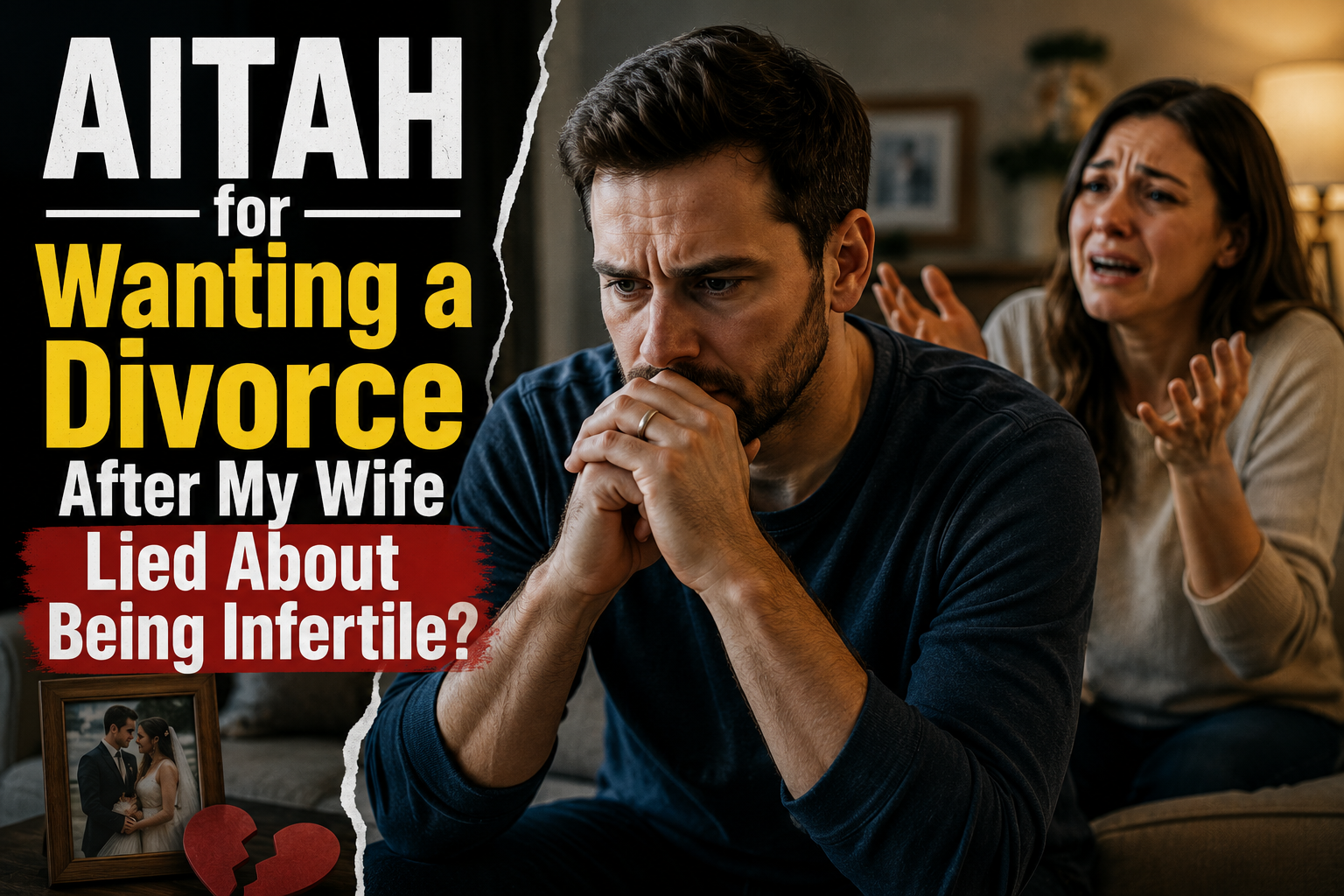
A husband’s world is turned upside down after a shocking family argument exposes a secret his wife kept hidden for years.
What began as a shared dream of having a biological child quickly unravels into a painful story of broken trust, difficult choices, and emotional betrayal.
This story leaves him questioning whether one devastating lie is enough to end an otherwise loving marriage.



A Story About Trust, Parenthood, and the Cost of Keeping Life-Changing Secrets
This article is far more than a disagreement about having children.
At its heart, it explores what happens when two people enter a marriage believing they share the same future, only for one of them to discover years later that the foundation of that future was built on a lie.
While the topic naturally sparks strong opinions because it involves fertility, birth control, and reproductive choices, the deepest wound in this story isn’t simply about having a baby—it’s about trust.
When honesty disappears from a marriage, even the strongest relationships can begin to crumble.
Check The Comment Section Below

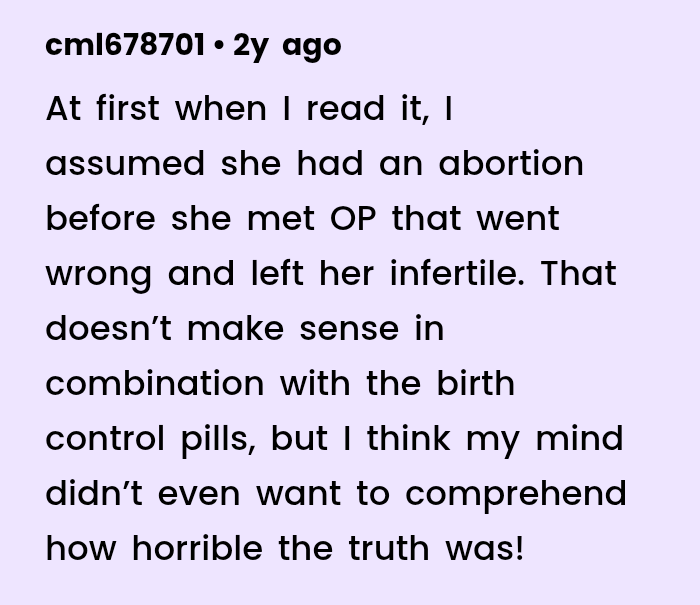
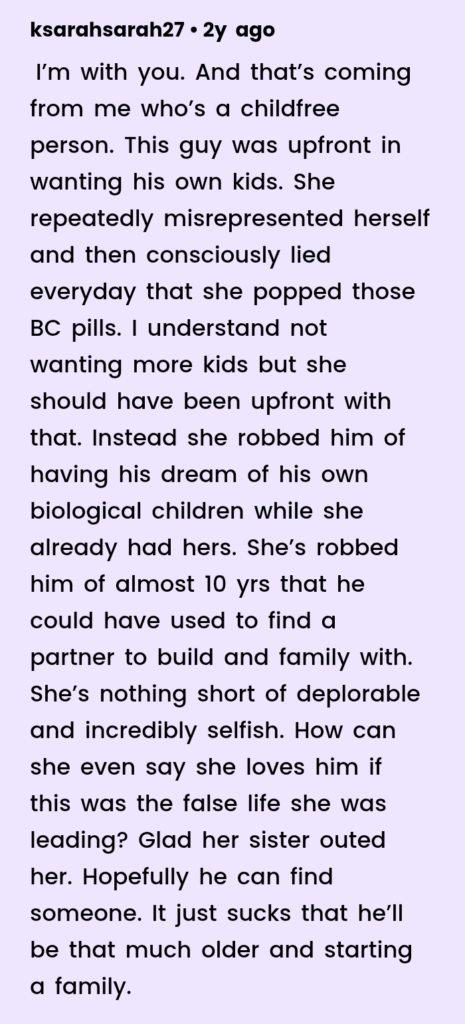
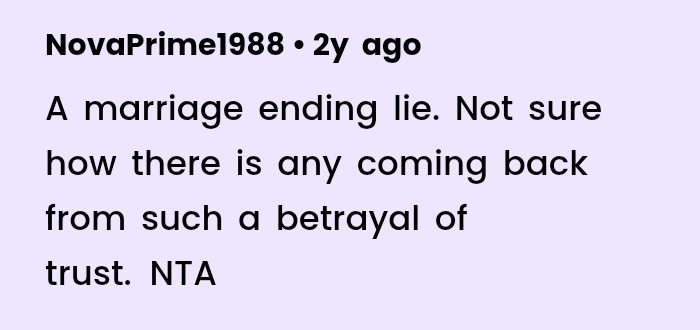
Analysis
They Began Their Marriage With the Same Dream
The story opens with what appears to be a loving and stable family. The couple has been together for eight years, married for four, and the husband has embraced his wife’s daughter as his own. He doesn’t treat her like a stepdaughter—he considers her his child, and she even calls him “Dad.”
That detail matters because it shows this wasn’t a man obsessed with genetics or unwilling to love a child who wasn’t biologically his. He had already proven that family is about love as much as biology.
At the same time, he had always been honest about one important dream: he wanted to have a biological child someday. Rather than hiding his hopes, he discussed them openly from the beginning of the relationship. According to the story, his wife agreed that she was open to having more children, allowing them both to move forward believing they wanted the same future.
The Infertility Journey Was Emotionally Devastating
Many couples experience months or years of trying to conceive without success. It often becomes an emotional rollercoaster filled with hope, disappointment, anxiety, and self-doubt.
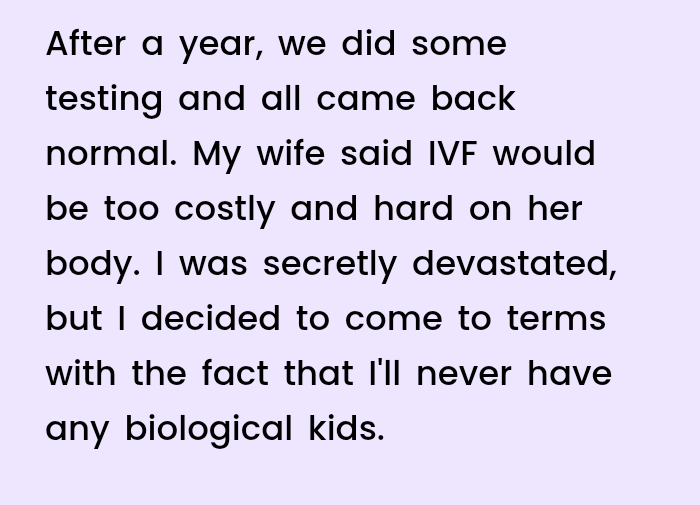
The article describes the couple trying for over a year before undergoing fertility testing.
When the tests reportedly came back normal, there was still no pregnancy.
That uncertainty alone can be emotionally exhausting.
Then came another difficult conversation when the wife explained she didn’t want IVF because of the financial burden and the physical toll it could place on her body.
Whether readers agree with that decision or not, IVF is indeed an emotionally and physically demanding process, and every person has the right to decide whether they are willing to undergo it.
The husband accepted her decision, even though it broke his heart.
Instead of forcing the issue, he chose acceptance.
That sacrifice demonstrates how deeply he valued the marriage.
One Family Argument Changed Everything
The turning point arrives suddenly and dramatically.
Not through a confession.
Not through an honest conversation.
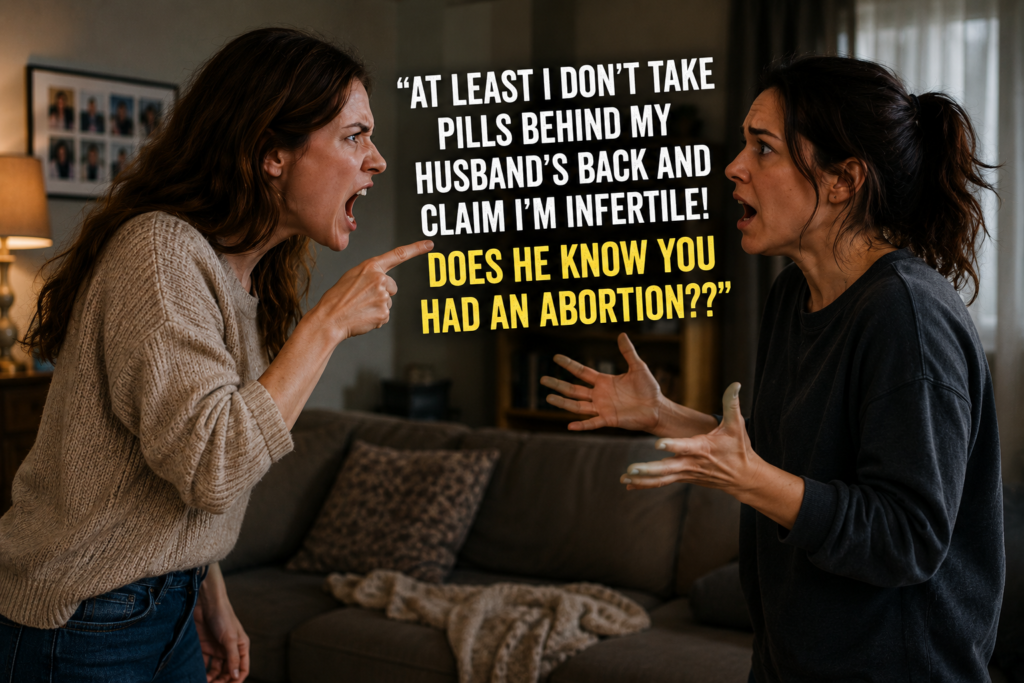
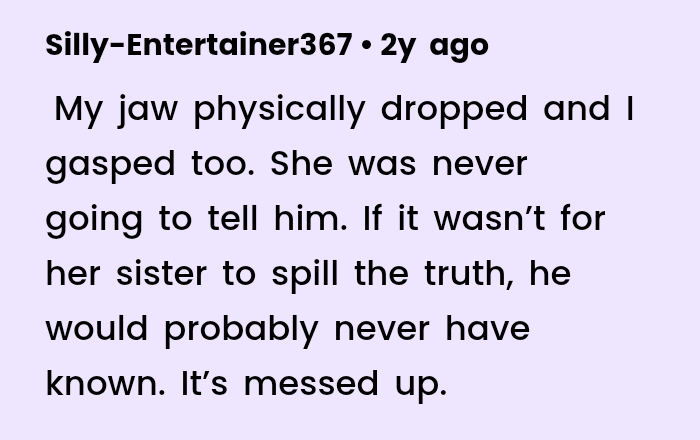
But through an argument between two sisters.
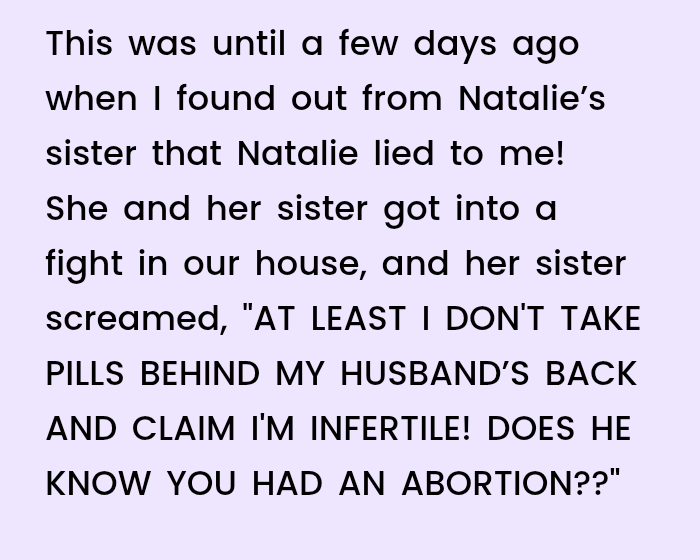
During that heated exchange, the wife’s sister blurts out accusations that completely change the husband’s understanding of his marriage.
Within seconds, years of assumptions collapse.
Moments like this are especially devastating because they don’t simply introduce new information.
They rewrite the past.
Every failed attempt at pregnancy, every emotional conversation, every expression of sadness suddenly looks different through the lens of newly discovered information.
That emotional shock is almost impossible to prepare for.
The Secret Wasn’t Simply About Fertility
Perhaps the biggest issue raised by this article is the difference between making a private reproductive choice and deceiving a partner about it.
Every individual has bodily autonomy.
No one should ever be forced into pregnancy or medical procedures.
At the same time, marriage depends on honest communication about major life decisions.
According to the husband’s account, he wasn’t upset because his wife controlled her own body.
He repeatedly emphasizes that he supports reproductive choice.
Instead, his pain comes from believing he spent years grieving something that wasn’t actually true.
If accurate, he made enormous life decisions based on information that he now believes was intentionally false.
That distinction is what drives much of the emotional conflict throughout the story.
The Revelation About the Pregnancy
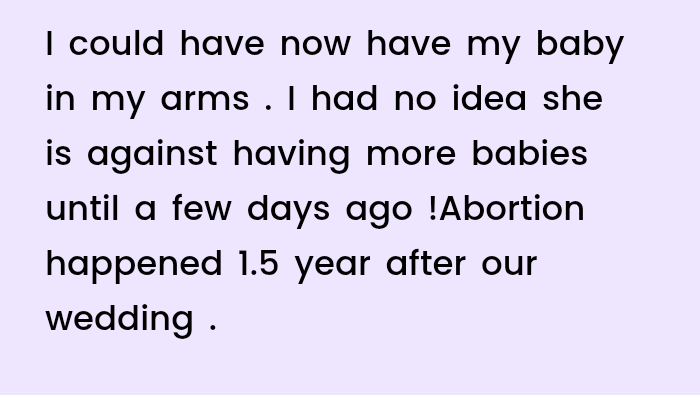
The mention of a previous abortion makes the situation even more emotionally complex.
This aspect of the story often generates strong reactions because it involves deeply personal beliefs.
Regardless of where readers stand politically or morally, the central issue within this relationship remains communication.
The husband believed they were struggling together to build a family.
Instead, he discovers that at one point a pregnancy existed without his knowledge.
Whether readers agree or disagree with how reproductive decisions should be handled within marriage, it’s understandable why learning about such a significant event years later would leave someone feeling shocked, confused, and deeply hurt.
Why the Husband Feels Betrayed
Throughout the article, one emotion appears repeatedly.
Betrayal.
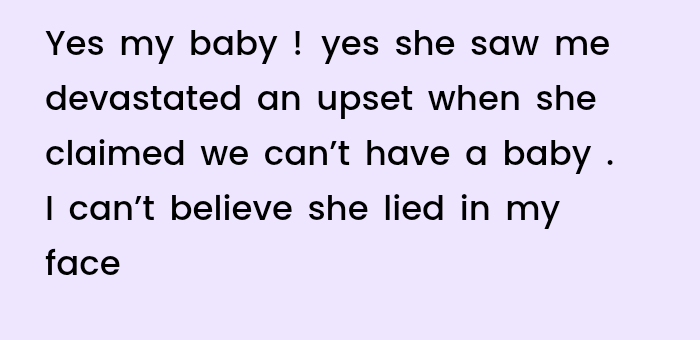
He describes watching his wife see him devastated after believing they couldn’t have children.
He remembers accepting what he thought was infertility.
He remembers giving up on biological fatherhood because he trusted what she told him.
Looking back, every one of those memories now carries new meaning.
That’s often what betrayal feels like.
It doesn’t only damage the present.
It changes how someone remembers the past.
Natalie’s Fear Is Also Important to Understand
While many readers naturally sympathize with the husband, it’s also worth considering the wife’s perspective.
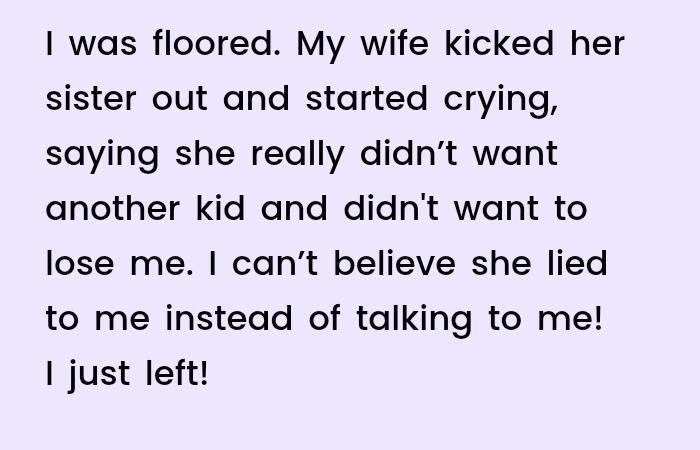
According to her own admission, she feared that telling the truth would cause her to lose him.
Fear can sometimes push people toward decisions they later regret.
Rather than having an honest conversation about not wanting another child, she appears to have chosen avoidance.
Unfortunately, avoiding painful conversations rarely makes problems disappear.
Instead, they often become even larger when the truth eventually emerges.
Her fear may explain her actions, but it does not erase the consequences.
The Daughter Caught in the Middle
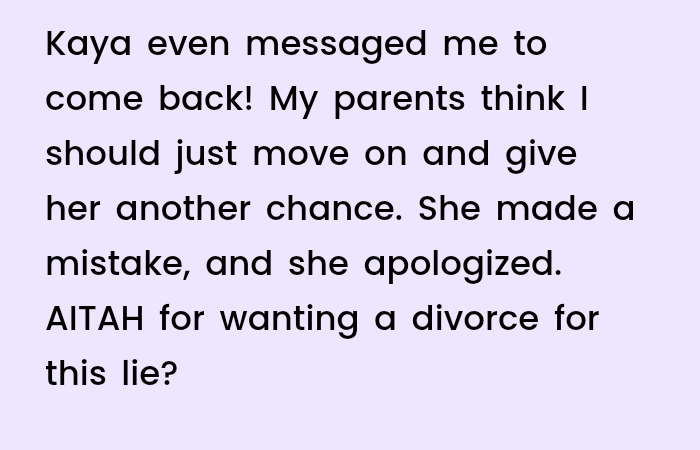
One of the saddest parts of the article involves Kaya.
She has done nothing wrong.
She simply watches the family she knows begin falling apart.
Her message asking him to come home reminds readers that marital conflict rarely affects only the adults involved.
Children often carry emotional burdens they never chose.
Whatever happens between the husband and wife, maintaining the loving father-daughter relationship will likely be one of the most important priorities moving forward.
Can Trust Ever Be Rebuilt?
Many readers will naturally ask whether forgiveness is possible.
The answer depends entirely on the individuals involved.
Forgiveness is rarely about pretending something never happened.
Instead, it’s about deciding whether rebuilding trust feels possible.
Some marriages recover from major betrayals through honesty, counseling, accountability, and time.
Others reach a point where the broken trust feels impossible to repair.
Neither outcome is easy.
Both require enormous emotional work.
Communication Could Have Prevented Years of Pain
One of the biggest lessons from this story is that uncomfortable conversations are almost always healthier than years of deception.
If the wife truly no longer wanted children, an honest discussion before or shortly after marriage may have been painful.
It may even have threatened the relationship.
But it would have allowed both people to make informed choices about their future.
Instead, according to the husband’s account, years passed while one partner believed they were pursuing a shared dream that the other had already abandoned.
Honesty doesn’t guarantee happiness.
But it does allow genuine consent in life-changing decisions.
Love Alone Cannot Replace Trust
The article also reminds readers that love and trust are closely connected but not identical.
A couple can love each other deeply while still struggling to survive serious dishonesty.
Trust acts as the foundation that allows love to feel secure.
When that foundation cracks, even genuine affection may no longer feel enough.
That reality makes stories like this especially heartbreaking because neither outcome feels entirely satisfying.
Staying may feel impossible.
Leaving may feel equally painful.
Final Thoughts
Ultimately, this story isn’t simply about fertility, birth control, or even the desire for children. It’s about honesty, informed choices, and the expectations partners have when they build a life together. Every scene—from the hopeful beginning of the marriage and the emotional infertility journey to the explosive family argument and the painful confession—shows how one hidden truth can reshape years of shared memories. While readers may disagree about what the husband should do next, one lesson remains universal: difficult conversations are almost always less damaging than years of silence. Healthy relationships are built not only on love but also on openness, respect, and the courage to tell the truth, even when that truth is painful.