

What started as an exciting celebration quickly turned into a stressful dilemma after a couple’s carefully planned vacation collided with a close friend’s last-minute wedding changes.
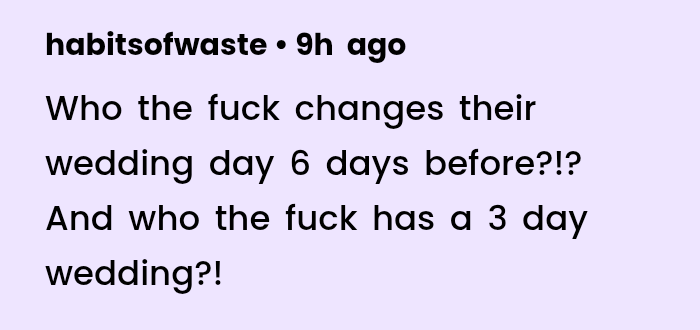
Just days before the ceremony, the wedding dates were unexpectedly moved forward, their baby was suddenly no longer welcome, and the couple was pressured to cancel their non-refundable birthday trip and arrange childcare on their own.
Now they’re left questioning whether standing by their original plans makes them unsupportive friends—or whether they’re simply refusing to pay the price for someone else’s poor planning.





When Poor Planning Collides With Real-Life Responsibilities
At first glance, this story may seem like a simple scheduling conflict between a wedding and a vacation. However, as the details unfold, it becomes clear that the real issue isn’t about choosing a holiday over a friend’s big day—it’s about expectations, respect, communication, and the consequences of last-minute decisions.
Every stage of this story reveals another layer of emotional strain, making it an excellent example of how even happy occasions can become sources of resentment when planning falls apart.
Changing one detail at the last minute often creates a domino effect that impacts every other commitment someone has already made.
Check The Comment Section Below
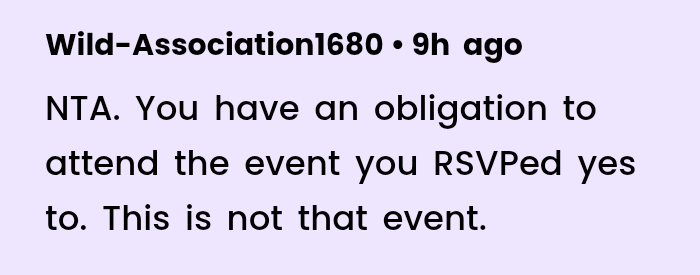
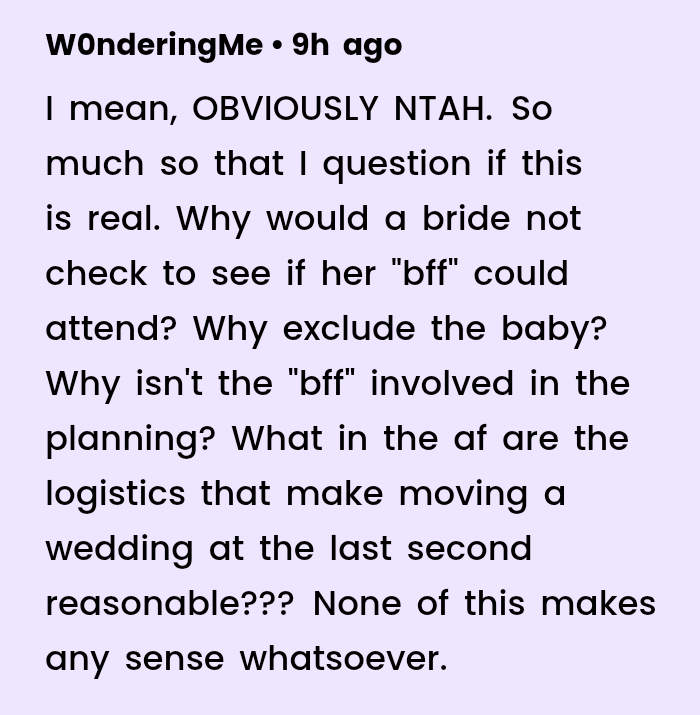
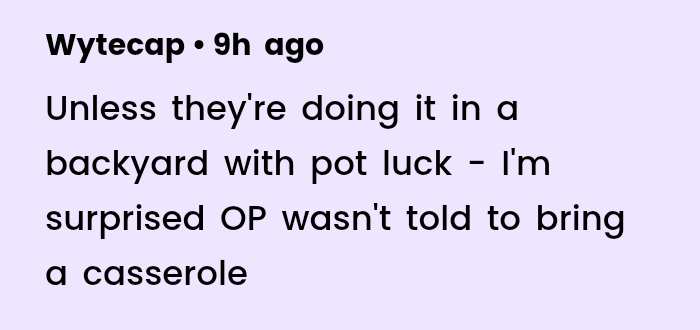
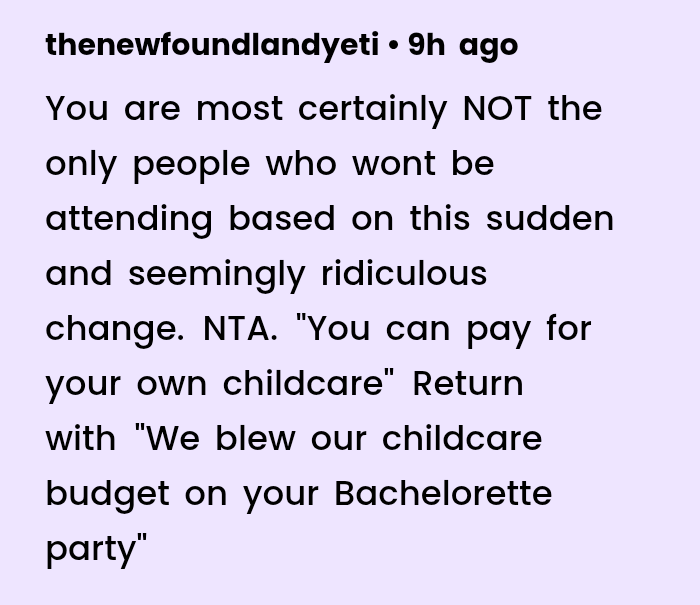
The Excitement of the Wedding Invitation
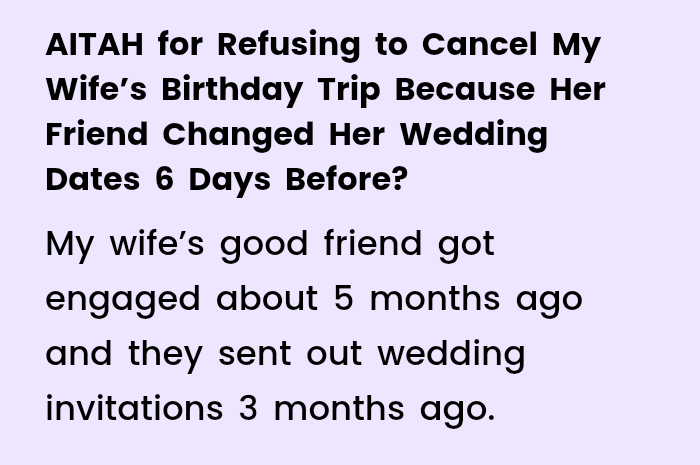
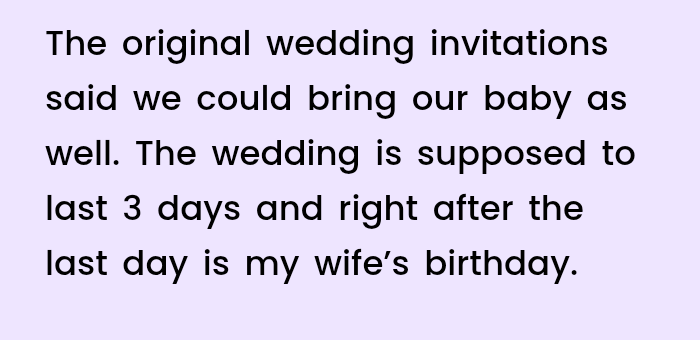
The story begins on a positive note. A close friend gets engaged, invitations are sent months in advance, and everything appears well organized. The invitation clearly states that guests can bring their baby, allowing the couple to make plans without worrying about childcare. Because they have several months’ notice, they organize their calendar around the wedding and even build another meaningful event into the schedule—celebrating the wife’s birthday with a four-day trip to San Diego immediately afterward.
This wasn’t a spontaneous vacation booked on a whim. It was a thoughtful birthday surprise that required planning, financial commitment, and reservations. In healthy friendships, people generally assume that once invitations are sent, the dates are reliable unless an unavoidable emergency occurs.
Planning Around the Original Schedule
One of the most overlooked parts of this situation is the amount of preparation that goes into family travel. Parents rarely make plans casually. Hotels are booked, vacation days are requested from work, transportation is arranged, budgets are set, and childcare logistics are carefully considered.
The couple wasn’t trying to avoid the wedding. They actually arranged their vacation around it, demonstrating that attending the celebration mattered to them. Their planning shows respect for both events.
Ironically, the very effort they put into accommodating the wedding becomes the reason they can’t accommodate the sudden changes later.
The Last-Minute Text Changes Everything
Everything changes with a single message.
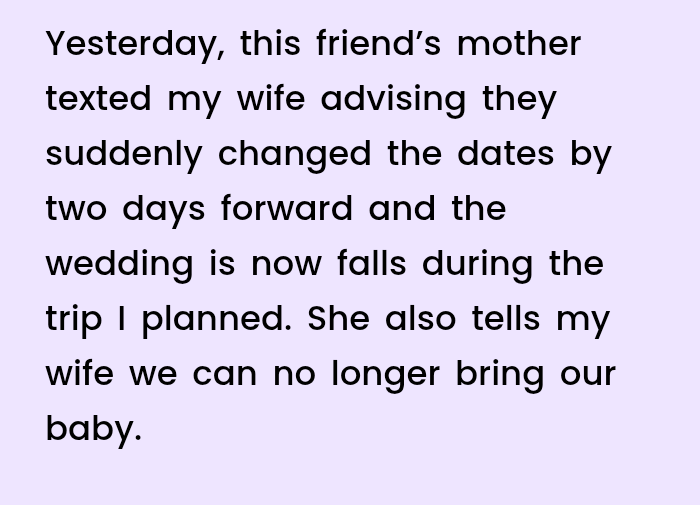
Only a few days before the ceremony, the friend’s mother informs them that the wedding has been moved forward by two days. As if that wasn’t enough, she also announces that children are no longer allowed, meaning their baby is suddenly uninvited.
This transforms the situation from inconvenient into nearly impossible.
Instead of simply adjusting one appointment, the couple now faces several major problems simultaneously:
- Their vacation overlaps with the new wedding dates.
- Their hotel has already been paid for.
- Childcare is no longer available.
- Family members who normally could help aren’t available.
- The emotional excitement surrounding the wife’s birthday plans is suddenly overshadowed by stress.
Why the Baby Policy Matters
Some readers may focus only on the changed dates, but the baby policy is equally significant.
Parents make attendance decisions based on the information they’re given. When an invitation explicitly welcomes children, families understandably assume those arrangements are settled. Removing that option less than a week before the event leaves parents scrambling for solutions that often don’t exist.
Finding trustworthy childcare isn’t something most parents can accomplish overnight.
Many families rely on grandparents, relatives, or longtime babysitters, all of whom may already have their own schedules.
Expecting parents to instantly solve that problem ignores the reality of raising young children.
The Financial Consequences
Another important factor is money.
Travel reservations frequently involve non-refundable deposits or cancellation fees. Hotels, flights, rental cars, restaurant reservations, and vacation activities can represent hundreds—or even thousands—of dollars in expenses.
The couple isn’t simply choosing a vacation over a wedding.
They’re being asked to absorb financial losses caused by someone else’s scheduling decisions.
Few people would willingly throw away money because another person changed plans with less than a week’s notice.
Financial responsibility doesn’t disappear simply because the occasion is a wedding.
The Emotional Pressure Begins
Perhaps the most uncomfortable part of the story comes after the couple politely declines.
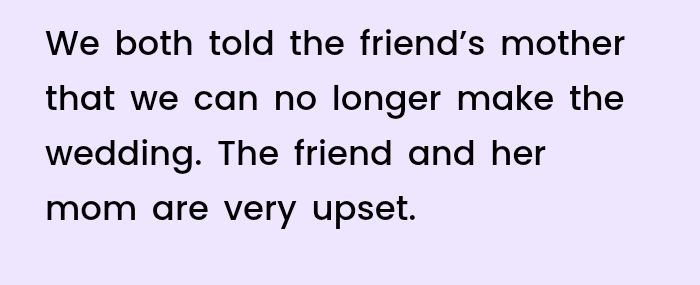
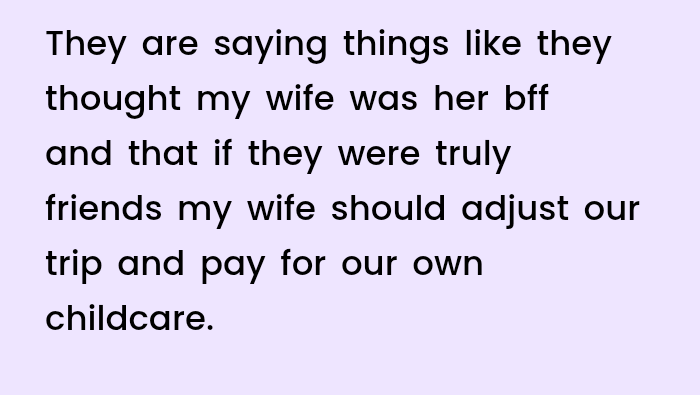
Rather than understanding their situation, the friend and her mother respond emotionally.
Comments suggesting that “a true best friend would come” shift the conversation away from practical realities and toward guilt.
This type of emotional pressure appears surprisingly often in relationships.
Instead of acknowledging the inconvenience created by the schedule change, the responsibility is redirected onto the guests.
The implication becomes:
“If you cared enough, you’d find a way.”
Unfortunately, real life doesn’t always work that way.
Love and friendship cannot magically create childcare, refund hotel reservations, or rearrange work schedules.
A Pattern of Poor Planning
The story also provides valuable background.
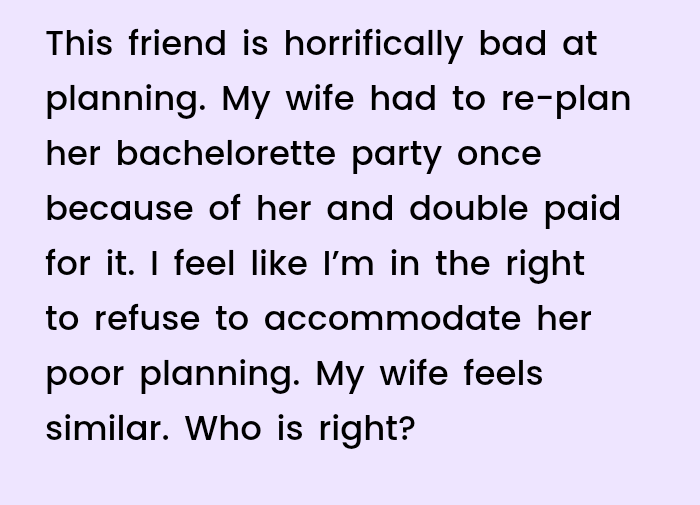
The wife previously organized and paid for the friend’s bachelorette party because the bride struggled with planning.
This detail changes the context.
Instead of viewing the wedding changes as an isolated accident, readers begin to see a recurring pattern where other people repeatedly compensate for one person’s lack of organization.
Patterns matter.
Most friendships survive one mistake.
Repeatedly expecting friends to solve preventable problems, however, gradually erodes goodwill.
Boundaries Are Not Betrayal
Many people struggle with guilt when saying no to someone they care about.
However, healthy relationships depend on boundaries.
A boundary isn’t punishment.
It simply acknowledges that another person’s emergency doesn’t automatically become your obligation.
The couple isn’t demanding that the wedding return to its original date.
They aren’t criticizing the marriage.
They’re simply saying they cannot realistically attend under the new circumstances.
That distinction is important.
Declining because circumstances changed is very different from declining because you don’t value the friendship.
Weddings Can Create Unrealistic Expectations
Modern weddings often carry enormous emotional pressure.
Couples invest significant money, time, and energy into making everything perfect.
Unfortunately, that stress sometimes leads people to expect unlimited flexibility from everyone around them.
Guests are expected to:
- Rearrange vacations.
- Take unpaid time off work.
- Spend large amounts on travel.
- Buy expensive gifts.
- Attend multiple events.
- Find childcare.
- Ignore financial losses.
While friends naturally want to celebrate together, there comes a point where expectations become unreasonable.
Respect works both ways.
Hosts also have a responsibility to respect the commitments their guests have already made.
What Could Have Been Done Better?
Several simple actions might have prevented this conflict altogether.
The wedding organizers could have immediately apologized for the inconvenience before asking about availability.
They could have explained why the dates needed to change.
They could have acknowledged that some guests might be unable to attend.
Most importantly, they could have accepted “no” gracefully without questioning the friendship.
Likewise, the couple handled the situation respectfully by informing the family promptly instead of waiting until the last minute.
Sometimes disappointment is unavoidable.
Blame isn’t.
The Bigger Lesson
Stories like this resonate because they reflect a common challenge in adult friendships: balancing loyalty with responsibility.
As people get older, they juggle careers, marriages, children, finances, and personal commitments. Supporting friends remains important, but so does honoring promises already made to one’s spouse and family.
Healthy friendships recognize that life sometimes gets in the way. They don’t measure loyalty by how much money someone is willing to lose or how much inconvenience they’re willing to endure. Instead, they are built on understanding, flexibility, and mutual respect.
In the end, this conflict isn’t really about a wedding or a vacation. It’s about whether friendships should require people to sacrifice their own carefully planned lives to compensate for another person’s last-minute decisions. The strongest relationships are those where compassion exists on both sides, and where unexpected changes are met with understanding rather than guilt, allowing friendships to survive even when attendance at a single event isn’t possible.