

Born from an affair that forever divided two families, a 15-year-old girl recounts a childhood filled with rejection, emotional neglect, and years of feeling like the unwanted reminder of everyone else’s mistakes.
After enduring constant blame, exclusion, and heartbreaking indifference from the people who were supposed to love her, one humiliating family gathering becomes the breaking point, leading her to confess that she doesn’t love any of them and never will.
Ultimately, this article is not simply about a teenager telling her family she doesn’t love them. It is about the emotional consequences of growing up feeling unwanted, unheard, and consistently treated as the reminder of an affair she had no role in creating.





A Story About Growing Up Unwanted Instead of Unloved
Some stories are difficult to read because they force us to confront uncomfortable truths about family life. This article is one of them.
On the surface, it asks whether a teenage girl was wrong for telling her family she doesn’t love them. But underneath that question lies years of emotional neglect, rejection, favoritism, and unresolved guilt from choices made long before she was born.
Rather than being about a single angry outburst, this is a story about what can happen when a child spends years feeling like a living reminder of other people’s mistakes.
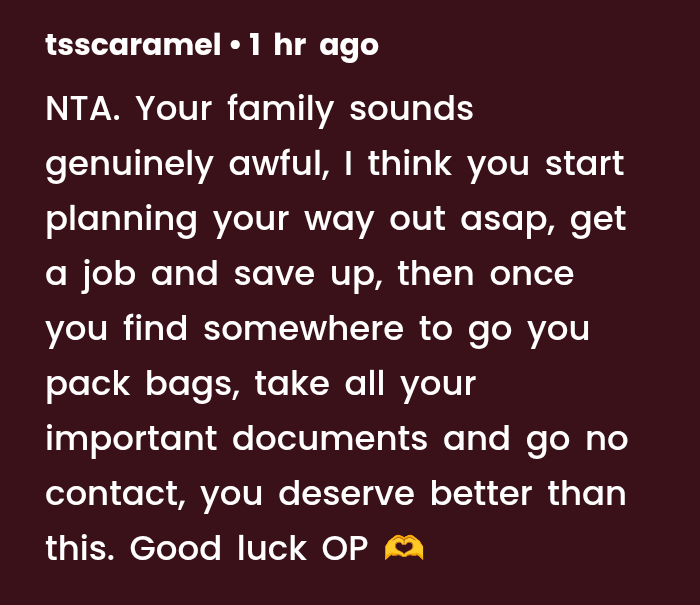
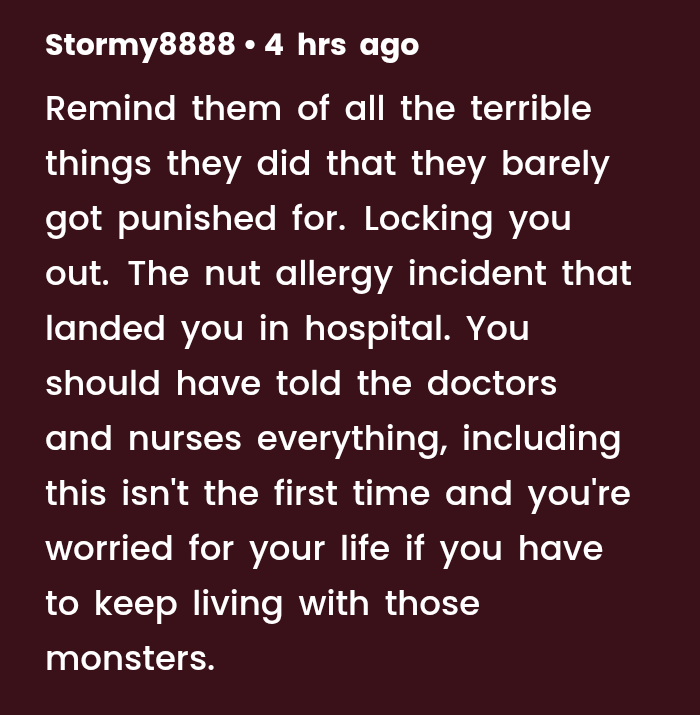
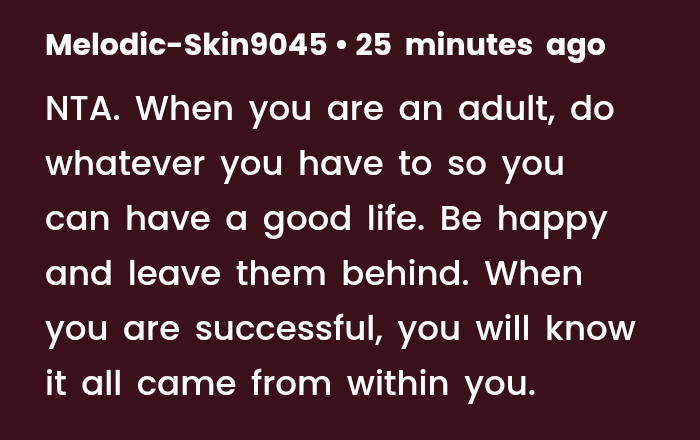
Check The Comment Section Below




Analysis
One of the most heartbreaking aspects of the article is that the narrator repeatedly reminds readers she never chose the circumstances of her birth. She simply grew up carrying consequences created entirely by adults.
The Affair Happened Before She Ever Had a Choice
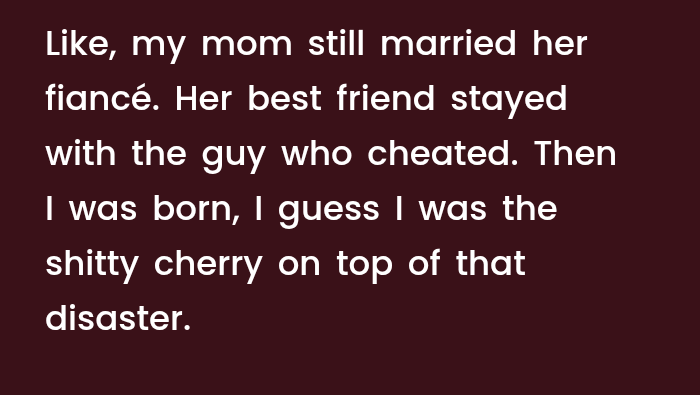
The story begins with the complicated history between two families.
Her mother had an affair with her best friend’s husband.
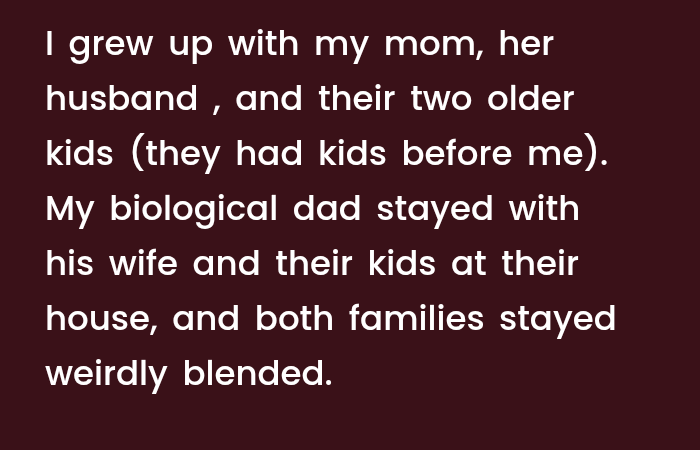
Instead of separating completely, both marriages continued.
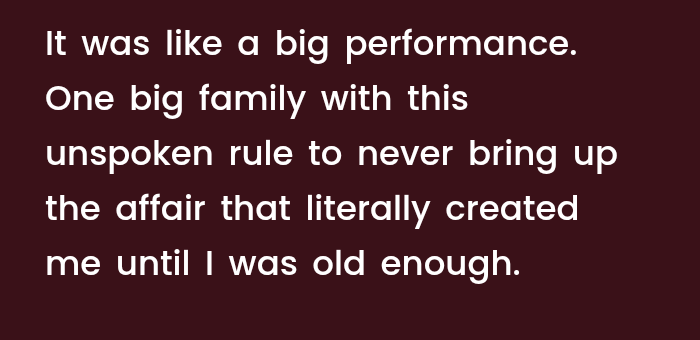
The result was an unusual family dynamic where everyone attempted to move forward while pretending the affair no longer mattered.
Unfortunately, pretending something painful never happened rarely makes the pain disappear.
Instead, it often resurfaces in unexpected ways.
For the adults, silence may have felt easier.
For the child born from that affair, silence became another form of isolation.
Children Notice More Than Adults Think
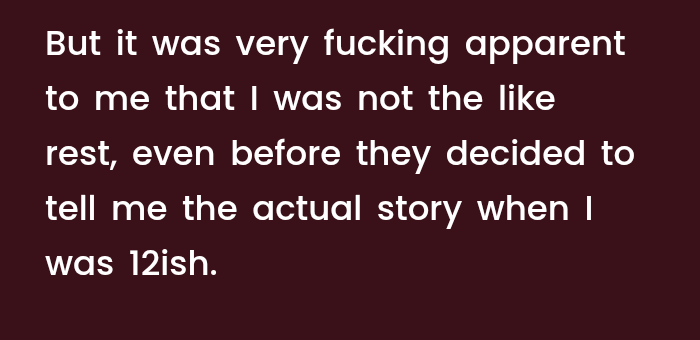
Long before anyone officially explained the affair, the author already knew something was different.
Children are remarkably observant.
They notice different treatment.
They notice who receives hugs.
They notice who gets defended after making mistakes.
They notice who is included—and who is merely tolerated.
Even when adults avoid difficult conversations, children often understand emotional dynamics far earlier than parents realize.
The article suggests she recognized she wasn’t fully accepted years before anyone explained why.
Growing Up Feeling Like the Outsider
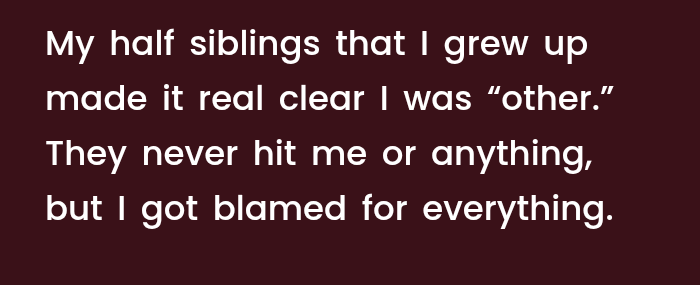
One of the strongest themes throughout the article is exclusion.
She describes living in the same home as her siblings while constantly feeling like she occupied a different place within the family.
She wasn’t necessarily abused physically.
Instead, she describes something many psychologists refer to as emotional neglect.
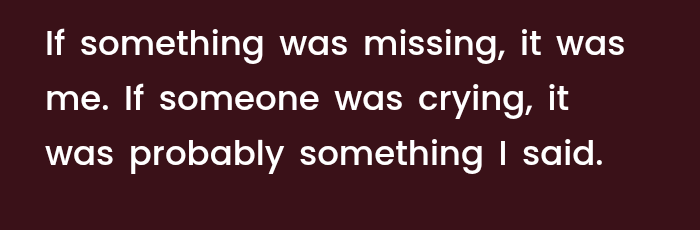
Being blamed more often.
Receiving less affection.
Feeling overlooked.
Watching others receive warmth that never reaches you.
These experiences may appear small individually.
Over years, however, they can profoundly shape a child’s sense of self-worth.
Emotional Neglect Can Leave Invisible Scars
Unlike physical abuse, emotional neglect often leaves no visible evidence.
There are no bruises.
No broken bones.
No dramatic photographs.
Yet many adults who experienced emotional neglect during childhood describe lifelong struggles with self-esteem, trust, anxiety, and relationships.
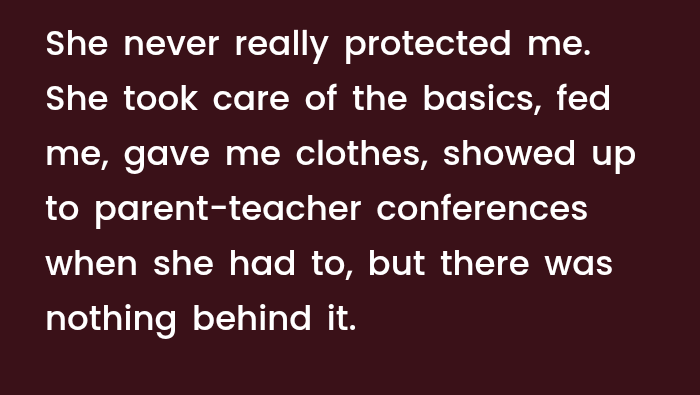
The author repeatedly explains that basic needs were met.
She had food.
Clothes.
School.
Medical care.
But love cannot be measured only through necessities.
Children also need affection, encouragement, protection, and emotional security.
Those needs appear largely absent throughout much of her childhood.
A Mother’s Role Extends Beyond Providing the Basics
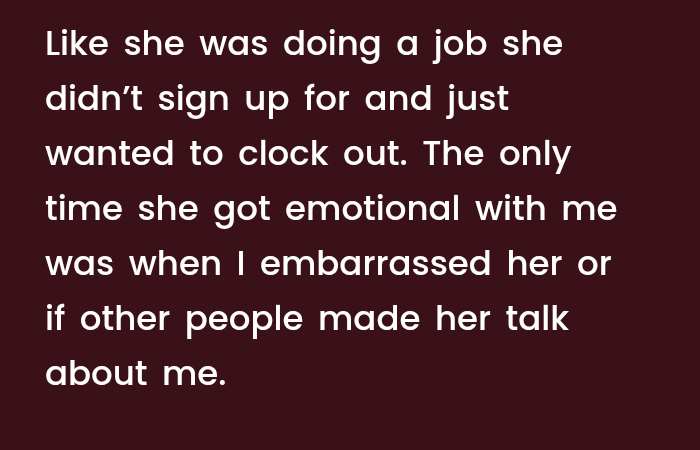
One painful detail appears when the narrator explains that her mother only became emotional when she caused embarrassment or forced conversations about the affair.
That statement reveals a relationship lacking emotional connection.
Parents inevitably make mistakes.
No parent is perfect.
However, children generally need to believe their parents are emotionally present and willing to protect them.
According to the article, she rarely experienced that feeling.
Instead, she often felt like an obligation rather than someone genuinely cherished.
The Man She Lived With Never Truly Became Her Father
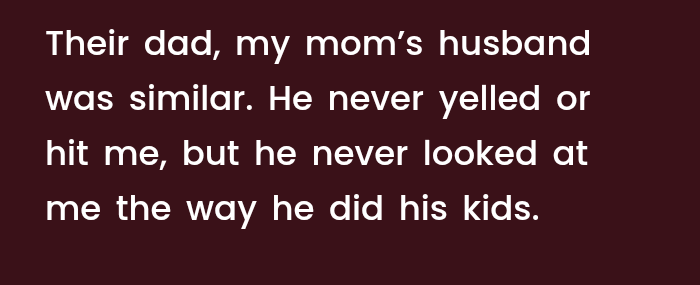
The mother’s husband presents another complicated relationship.
He wasn’t openly cruel.
He didn’t physically hurt her.
Yet she carefully describes years of emotional distance.
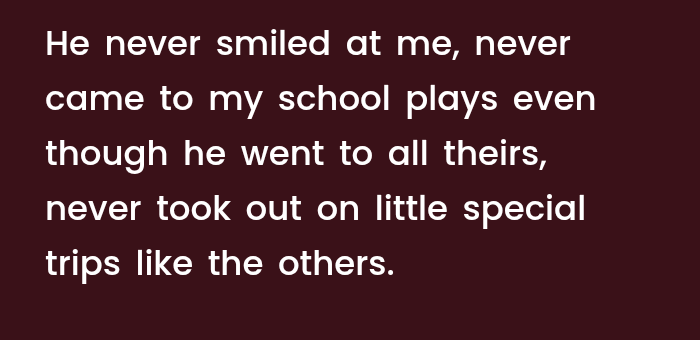
He attended school events for his biological children but not hers.
He planned outings with them.
He smiled at them differently.
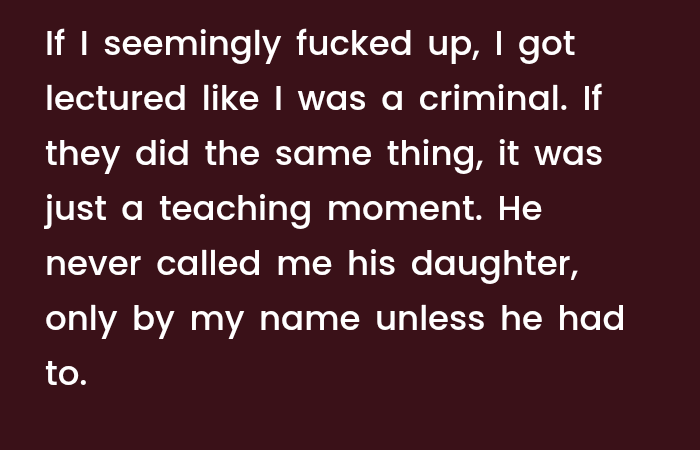
He disciplined her more harshly.
Perhaps most painful of all, she says he rarely referred to her as his daughter.
Children often remember these seemingly ordinary moments for decades because they quietly communicate where they belong—or don’t belong.
The Other Family Wasn’t Much Different
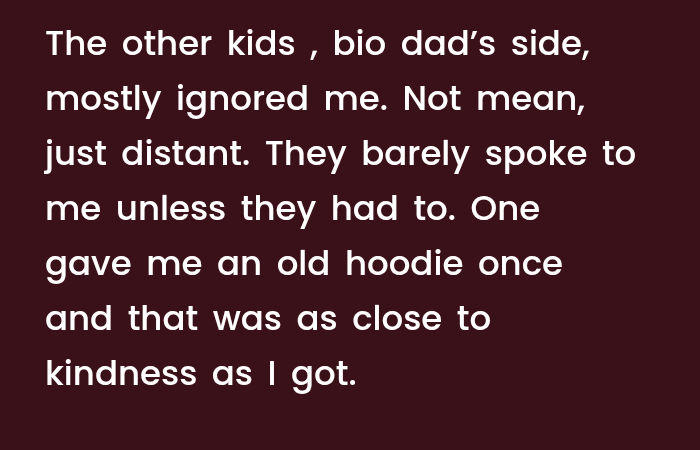
The biological father’s household appears emotionally distant as well.
Unlike her maternal siblings, they weren’t openly hostile.
Instead, they mostly ignored her.
While indifference may seem less harmful than direct cruelty, consistent emotional distance can still leave a child feeling invisible.
One old hoodie becomes memorable because it represented one of the few moments resembling kindness.
That small detail speaks volumes about how little affection she experienced elsewhere.
The Allergy Incident Changed Everything
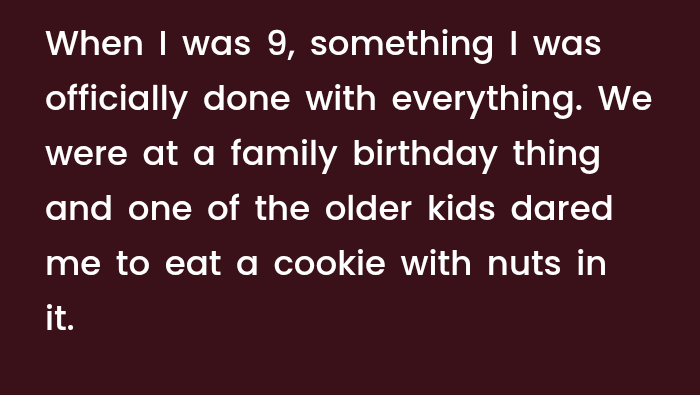
Perhaps the most heartbreaking scene occurs when she recalls the birthday party at nine years old.
Other children encouraged her to interact with food containing something she was allergic to.
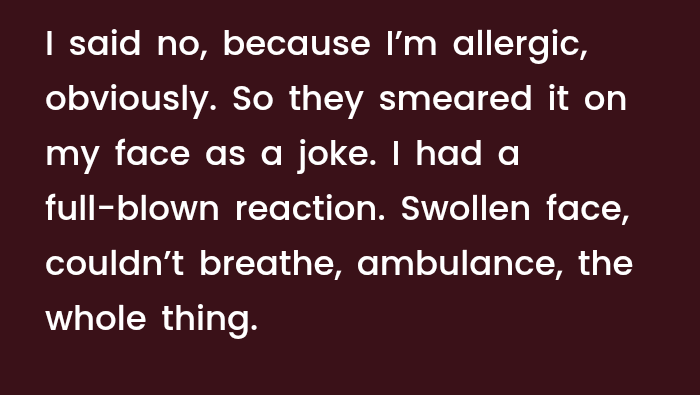
According to her account, they smeared it on her face despite knowing the danger.
The result was a serious allergic reaction requiring emergency medical attention.
Whether intended as a prank or not, allergies are never something to joke about.
This moment represents more than childhood teasing.
It became the point where she emotionally disconnected from the people around her.
Even more painful than the prank itself was what followed.
Feeling Unprotected by the Adults
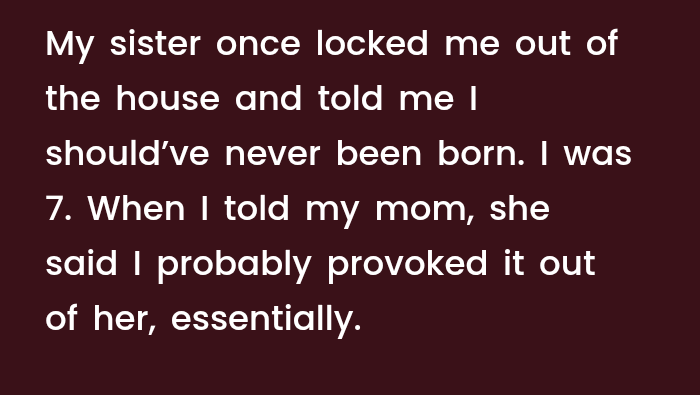
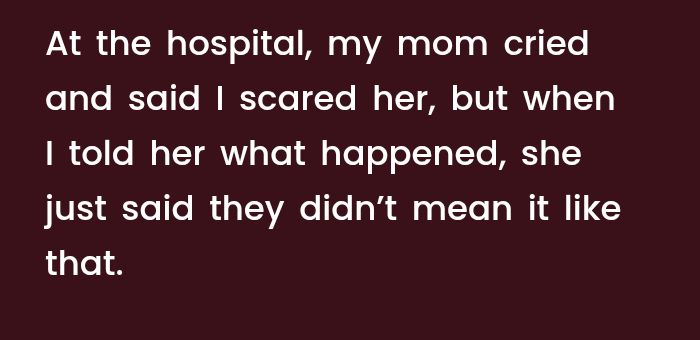
After the hospital visit, she expected protection.
Instead, she recalls hearing that the other child “didn’t mean it.”
That response appears to have left a lasting emotional impact.
Children often judge situations less by what happened and more by how trusted adults respond afterward.
When adults minimize harmful experiences, children may begin believing their pain doesn’t matter.
Whether intentional or not, dismissing those emotions can deepen feelings of abandonment.
Emotional Distance Became a Survival Strategy
One particularly revealing moment is when she explains that she stopped loving them years earlier.
Instead of continuing to seek affection, she reduced every relationship to something resembling polite roommates.
This emotional withdrawal wasn’t presented as revenge.
Rather, it appears to have become self-protection.
Many people experiencing repeated rejection eventually stop expecting warmth altogether because lowering expectations feels safer than repeated disappointment.
The “Family Healing Weekend”
Ironically, the family gathering intended to promote healing becomes the moment everything finally falls apart.
This illustrates an important reality.
Healing cannot happen through appearances alone.
Real reconciliation requires honesty.
Accountability.
Listening.
Empathy.
Simply gathering everyone together without addressing years of unresolved pain rarely creates genuine healing.
Sometimes it simply provides another opportunity for old wounds to reopen.
The Joke That Became the Final Straw
The final trigger seems surprisingly small compared with everything else.
One sibling jokes that she causes drama simply by existing.
Everyone laughs.
While outsiders may see this as harmless teasing, context changes everything.
After years of feeling unwanted, hearing laughter directed toward your very existence carries enormous emotional weight.
Sometimes people don’t explode because of one comment.
They explode because that comment becomes the final drop after years of accumulated hurt.
The Words That Shocked Everyone
Her response was immediate and brutally honest.
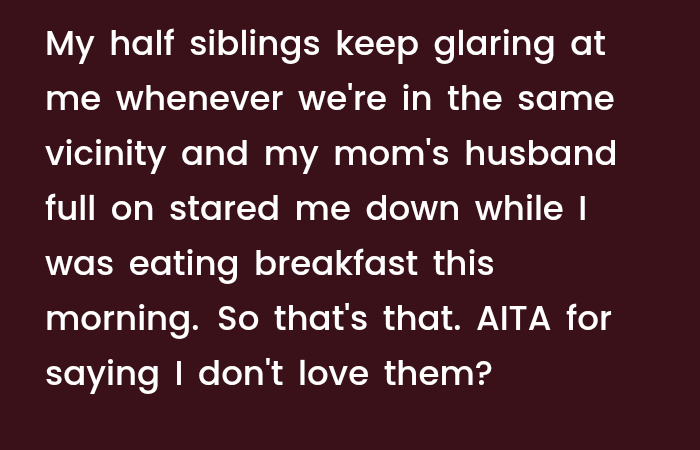
She declared she didn’t love them and never would.
Some readers may view those words as unnecessarily harsh.
Others may interpret them as years of suppressed pain finally reaching the surface.
Regardless of opinion, the intensity of her reaction makes sense when viewed alongside everything described earlier.
People rarely reach emotional breaking points overnight.
They usually arrive there one painful experience at a time.
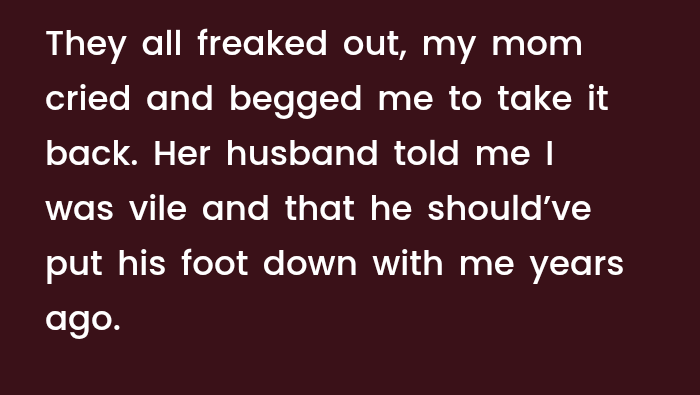
The Family’s Reaction
Afterward, the adults express shock.
Her mother cries.
The man who raised her becomes angry.
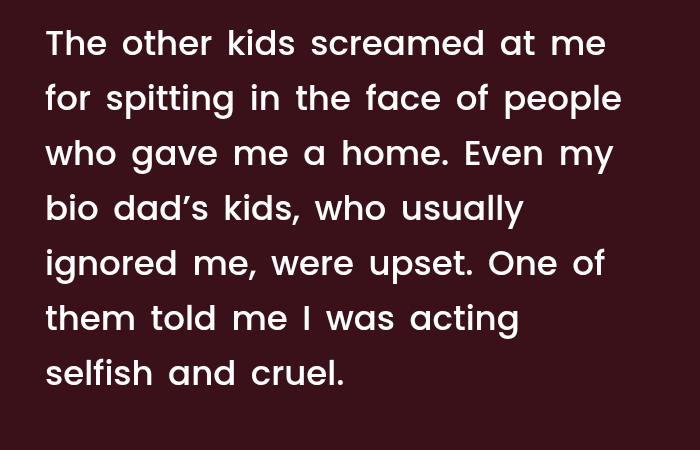
Her siblings accuse her of being ungrateful.
Interestingly, very little attention appears focused on the reasons she reached this point.
Instead, the discussion quickly shifts toward whether her words were inappropriate.
This often happens during family conflict.
People respond to the emotional explosion while overlooking the years of pressure that caused it.
Can Love Be Forced?
One difficult question raised by this article is whether love can exist without emotional safety.
Love generally grows through trust, protection, consistency, and acceptance.
When those experiences are repeatedly absent, emotional distance often develops naturally.
While some readers may believe family bonds should remain unconditional, others recognize that healthy relationships require mutual care—not simply shared biology or legal ties.
The Long-Term Impact of Childhood Rejection
Growing up feeling unwanted can affect someone well into adulthood.
Many individuals who experience similar childhood environments struggle with:
- Difficulty trusting others.
- Fear of abandonment.
- Low self-esteem.
- Anxiety and depression.
- Challenges forming healthy relationships.
- Emotional withdrawal.
- Feeling responsible for other people’s mistakes.
These effects don’t mean recovery is impossible.
With supportive relationships, counseling, and time, many people gradually rebuild confidence and learn that they deserve genuine love and acceptance.
Final Thoughts
Every scene—from the confusing childhood, the unequal treatment, and the terrifying allergy incident to the failed “healing” weekend and emotional confrontation—illustrates how years of unresolved pain can eventually erupt in one heartbreaking moment. Whether readers agree with her words or not, the story serves as a powerful reminder that children are never responsible for the circumstances of their birth. Families cannot erase years of emotional neglect with a single weekend of forced togetherness. Genuine healing begins with accountability, empathy, honest conversations, and a willingness to acknowledge wounds that have been ignored for far too long.