
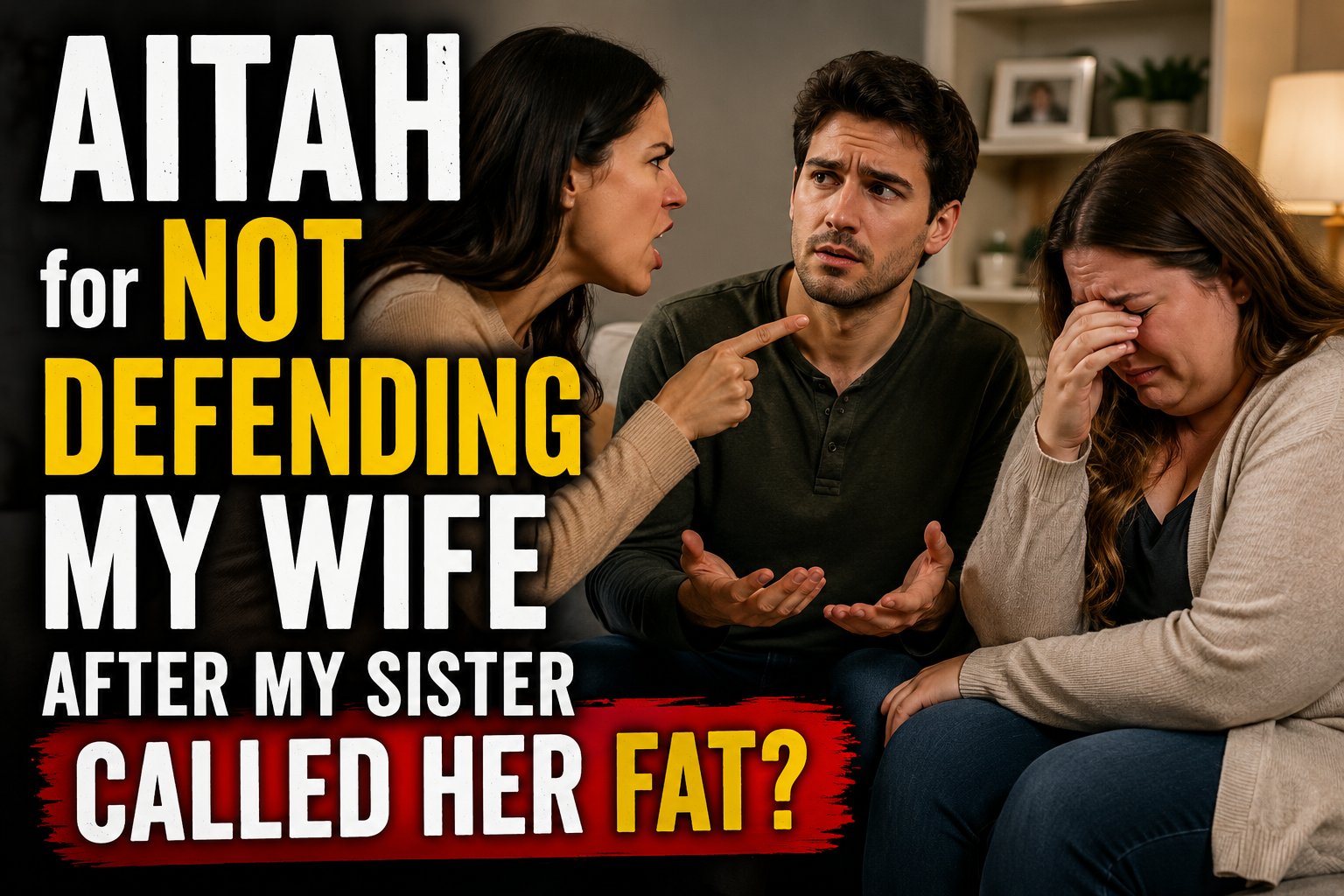
A family visit takes a dramatic turn when a long-standing disagreement erupts into a deeply personal argument.
After years of watching his wife repeatedly criticize his sister’s life choices, one husband’s sister finally snaps and fires back with a cruel comment about his wife’s weight.
Caught completely off guard, he freezes instead of defending his wife, leaving her devastated and questioning where his loyalty truly lies.

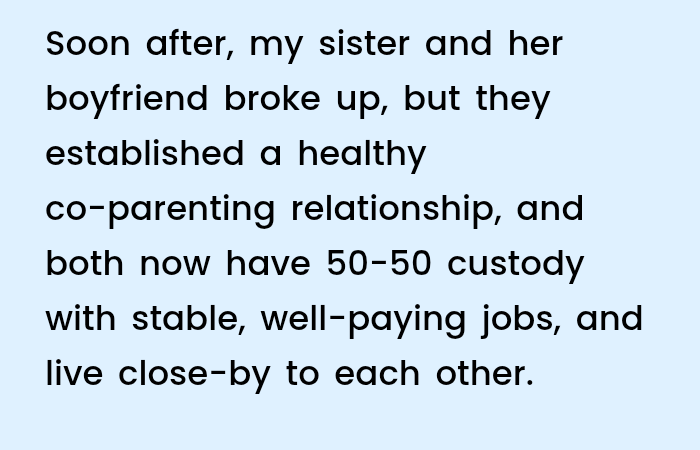
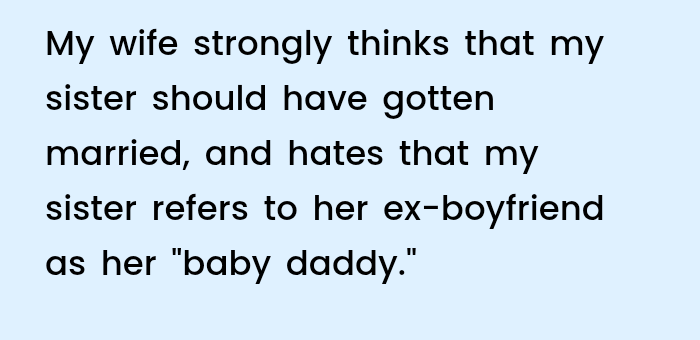
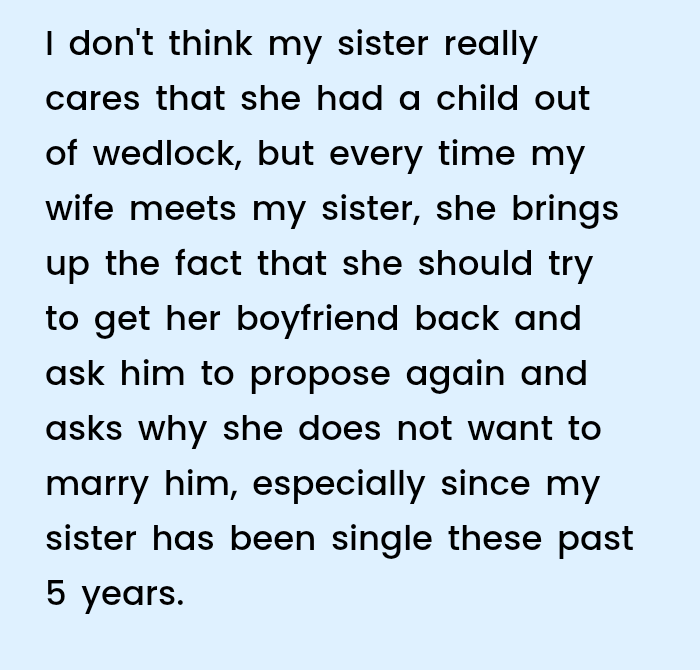
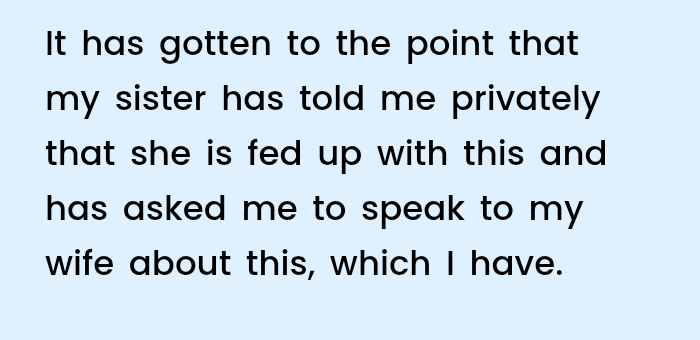
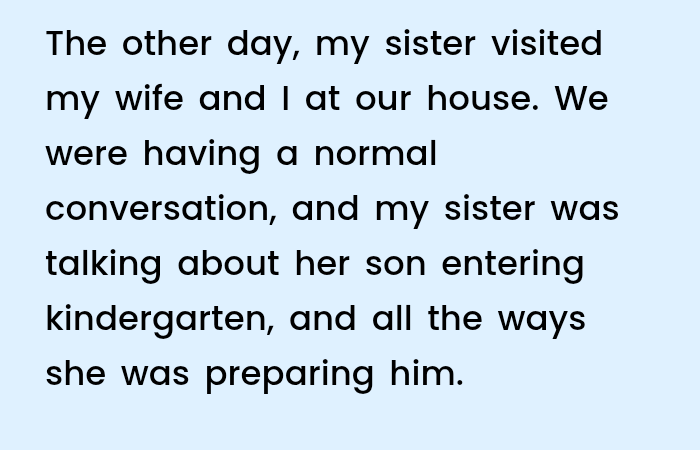

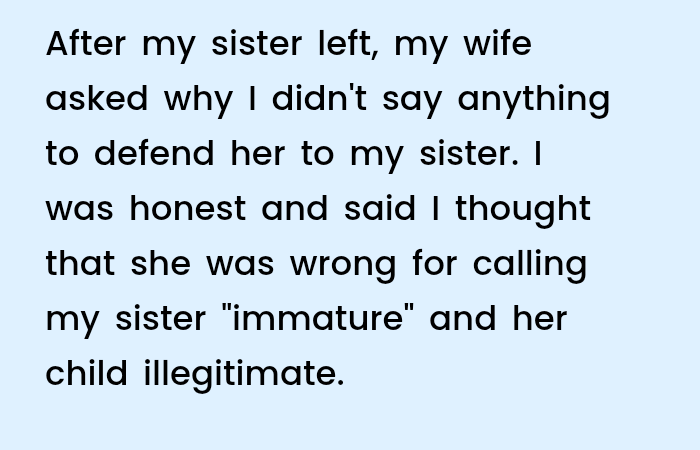
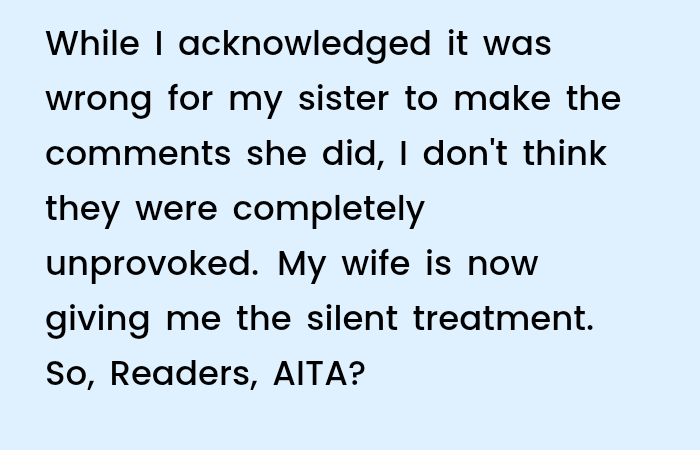
Some arguments seem to explode out of nowhere, but in reality they have been building quietly for months or even years. This story is a perfect example.
On the surface, it appears to be about one harsh comment during a family visit, but the real conflict had been developing long before anyone raised their voice.
Repeated criticism, hurt feelings, and unresolved frustration eventually reached a point where one conversation turned into a painful confrontation that affected everyone involved.
Check The Comment Section Below
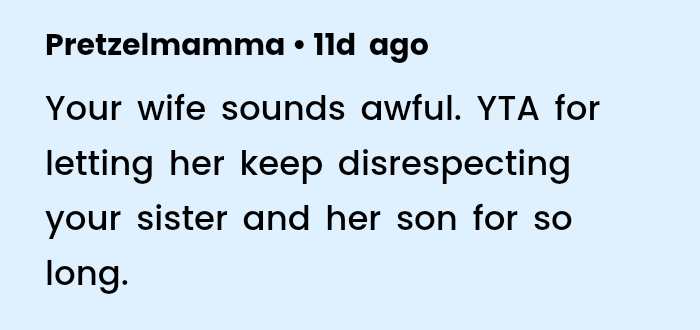

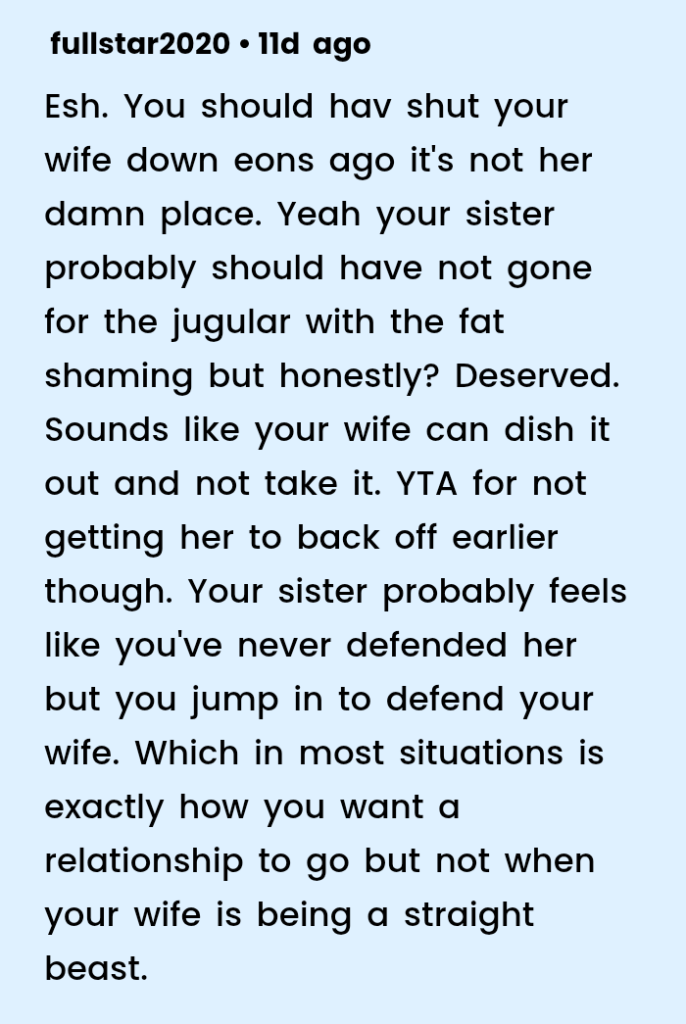

Analysis
When Family Tensions Finally Reach a Breaking Point
Situations like this remind us that the harshest arguments are often the result of many smaller issues that were never fully addressed.
The Wife’s Concerns Crossed Into Repeated Judgment
One of the central themes in this story is the difference between expressing an opinion once and repeatedly judging someone else’s life choices.
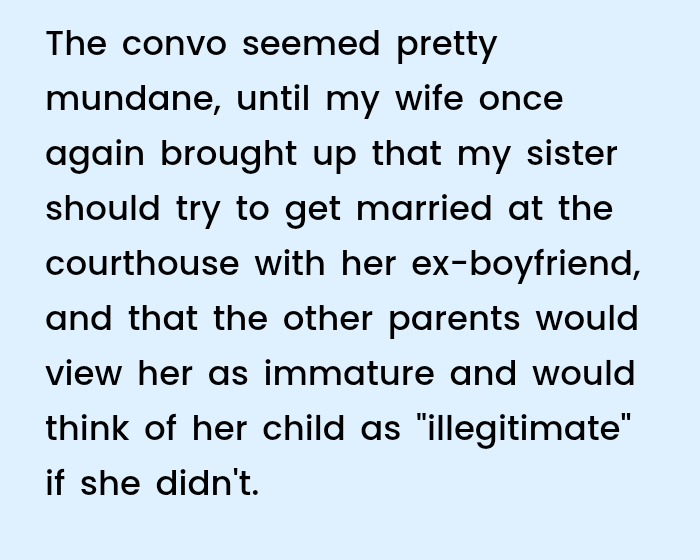
The wife clearly believed that marriage should come before raising children and felt strongly that her sister-in-law should reconcile with her former partner. While everyone is entitled to personal beliefs and values, repeatedly bringing up someone else’s past relationship—especially after being asked to stop—can feel less like concern and more like criticism.
The sister had already explained that she didn’t want to marry her former boyfriend and had successfully built a healthy co-parenting relationship. Whether others agree with that decision or not, it remained her personal choice.
Respecting another adult’s decisions doesn’t always mean agreeing with them. Sometimes it simply means recognizing that their life belongs to them.
Parenting Looks Different for Every Family
Another important topic raised by this story is the changing definition of family.
Modern families come in many forms. Some parents are married, some are divorced, some co-parent successfully without ever marrying, and others raise children on their own. What matters most for a child’s well-being is not necessarily whether their parents are married, but whether they are loved, supported, and provided with a stable environment.
From the information shared, the sister and her former partner appeared to have established a respectful co-parenting arrangement that worked well for their child.
Labeling a child as “illegitimate” or suggesting other parents would judge them can understandably feel deeply offensive because it shifts criticism away from an adult’s decisions and toward an innocent child.
Hurtful Words Often Lead to Hurtful Responses
Unfortunately, once emotions become heated, people often stop trying to solve the problem and begin trying to hurt each other.
That appears to be exactly what happened here.
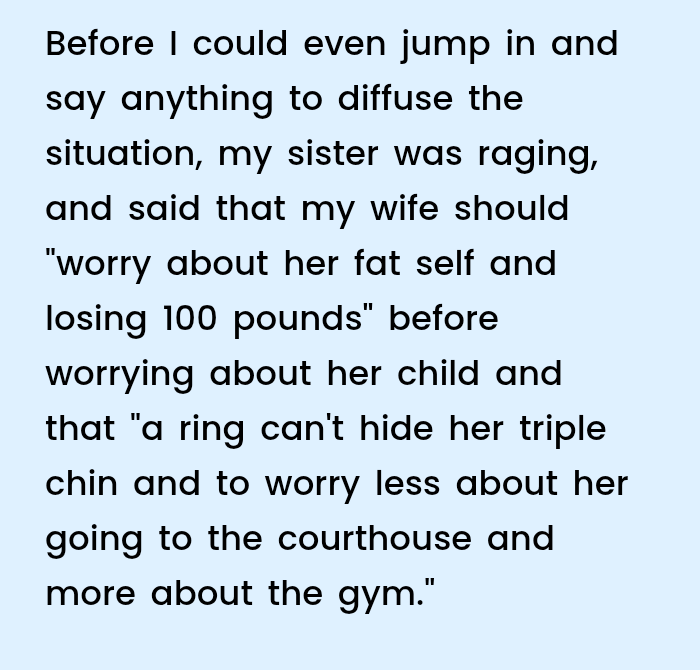
Instead of calmly defending her choices, the sister responded with an intensely personal attack on the wife’s appearance.
Comments about someone’s weight, body, or physical appearance can leave lasting emotional scars, especially when they target an insecurity the other person already struggles with.
Body-shaming rarely solves disagreements.
It simply creates new wounds while leaving the original conflict unresolved.
Two Wrongs Rarely Make a Right
An important lesson from this story is that someone can be provoked and still respond in an unhealthy way.
The sister may have reached her breaking point after years of repeated criticism.
That frustration is understandable.
However, insulting someone’s appearance is generally unlikely to improve the situation.
Likewise, repeatedly criticizing someone’s personal life and parenting choices isn’t constructive either.
Both actions caused harm.
Recognizing that doesn’t require pretending both behaviors were equally damaging—it simply acknowledges that conflict often escalates when everyone begins responding emotionally instead of thoughtfully.
Freezing Is a Common Human Response
Many readers immediately focus on the husband’s reaction—or lack of one.
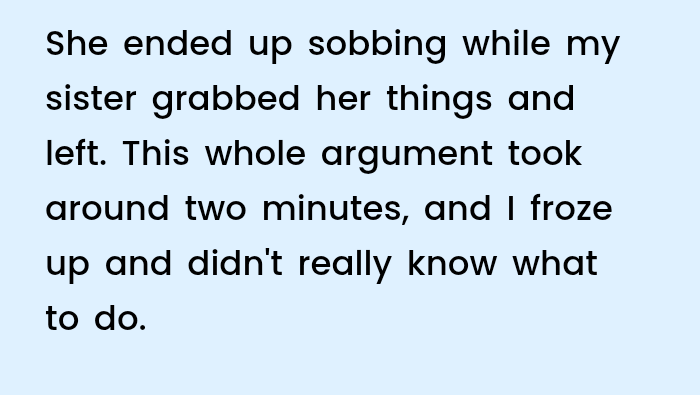
He didn’t defend his wife.
He also didn’t defend his sister.
He froze.
Psychologists often describe four common stress responses:
- Fight
- Flight
- Freeze
- Fawn
Most people are familiar with fighting or walking away, but freezing is just as real. When confronted with sudden conflict, especially involving two loved ones, some people become overwhelmed and struggle to respond at all.
Freezing doesn’t necessarily mean someone agrees with what was said.
It often means their brain is struggling to process multiple emotions at once.
Understanding this response doesn’t automatically excuse the silence, but it helps explain why people sometimes fail to react the way they wish they had afterward.
Marriage Naturally Creates Expectations of Loyalty
Although freezing is understandable, the wife’s disappointment is understandable too.
Marriage creates an expectation that spouses will protect and support one another, particularly during moments of public embarrassment or emotional pain.
From her perspective, she had just been insulted in her own home and looked toward her husband for reassurance.
When none came, she likely felt abandoned.
Whether or not she contributed to the argument beforehand, emotional support from a spouse often carries enormous importance during vulnerable moments.
Feeling alone in those moments can hurt almost as much as the original insult.
Family Loyalty Can Become Complicated
This situation also highlights one of the most difficult balancing acts in adult life—managing loyalty between a spouse and close family members.
Many people believe a husband or wife should always defend their spouse.
Others believe accountability should come before loyalty when a spouse behaves unfairly.
Reality is often more complicated.
Supporting a spouse doesn’t necessarily mean agreeing with every action they take.
Likewise, recognizing that someone provoked an argument doesn’t mean they deserved to be insulted.
Healthy relationships often require separating the behavior from the person.
It’s possible to acknowledge that someone was wrong while still comforting them afterward.
Communication Could Have Prevented This
One encouraging aspect of this story is that the sister had previously spoken privately to her brother about the repeated comments.
Unfortunately, whatever conversation took place afterward didn’t fully solve the issue.
This highlights how important follow-through can be.
When someone sets a boundary, consistently respecting it prevents resentment from building.
Ignoring those boundaries often leads to emotional explosions like the one described here.
Difficult conversations are uncomfortable, but they are usually far easier than repairing the damage caused when frustrations boil over.
Body-Shaming Is Never a Healthy Solution
Society has become increasingly aware of the emotional impact of body-shaming.
Weight-related insults often linger long after arguments end because they target something deeply personal.
People rarely know another person’s health journey, medical history, or emotional struggles.
Even when spoken in anger, these comments can damage self-esteem and trust.
Disagreements should focus on behaviors and choices—not physical appearance.
Respectful conflict is still possible without attacking someone’s body.
Healthy Boundaries Protect Relationships
This story also demonstrates why boundaries are so important within families.
The sister had clearly communicated that she didn’t want her personal relationship discussed repeatedly.
The wife continued raising the topic.
Eventually, frustration replaced patience.
Boundaries aren’t meant to push people away.
They’re meant to preserve relationships by preventing repeated sources of conflict.
Listening when someone says, “Please stop bringing this up,” can prevent far greater problems later.
Healing After the Argument
Repairing relationships after an argument like this will require honesty from everyone involved.
The wife may need to acknowledge that repeatedly criticizing her sister-in-law’s personal choices contributed to the tension.
The sister may need to apologize for making deeply personal remarks about appearance.
The husband may need to recognize why his silence hurt his wife, even if freezing wasn’t intentional.
Healing usually begins when each person focuses less on proving they were right and more on understanding how their actions affected others.
Accountability and empathy often rebuild relationships far more effectively than blame.
Final Thoughts
This story is about much more than one cruel comment or one awkward moment of silence. It’s about boundaries, respect, family dynamics, and the difficult position people can find themselves in when the people they love are in conflict with one another. While the wife’s repeated criticism, the sister’s body-shaming response, and the husband’s silence each played a role, none of these moments happened in isolation. They were the result of unresolved issues that had been building over time.
The hopeful takeaway is that relationships can recover when people are willing to reflect on their own actions as much as they examine everyone else’s. Families don’t become stronger by avoiding difficult conversations—they become stronger when those conversations are approached with empathy, accountability, and respect. Even after painful disagreements, genuine apologies, healthier boundaries, and better communication can create an opportunity for healing and stronger relationships in the future.