
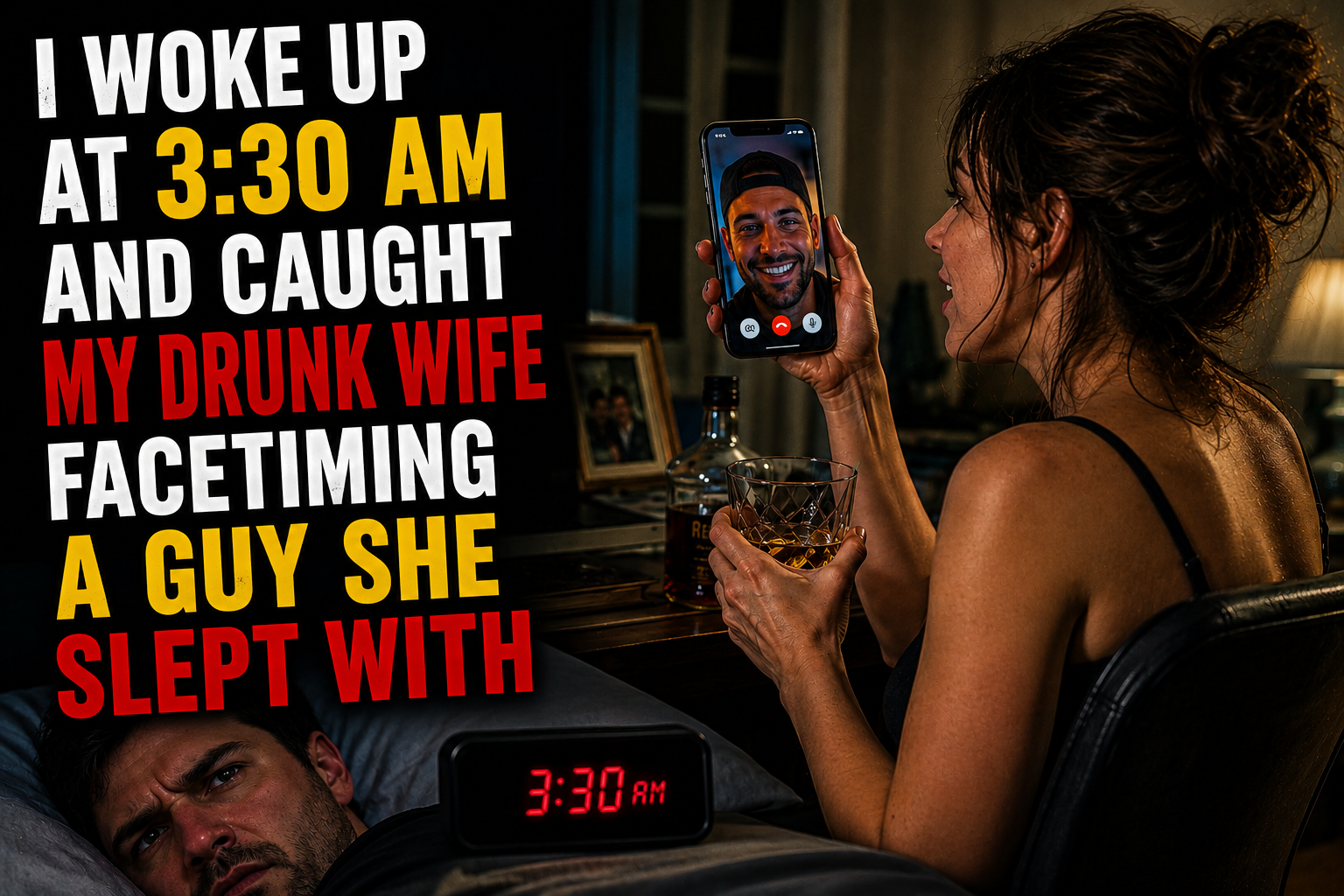
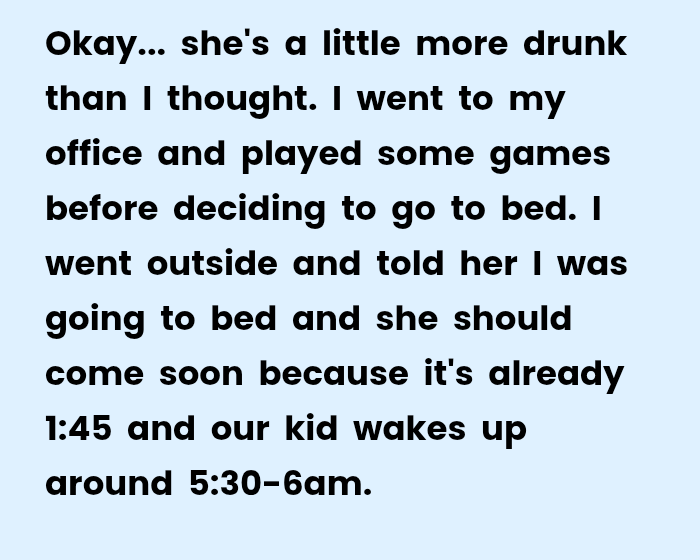
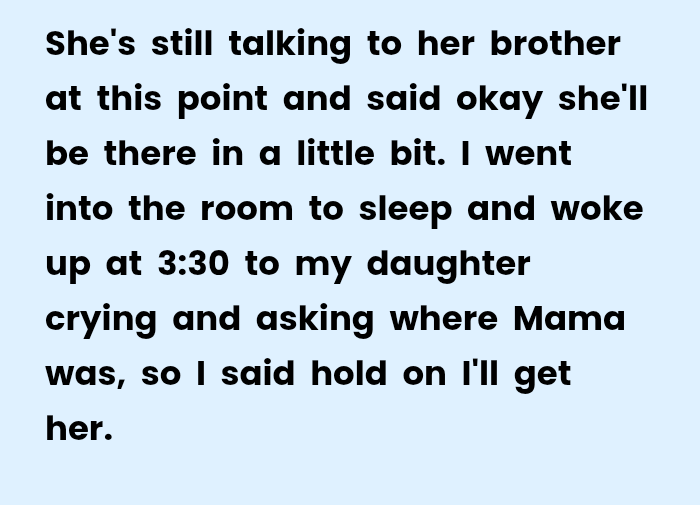
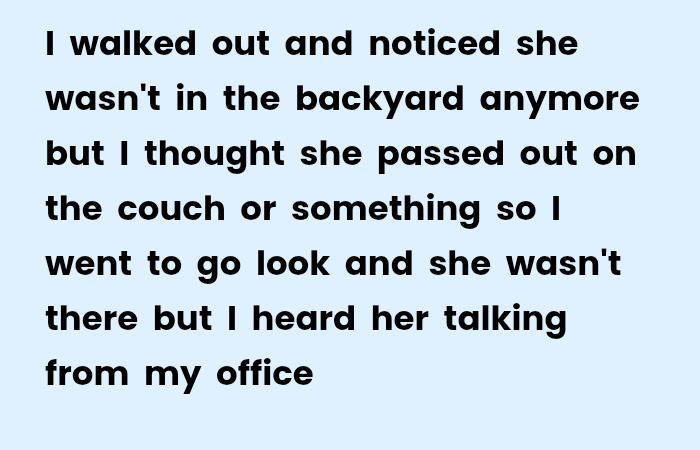
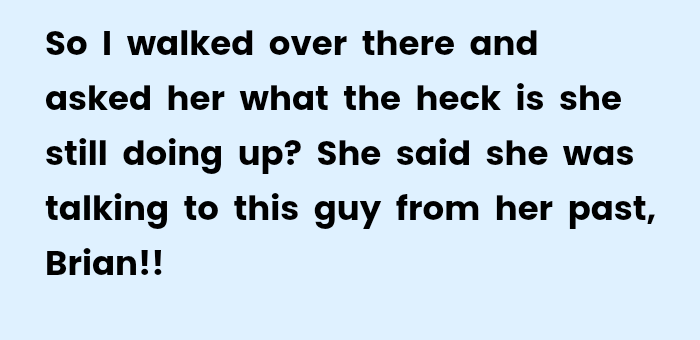
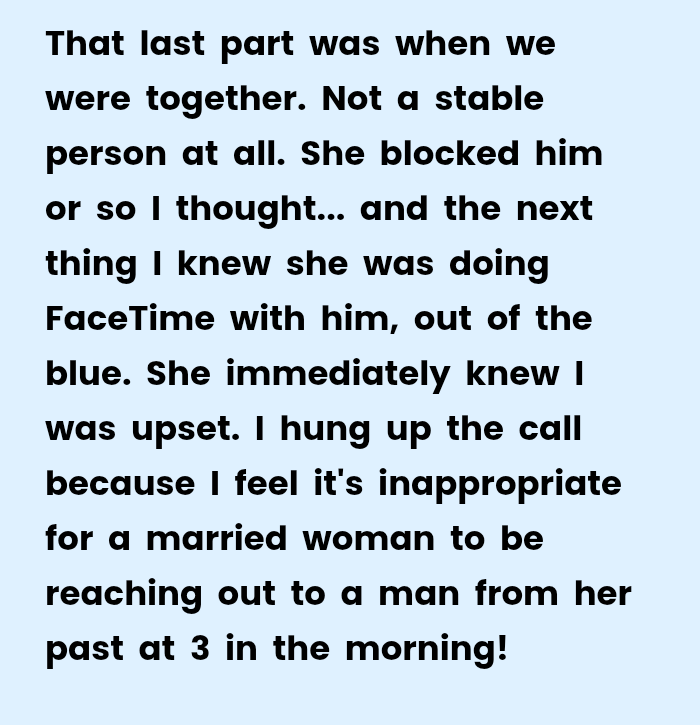
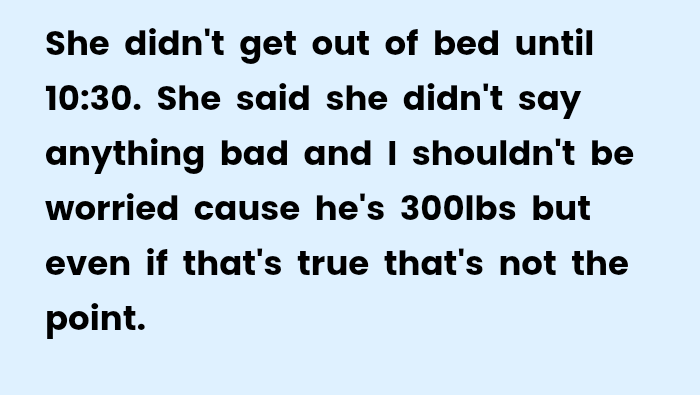
A husband’s ordinary night takes an unexpected turn when he wakes up at 3:30 AM and discovers his intoxicated wife secretly FaceTiming a man from her past.
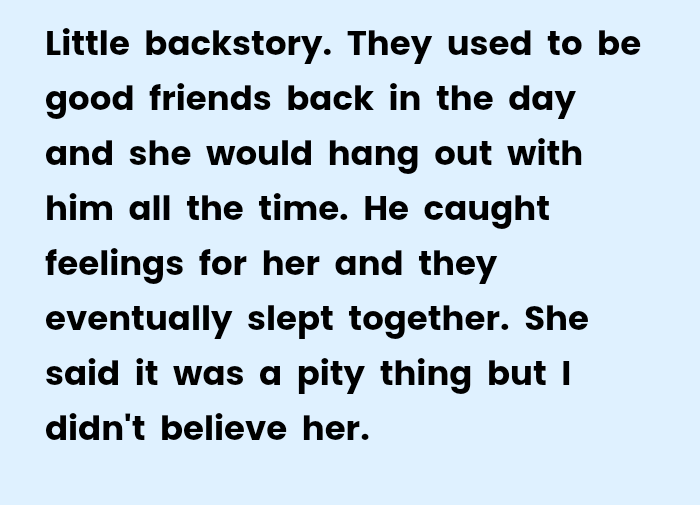
He was someone she once had a sexual relationship with and believed was no longer part of her life.
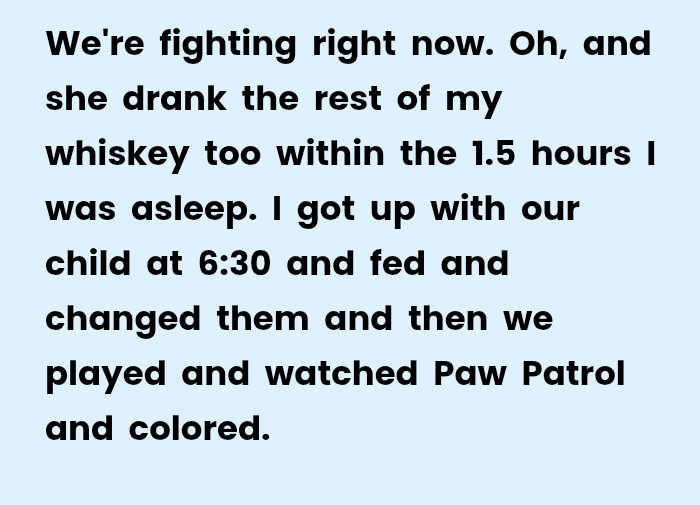
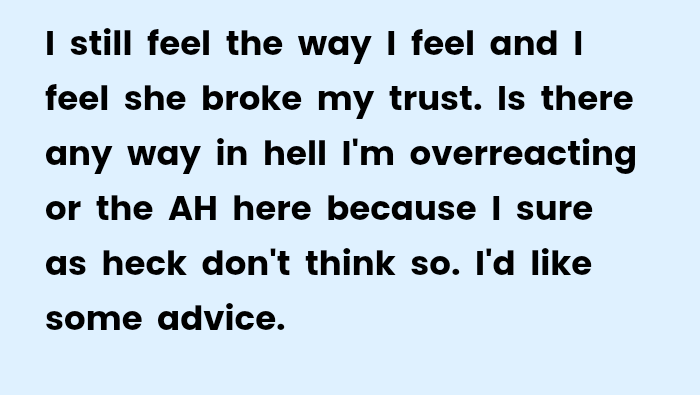
Although she insists nothing inappropriate happened, the late-night call, heavy drinking, and secrecy leave him feeling betrayed and questioning whether his trust in the marriage has been damaged beyond repair.
This situation also reminds us that relationships are not only tested during happy moments—they are tested during moments of vulnerability.
A strong marriage requires both partners to consistently choose each other, even when life feels overwhelming.
Small actions that seem harmless to one person can deeply affect the other, especially when trust is involved.

Analysis
Trust Is the Foundation of Every Marriage
Marriage is built on much more than love. It relies on trust, respect, honesty, and the confidence that your partner will protect the relationship even when you’re not watching. Stories like this resonate with so many people because they aren’t simply about a late-night phone call or a former partner—they’re about what happens when trust begins to crack. Once doubt enters a marriage, even seemingly small actions can carry enormous emotional weight.
Late-Night Calls and Relationship Boundaries
From one perspective, this situation revolves around boundaries. Every couple has different expectations regarding friendships with former partners, but healthy boundaries are usually established through open communication rather than assumptions. Reconnecting with someone you once had an intimate relationship with isn’t automatically wrong, but doing so at three o’clock in the morning while intoxicated naturally raises questions. Even if no romantic intentions existed, the circumstances make it understandable why a spouse would feel hurt, confused, and excluded. Trust isn’t only about avoiding infidelity; it’s also about avoiding situations that create unnecessary insecurity or undermine your partner’s confidence in the relationship.
Alcohol Explains Behavior—But Doesn’t Excuse It
Alcohol also plays an important role in this story, but it shouldn’t become an excuse. Excessive drinking often lowers inhibitions and leads people to make decisions they might not otherwise make. However, while alcohol may explain poor judgment, it doesn’t erase the consequences of that judgment. Whether someone is sober or intoxicated, actions taken during those moments can still leave lasting emotional scars on the people they love. For couples, it’s a reminder that substance use can amplify existing relationship problems rather than solve them.
Communication Could Have Prevented This Conflict
Communication is another central theme. Many relationship conflicts don’t begin because one partner intentionally wants to hurt the other—they begin because important conversations never happen until emotions are already running high. Healthy marriages require transparency. If reconnecting with someone from the past is truly innocent, discussing it openly beforehand helps eliminate suspicion. Secrets, omissions, and unexpected discoveries tend to create far more damage than honest conversations ever do.
Why Broken Trust Is So Emotionally Exhausting
The emotional toll of situations like this is often underestimated. When someone discovers something unexpected involving their partner, their mind naturally begins filling in the gaps with unanswered questions. Was this the first conversation? Has this been happening for weeks or months? Why at this hour? Why hide it? Even without evidence of physical cheating, uncertainty itself can become emotionally exhausting. People lose sleep, replay conversations repeatedly in their minds, struggle to focus at work, and begin questioning whether the relationship they believed they had is the same relationship they’re actually living in. That kind of mental strain is very real and shouldn’t be dismissed simply because no clear act of infidelity occurred.
Technology Has Changed Modern Relationships
This story also highlights how modern technology has complicated relationships. Smartphones, FaceTime, messaging apps, and social media have made reconnecting with people from the past incredibly easy. Old relationships that might have naturally faded away decades ago can now be revived with a single message or video call. Technology itself isn’t the problem, but it does require couples to communicate honestly about boundaries, expectations, and what behaviors feel respectful within their relationship.
Don’t Rush to Conclusions—But Don’t Ignore Your Feelings Either
It’s equally important to avoid rushing to conclusions. While the husband’s feelings appear understandable, a healthy relationship also benefits from listening before assuming the worst. Emotional reactions are valid, but lasting decisions should ideally be based on facts, honest conversations, and consistent patterns rather than a single emotional night. Trust can be damaged by one event, but whether it can be rebuilt often depends on how both partners respond afterward. Genuine accountability, empathy, and a willingness to understand each other’s perspective can sometimes prevent a painful situation from becoming permanent.
The Hidden Pressure Many Couples Face Today
On a broader societal level, stories like this remind us how emotionally drained many couples have become. Careers are demanding, finances create pressure, raising children leaves parents exhausted, and many people struggle silently with stress, anxiety, or burnout. When individuals become mentally overwhelmed, communication often suffers first. Partners begin living side by side instead of truly connecting with one another. Emotional distance creates opportunities for misunderstandings, poor decisions, and behaviors that may never have occurred if both people felt heard, appreciated, and emotionally supported. While stress never excuses harmful actions, it does remind us why emotional well-being deserves just as much attention as physical health.
Choosing Your Marriage Every Single Day
Empathy is so important. Taking a moment to consider how your choices might make your spouse feel can prevent misunderstandings from turning into lasting wounds.
Respect Is More Powerful Than Love Alone
Marriage isn’t about never making mistakes. It’s about creating an environment where both partners feel emotionally safe enough to admit those mistakes, take responsibility for them, and work together to rebuild trust. Respect is demonstrated not only through grand gestures but through everyday decisions that show your spouse they remain your priority. Being mindful of how your actions might affect the person you love is one of the quiet foundations of a lasting relationship.
Final Thoughts
Ultimately, this situation serves as a reminder that trust is incredibly fragile. It often takes years to build and only a single moment to shake. Whether this marriage recovers depends less on one late-night FaceTime call and more on what happens next—whether there is honesty instead of defensiveness, empathy instead of dismissal, and a shared commitment to protecting the relationship moving forward. Couples who prioritize open communication, healthy boundaries, mutual respect, and emotional transparency give themselves the best chance of overcoming difficult moments. Even when relationships face painful challenges, choosing understanding, accountability, and compassion offers the strongest path toward healing.