

A father’s frustration boils over after his wife publicly reveals their teenage son’s secret crush in front of his closest friends, turning what should have been a harmless gathering into a deeply embarrassing moment.
As the emotional fallout unfolds, the family is forced to confront broken trust, hurt feelings, and the unintended consequences of exposing a child’s private emotions.
This leaves everyone questioning whether the mother’s actions were justified or a serious breach of parental responsibility.





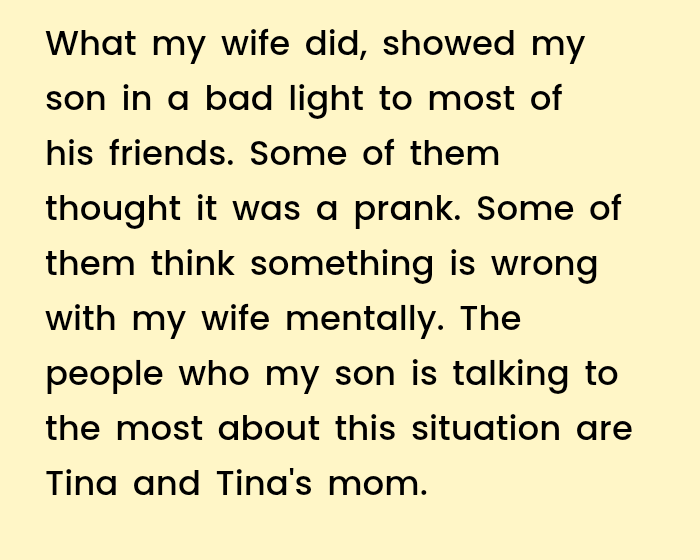
A Story About Trust, Parenting, and a Teenager’s Most Vulnerable Secret
At first glance, this story seems to be about an awkward family moment, but the deeper issue is far more serious. It explores what happens when a parent breaks a child’s confidence in front of the very people whose opinions matter most to them.
For teenagers, friendships, reputation, and first crushes often feel like the biggest parts of their world. While adults may dismiss these experiences as “just young love,” the emotions are incredibly real.
This situation reminds us that trust between parents and children is fragile, and once broken, it can take a long time to rebuild.
Check The Comment Section Below
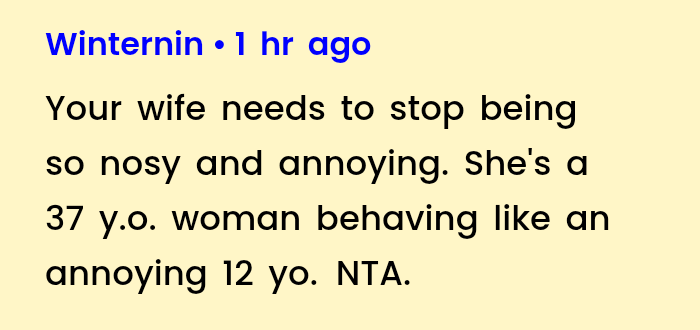
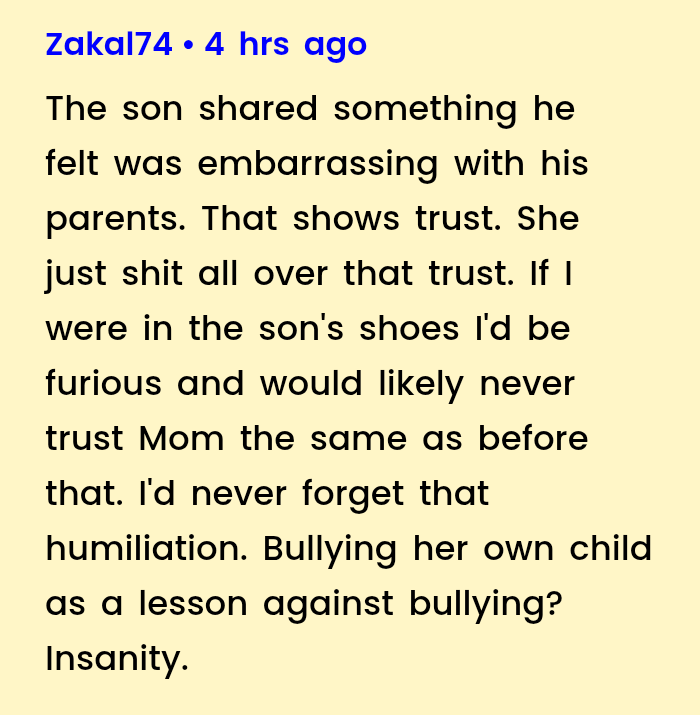
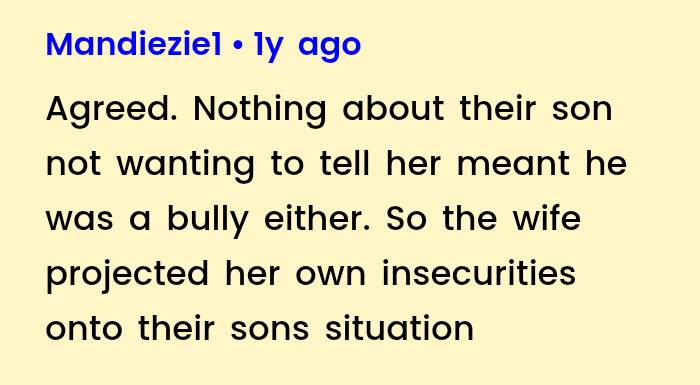
Analysis
The Son Trusted His Mother With Something Personal
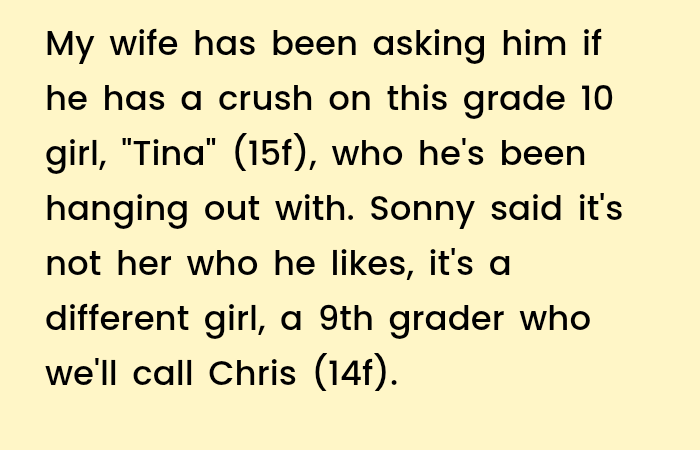
The article begins with a fairly ordinary conversation between a mother and her teenage son. Like many parents, she was curious about whether he had a crush. Eventually he admitted that he liked a classmate named Chris, but he also made one thing very clear—it was a secret.
That detail changes everything.
He didn’t simply mention his feelings in passing. He specifically explained why he didn’t want anyone else to know. He feared being teased by his friends because the girl didn’t fit the stereotypical beauty standards many teenagers unfairly judge others by. Whether those fears were right or wrong, they were honest. He was confiding in someone he believed would protect that information.
When children or teenagers choose to share something deeply personal with a parent, they’re placing enormous trust in them. That trust deserves to be handled with care.
Teenagers Live in a Different Social World
Adults often underestimate just how complicated teenage social dynamics can be.
At fourteen years old, friendships, popularity, peer approval, and embarrassment can feel overwhelming. A single awkward moment at school can become the topic of conversation for weeks.
To an adult, admitting a crush may seem harmless.
To a teenager, it can feel terrifying.
The son’s fear wasn’t necessarily about liking Chris. It was about becoming the target of jokes, losing social standing, or having his feelings mocked. Those fears may not seem logical from an adult perspective, but they are completely understandable during adolescence.
Was the Mother Trying to Teach a Lesson?
The mother’s later explanation is perhaps the most debated part of the article.
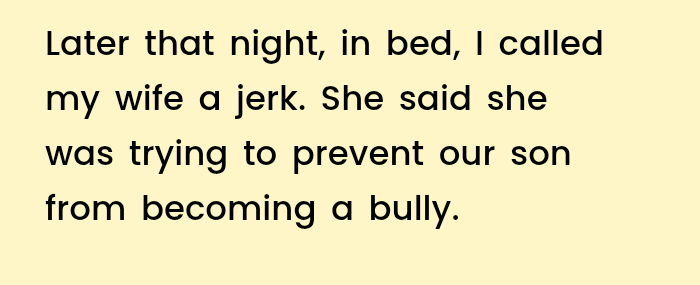
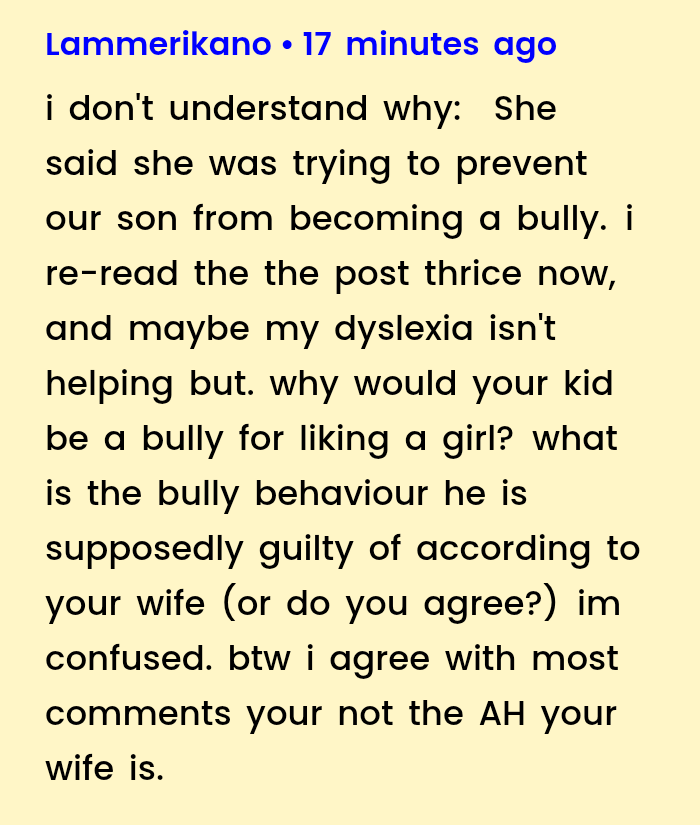
She believed her son was embarrassed because Chris was overweight, had acne, and was a tomboy. From her perspective, she may have thought forcing the truth into the open would challenge superficial attitudes and teach him to respect people regardless of appearance.
Teaching children kindness is certainly an admirable goal.
However, good intentions don’t automatically make a decision wise.
Parents must consider not only what lesson they’re trying to teach but also whether their method causes unnecessary harm.
In this case, the approach created far more damage than learning.
Public Humiliation Rarely Produces Healthy Lessons
One of the biggest parenting lessons illustrated by this story is that embarrassment is usually a poor teaching tool.
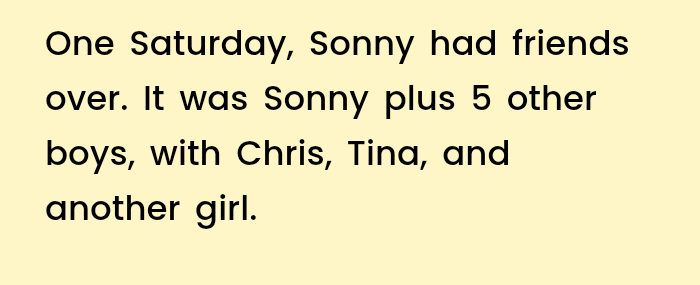
Instead of helping her son become more compassionate, the mother publicly exposed his private feelings in front of nearly everyone important to him.
She didn’t simply tell Chris.
She announced it in front of his closest friends.
That changed the situation from a private conversation into public humiliation.
When people feel humiliated, they often become defensive rather than reflective. Instead of focusing on what they may have done wrong, they become consumed by the embarrassment itself.
Teaching moments work best when they happen privately, respectfully, and with empathy.
Chris Became an Unintended Victim
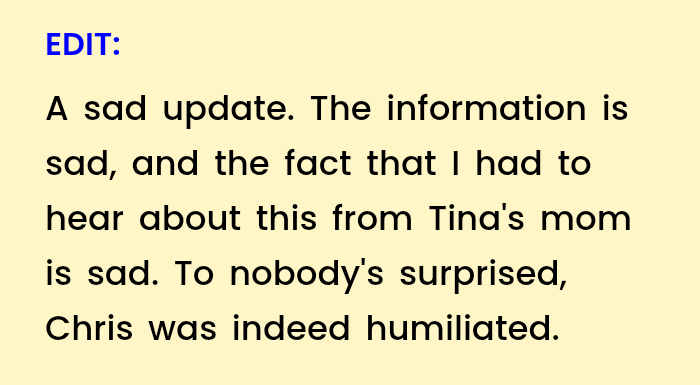
The update makes it clear that the situation hurt more than just the son.
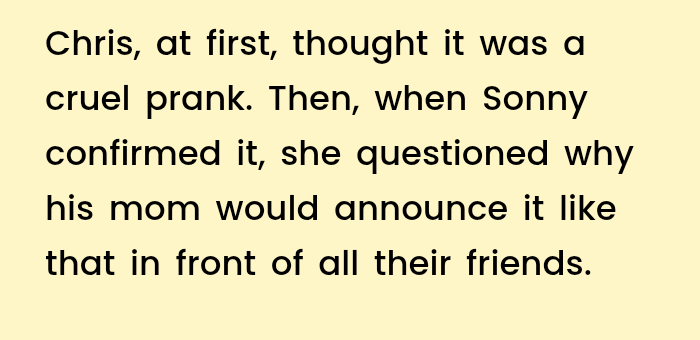
Chris initially believed the confession was a cruel prank.
Sadly, that’s an understandable reaction.
Teenagers who have been teased because of their appearance often become skeptical when someone unexpectedly expresses romantic interest.
Rather than feeling flattered, she questioned whether she was being mocked.
That realization is heartbreaking.
She wasn’t simply embarrassed.
She was emotionally wounded.
What should have been an opportunity for an honest conversation instead became another reminder of how harsh teenage social pressures can be.
The Son’s Honesty Was Painful but Important
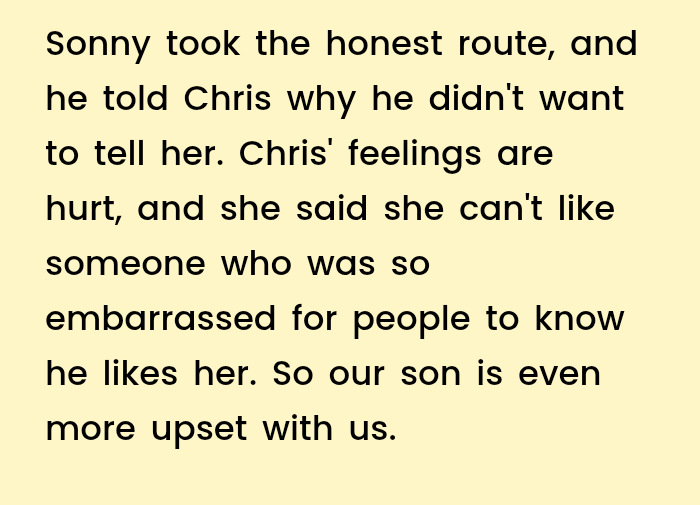
When Chris questioned him, the son chose honesty.
He admitted why he hadn’t wanted others to know.
Although the truth hurt Chris deeply, lying would likely have caused even more problems later.
This moment demonstrates how one impulsive decision by an adult forced two teenagers into an impossible conversation neither was emotionally prepared to have.
Sometimes adults unintentionally create situations where children must deal with consequences they never asked for.
The Father Froze in the Moment
Another interesting aspect of the article is the father’s own reaction.
He admits he didn’t intervene during the incident itself.
Many readers may wonder why.
In reality, people often freeze during shocking situations.
Not everyone immediately knows the right thing to say when events spiral out of control within seconds.
His real response came later, after he had time to process what happened.
He confronted his wife privately rather than escalating the conflict in front of the children.
That decision likely prevented even more emotional damage.
Was Calling His Wife a “Jerk” Fair?
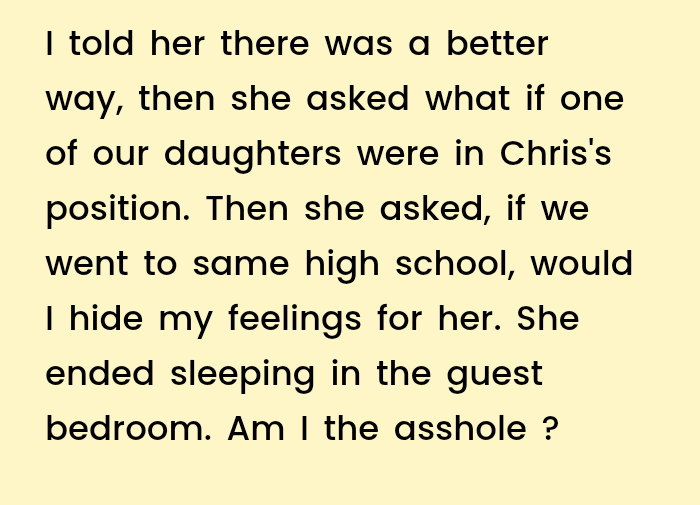
The central question asks whether the husband was wrong for calling his wife a jerk.
Looking at the circumstances, it’s understandable why emotions were high.
He had just watched his son’s trust shattered.
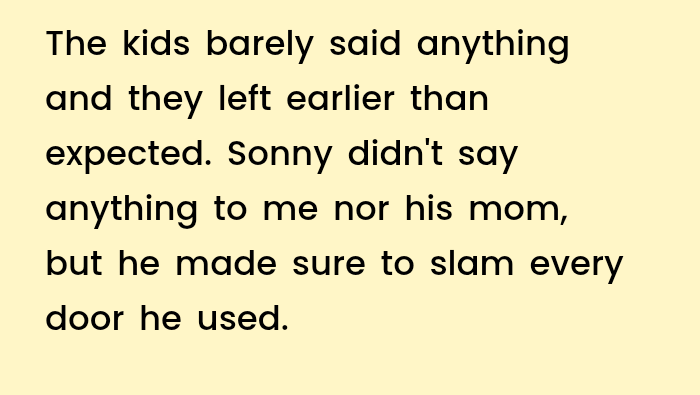
He had seen an uncomfortable gathering abruptly end.
Later he learned another teenager had been deeply hurt.
His frustration wasn’t simply about one awkward moment.
It was about the consequences that followed.
Could he have chosen calmer words?
Probably.
But it’s equally understandable that witnessing your child’s emotional pain would trigger a strong emotional reaction.
Parenting Requires Privacy as Much as Guidance
Parents naturally want to shape their children’s values.
They want them to become kind, respectful, and compassionate adults.
However, guidance works best when children feel emotionally safe.
When a child believes that sharing something private could later become public knowledge, they often stop opening up altogether.
That’s perhaps the greatest long-term consequence of this story.
The son may think twice before trusting his mother with personal information again.
Trust isn’t rebuilt simply by saying sorry.
It’s rebuilt through consistent respect over time.
The Social Impact of Public Embarrassment
The article also highlights a broader societal issue.
In today’s world, embarrassment spreads faster than ever.
School friendships, group chats, social media, and constant communication mean uncomfortable moments rarely remain private.
Teenagers already experience enormous pressure regarding appearance, popularity, and acceptance.
Adults should strive to reduce those pressures rather than unintentionally increasing them.
Respecting a young person’s dignity helps build confidence far more effectively than public correction.
Communication Could Have Changed Everything
Imagine if the mother had waited until later that evening.
She could have asked her son why he felt embarrassed.
She could have challenged his assumptions about beauty.
She could have encouraged him to treat Chris with kindness.
She could even have suggested that if his feelings were genuine, honesty delivered privately would be the respectful path.
Every one of those options would have preserved trust while still teaching an important lesson.
Instead, a spontaneous decision changed multiple relationships in a matter of seconds.
Everyone Walked Away Hurt
One of the saddest aspects of the story is that nobody truly benefited.
The son felt betrayed.
Chris felt humiliated.
The father became angry.
The mother believed she was misunderstood.
Friends left confused.
Even the update shows that many classmates viewed the situation negatively rather than learning the lesson the mother intended.
Sometimes actions taken with good intentions still produce harmful outcomes.
Intentions matter, but consequences matter too.
What This Story Teaches About Parenting
Perhaps the greatest lesson is that children and teenagers deserve emotional safety within their own homes. Parents will inevitably make mistakes, but preserving trust should always be a priority. A child who feels heard, respected, and protected is far more likely to seek guidance when facing life’s difficult moments. Public embarrassment, even with positive intentions, can easily damage that foundation.
Ultimately, this wasn’t simply a story about a teenage crush. It was about trust, empathy, communication, and the responsibility adults have to protect the emotional well-being of the young people who depend on them. Every scene—from the private confession to the awkward gathering, the painful update, and the parents’ disagreement—illustrates how one impulsive decision can ripple through an entire family. The article serves as a reminder that the best parenting lessons are often taught through patience, private conversations, and compassion rather than public humiliation.