

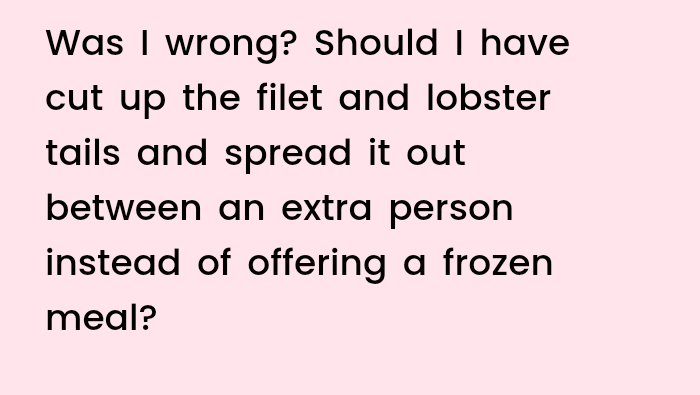
A host carefully plans an intimate dinner party for close friends, spending more than $300 on individually portioned filet mignon and lobster tails for each invited guest.
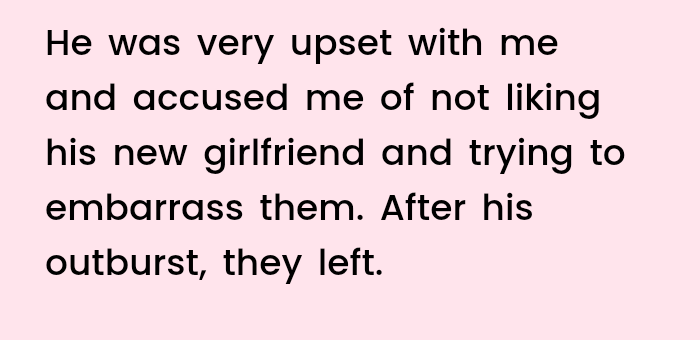
Everything goes according to plan until one friend unexpectedly arrives with a new girlfriend who wasn’t invited and hadn’t been mentioned beforehand, leaving the host without enough food for everyone.
What was meant to be a relaxing evening among friends turns into a debate about hospitality, boundaries, and who was really responsible for the uncomfortable situation.

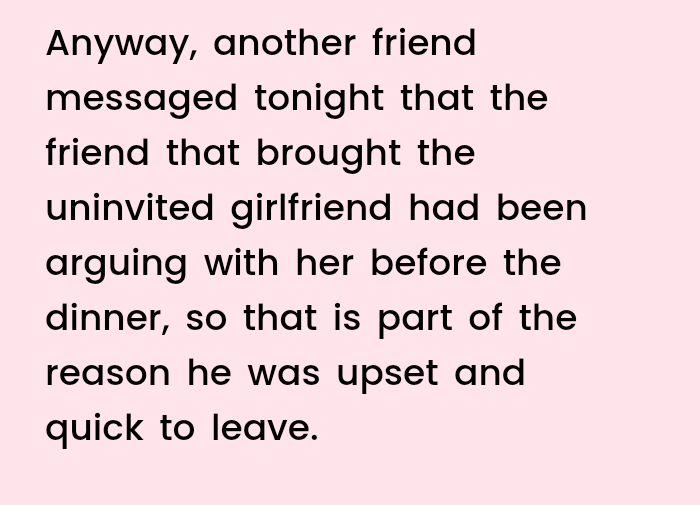
The uninvited girlfriend likely had no idea she was walking into an awkward situation.
She may have assumed she had been invited, making the entire experience uncomfortable for her as well.
That’s why this situation is a reminder that misunderstandings often hurt innocent people the most.
Analysis: What This Situation Really Reveals
This story isn’t really about a frozen dinner.
It’s about expectations, communication, and respecting other people’s plans.
Hosting a dinner party takes far more effort than many people realize. There’s planning, shopping, budgeting, cooking, and making sure every guest feels welcome. When someone unexpectedly brings an extra person without asking, it can throw everything off, especially when the meal has been carefully portioned.
At the same time, no one wants a guest to feel excluded or embarrassed. The uninvited girlfriend likely had no idea she was walking into an awkward situation. She may have assumed she had been invited, making the entire experience uncomfortable for her as well.
That’s why this situation is a reminder that misunderstandings often hurt innocent people the most.
The Bigger Impact On Society
Situations like this happen more often than we think because social etiquette isn’t always discussed openly.
Some people believe bringing a surprise plus-one is harmless, while others see it as disrespectful to the host. Neither expectation is automatically shared by everyone, which is why assumptions can easily lead to conflict.
In today’s fast-paced world, casual plans often replace clear communication. A quick message asking, “Would it be okay if I brought someone?” can prevent an evening from turning into an uncomfortable memory.
This story also reminds us that hospitality has limits.
Being a gracious host doesn’t mean you have unlimited food, seating, or budget. Likewise, being a thoughtful guest means recognizing that invitations are usually planned around specific numbers.
Respect works both ways.
What Can We Learn From This?
If you’re invited to someone’s home, it’s always best to ask before bringing another person, even if you think they’ll be welcome.
Hosts deserve the chance to prepare, whether that means making more food, setting another place at the table, or simply saying they aren’t able to accommodate another guest this time.
If you’re the host and something unexpected happens, remember that the surprise guest may not know the situation. Treating them with kindness while explaining the circumstances can help avoid unnecessary embarrassment.
Small acts of communication often prevent big misunderstandings.
A Better Way Forward
Whether you’re hosting or attending, the goal should always be making people feel respected.
Guests can help by confirming plans, arriving as expected, and communicating any last-minute changes before showing up.
Hosts can help by responding honestly without feeling guilty if accommodating an unexpected guest isn’t possible. Setting boundaries doesn’t make someone inhospitable. It simply acknowledges the reality of planning an event.
At the end of the day, good etiquette isn’t about following rigid rules.
It’s about consideration.
When people communicate clearly, respect each other’s time and effort, and give one another the benefit of the doubt, gatherings become less stressful and far more enjoyable for everyone involved.