
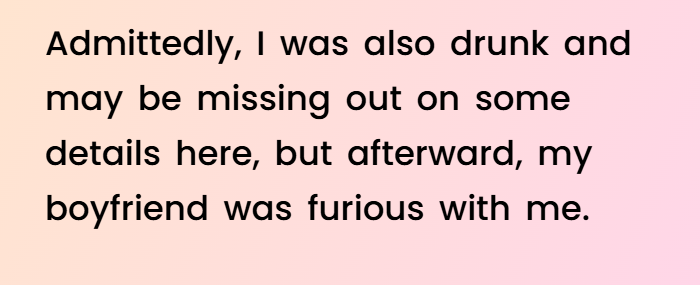
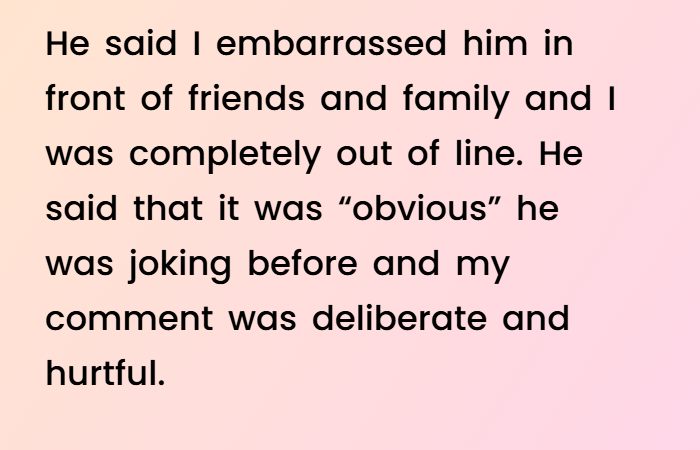
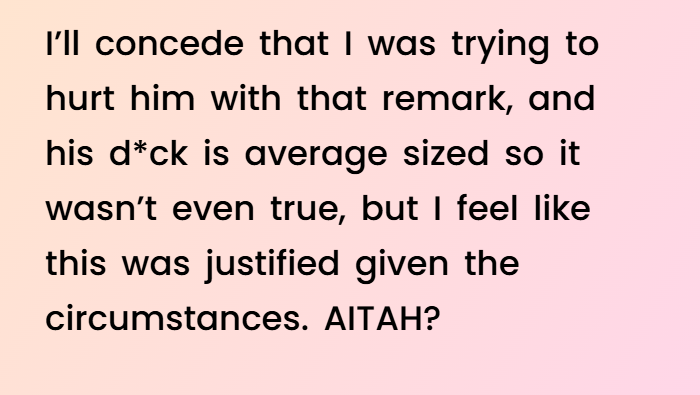
A wedding reception takes an awkward turn when a drunken boyfriend repeatedly shares intimate details about his relationship in front of friends and family, leaving his girlfriend deeply embarrassed.
After asking him multiple times to stop, she finally snaps and fires back with a humiliating comment that shocks everyone within earshot.
Now, she’s left wondering whether her public insult crossed the line—or whether it was a justified response to his relentless disrespect.
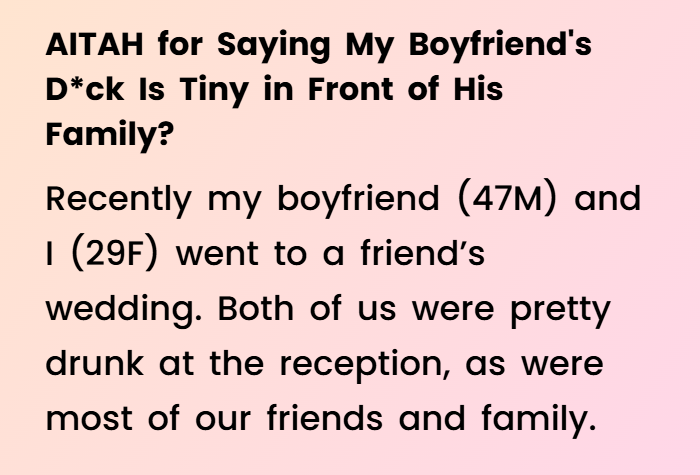




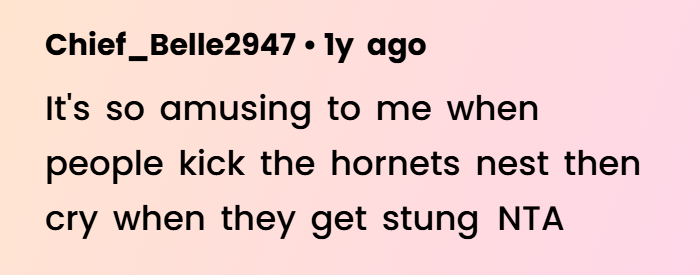
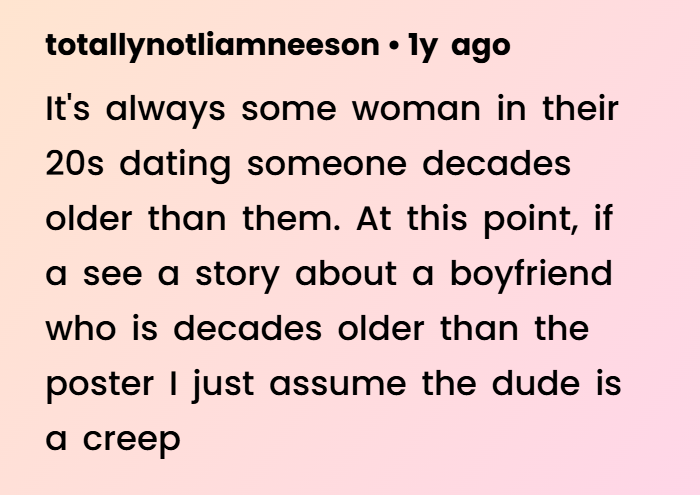
Check The Comment Section Below
As the night unfolded, what started as harmless wedding banter quickly spiraled into a deeply uncomfortable public spectacle.
Repeated jokes about their private relationship pushed the boundaries of respect, leaving emotions running high until one impulsive remark changed the atmosphere entirely.
In the aftermath, both partners were left questioning whether the greater damage came from the public humiliation—or the heated response it provoked.
Analysis: When Public Humiliation, Alcohol, and Hurtful Words Collide
Relationships are built on trust, respect, and the understanding that some parts of a couple’s life remain private. In this story, a wedding celebration intended to be filled with joy quickly transformed into an emotionally charged confrontation after alcohol, poor judgment, and repeated boundary violations collided. What began as embarrassing jokes escalated into a public exchange that left both partners feeling humiliated, raising important questions about respect, communication, and whether one hurtful comment can ever justify another.
This situation is far more complex than a simple argument. It touches on consent, emotional safety, public embarrassment, retaliation, and the lasting impact that impulsive words can have on a relationship. While readers may disagree on who was more at fault, the story highlights how quickly celebrations can turn into painful memories when personal boundaries are ignored.
A Wedding Reception That Took an Unexpected Turn
Weddings are often emotional occasions where families, friends, and alcohol come together in one place. While laughter and playful conversations are common, they also create an environment where intoxicated decisions can spiral beyond anyone’s expectations.
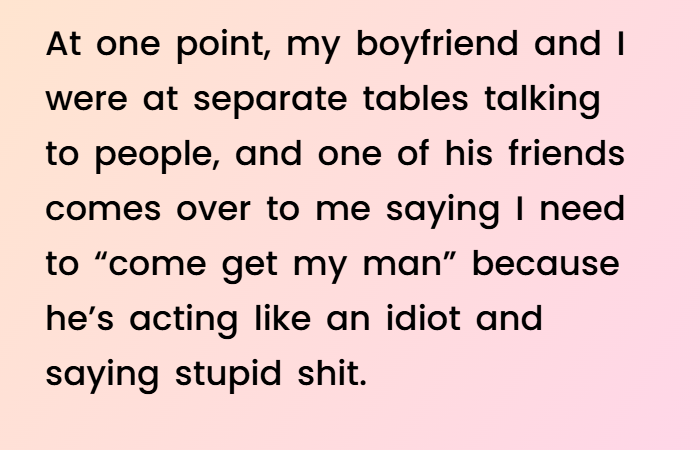
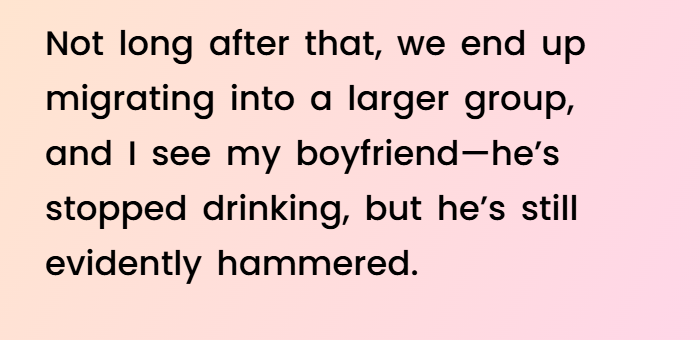
In this case, both partners had been drinking heavily. The boyfriend’s behavior had already become noticeable enough that one of his friends approached the girlfriend, jokingly asking her to “come get her man” because he was making a fool of himself.
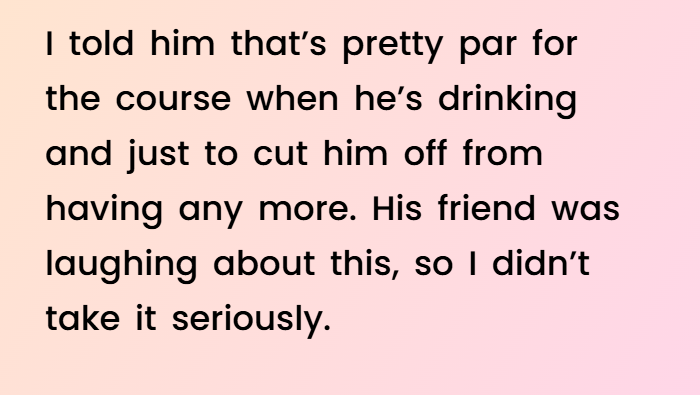
Although she recognized this as typical behavior when he drank, she initially brushed it off, believing it would remain harmless.
Unfortunately, it didn’t.
When Private Conversations Become Public Entertainment
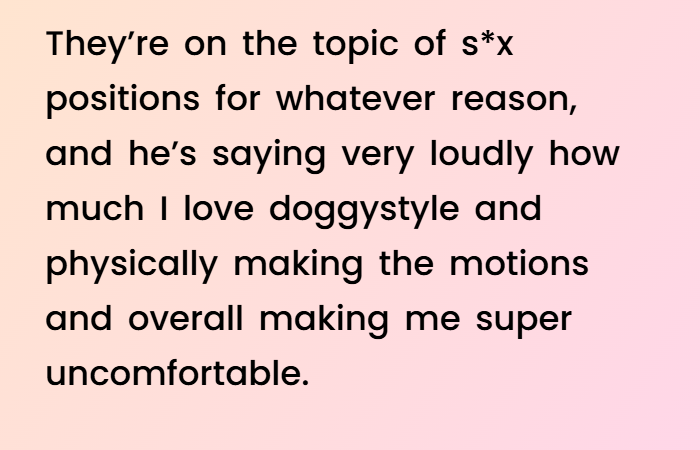
As the evening progressed, the conversation shifted toward sexual topics.
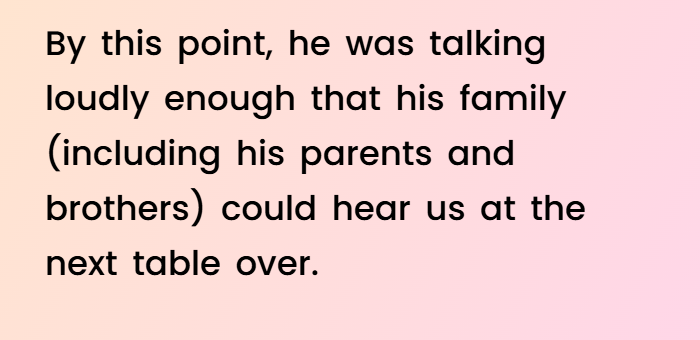
Instead of speaking generally, the boyfriend repeatedly began discussing intimate details about their own relationship.
He loudly described preferred sexual positions.
He acted them out physically.
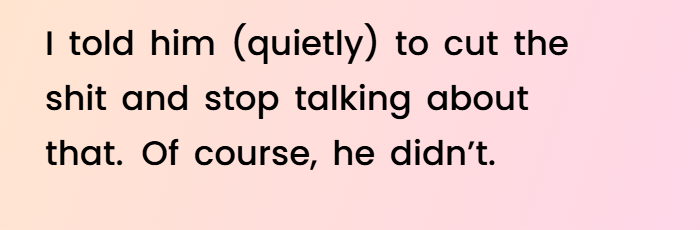
He continued despite being asked privately to stop.
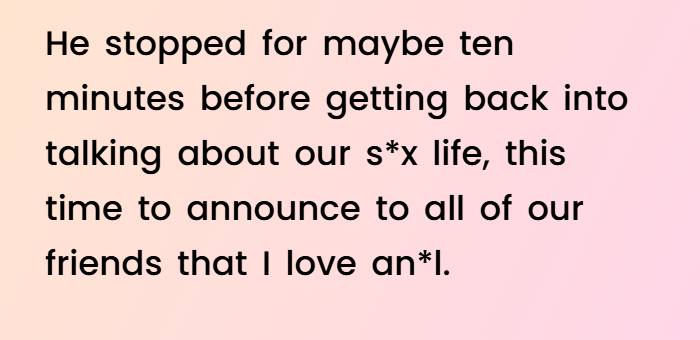
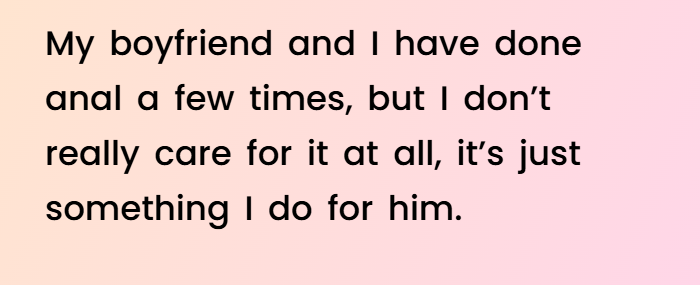
He later loudly claimed she enjoyed *nal, even though she later explained it wasn’t something she actually liked and only agreed to occasionally for him. Sharing intimate details without a partner’s consent can feel deeply violating, especially in front of family members and close friends.
At this point, the issue was no longer about humor.
It became a question of respecting a partner’s privacy.
Every couple has different comfort levels regarding what they share publicly. Healthy relationships depend on respecting those boundaries, especially after one partner clearly expresses discomfort.
Ignoring Boundaries Often Escalates Conflict
One of the most significant moments in this story wasn’t the final insult.
It was the moment the boyfriend ignored her first request.
She quietly asked him to stop.
He briefly did.
Then he returned to the same topic.
When someone repeatedly communicates that they’re uncomfortable and those concerns continue to be dismissed, frustration naturally builds. People who feel unheard often reach a breaking point where emotions override careful thinking.
Many relationship conflicts become much larger because early warnings are ignored.
Public Embarrassment Can Feel Deeply Personal
Being embarrassed in front of strangers is uncomfortable.
Being embarrassed in front of close friends is worse.
Being embarrassed in front of parents, siblings, and extended family can feel overwhelming.
The boyfriend didn’t simply joke with friends.
His comments became loud enough for nearby relatives to hear.
The situation became even more uncomfortable when he publicly discussed intimate acts and claimed his girlfriend enjoyed experiences she had never truly wanted.
For many people, this kind of unwanted disclosure would feel like a serious invasion of privacy.
The Emotional Impact of Having Personal Boundaries Crossed
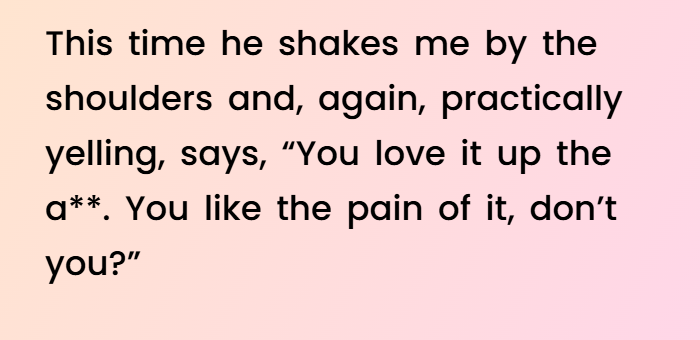
One particularly painful moment came when the boyfriend physically grabbed her shoulders while continuing the conversation.
Whether intended playfully or not, the combination of physical contact and loudly discussing intimate details intensified the humiliation.
Moments like these often trigger a mix of emotions:
- Embarrassment
- Anger
- Powerlessness
- Anxiety
- Shame
- Betrayal
These feelings can appear almost instantly, especially when someone feels trapped in a public setting with no easy escape.
The Heat-of-the-Moment Response
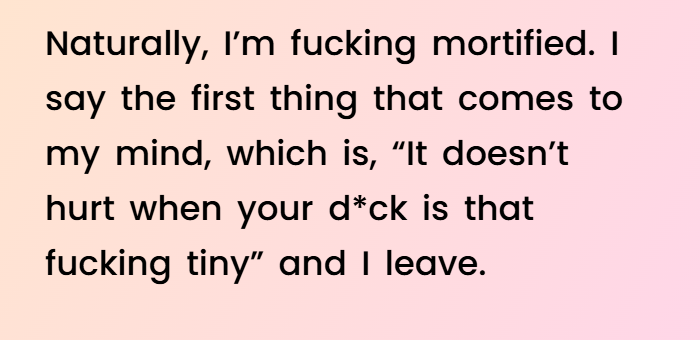
Feeling cornered, embarrassed, and emotionally overwhelmed, the girlfriend responded with a deeply personal insult about her boyfriend’s anatomy, saying his d*ck was tiny.
She later admitted two important things:
- She intentionally wanted to hurt him.
- The statement wasn’t even true.
That honesty matters.
Her goal wasn’t to provide accurate information.
It was to end the humiliation by returning it.
Retaliation often feels satisfying in the moment because it restores a temporary sense of control.
Unfortunately, it also creates new emotional wounds.
Alcohol Doesn’t Remove Responsibility
Alcohol frequently appears in stories involving arguments because it weakens judgment, lowers inhibitions, and reduces people’s ability to recognize social boundaries.
People may:
- Speak louder.
- Overshare.
- Miss social cues.
- Become emotionally reactive.
- Say things they’d normally keep to themselves.
While intoxication may explain certain behaviors, it doesn’t erase responsibility for them.
Both individuals were drinking, but both remained accountable for the consequences of what they said.
Why Public Humiliation Can Leave Lasting Scars
Embarrassment activates powerful emotional responses in the brain.
Many people remember humiliating moments for years.
Public ridicule can damage:
- Self-confidence
- Relationship security
- Emotional intimacy
- Trust
- Communication
Because the boyfriend’s parents, siblings, friends, and wedding guests were present, both individuals may carry memories of this incident long after the wedding itself is forgotten.
Retaliation Rarely Solves the Original Problem
One of the central questions this story raises is whether responding to humiliation with another humiliation actually fixes anything.
In most situations, revenge creates a cycle.
One person feels hurt.
They strike back.
The other feels attacked.
Now both people become victims in their own minds.
Instead of addressing the original boundary violation, attention shifts toward the retaliatory comment.
That doesn’t erase the initial wrongdoing, but it often makes productive conversations much more difficult afterward.
Respecting Privacy in Relationships
Healthy relationships rely heavily on mutual respect regarding personal information.
Some couples openly joke about their intimate lives.
Others keep those details completely private.
Neither approach is inherently right or wrong.
The important factor is agreement.
When one partner repeatedly shares private information after being asked not to, trust begins to erode.
Privacy is not secrecy.
It is an important expression of respect.
The Psychological Effects of Public Shaming
Public embarrassment can have lasting emotional consequences beyond the event itself.
People who experience public humiliation may struggle with:
- Increased anxiety
- Social withdrawal
- Difficulty trusting others
- Fear of future gatherings
- Reduced self-esteem
- Emotional distress
Likewise, people who are publicly insulted may also experience shame, resentment, and lasting insecurity.
Words spoken in anger often linger much longer than anyone expects.
Could Better Communication Have Prevented This?
Many relationship conflicts begin long before the argument itself.
If concerns about drinking behavior had been discussed beforehand…
If boundaries around private topics had already been established…
If the boyfriend had immediately respected her request to stop…
If either partner had chosen to walk away before emotions exploded…
The evening may have unfolded very differently.
Communication isn’t only about solving problems after they happen—it’s about preventing unnecessary conflict before it starts.
Alcohol and Relationship Dynamics
Heavy drinking can expose unhealthy patterns that already exist within a relationship.
If someone repeatedly becomes disrespectful, inappropriate, or dismissive only when intoxicated, that behavior deserves attention rather than dismissal as “just how they are.”
Occasional poor judgment differs significantly from recurring patterns that leave one partner feeling unsafe or consistently embarrassed.
Honest conversations about alcohol use, personal boundaries, and expectations are often healthier than repeatedly excusing harmful behavior.
Healing After a Public Argument
Recovering from an incident like this requires more than apologies.
Both partners would likely benefit from reflecting on what happened without focusing solely on who “won” the argument.
Important questions include:
- Why were boundaries ignored?
- Why did emotions escalate so quickly?
- How can trust be rebuilt?
- What changes need to happen before attending future social events together?
Sometimes couples also benefit from relationship counseling, especially if alcohol-fueled conflicts or public disrespect have become recurring issues. Learning healthier communication strategies can prevent painful moments from becoming long-term patterns.
A Gentle Reminder for Every Reader
If you’ve ever felt embarrassed by someone you love, your feelings deserve to be acknowledged. Being asked to laugh off discomfort or tolerate repeated disrespect can slowly damage emotional safety within a relationship. At the same time, responding in anger with deeply personal insults often creates new wounds alongside the old ones.
Healthy love isn’t about winning public arguments or finding the perfect comeback. It’s about protecting one another’s dignity—even during disagreements. Respect, honest communication, and mutual boundaries remain some of the strongest foundations any relationship can have, especially when emotions are running high.