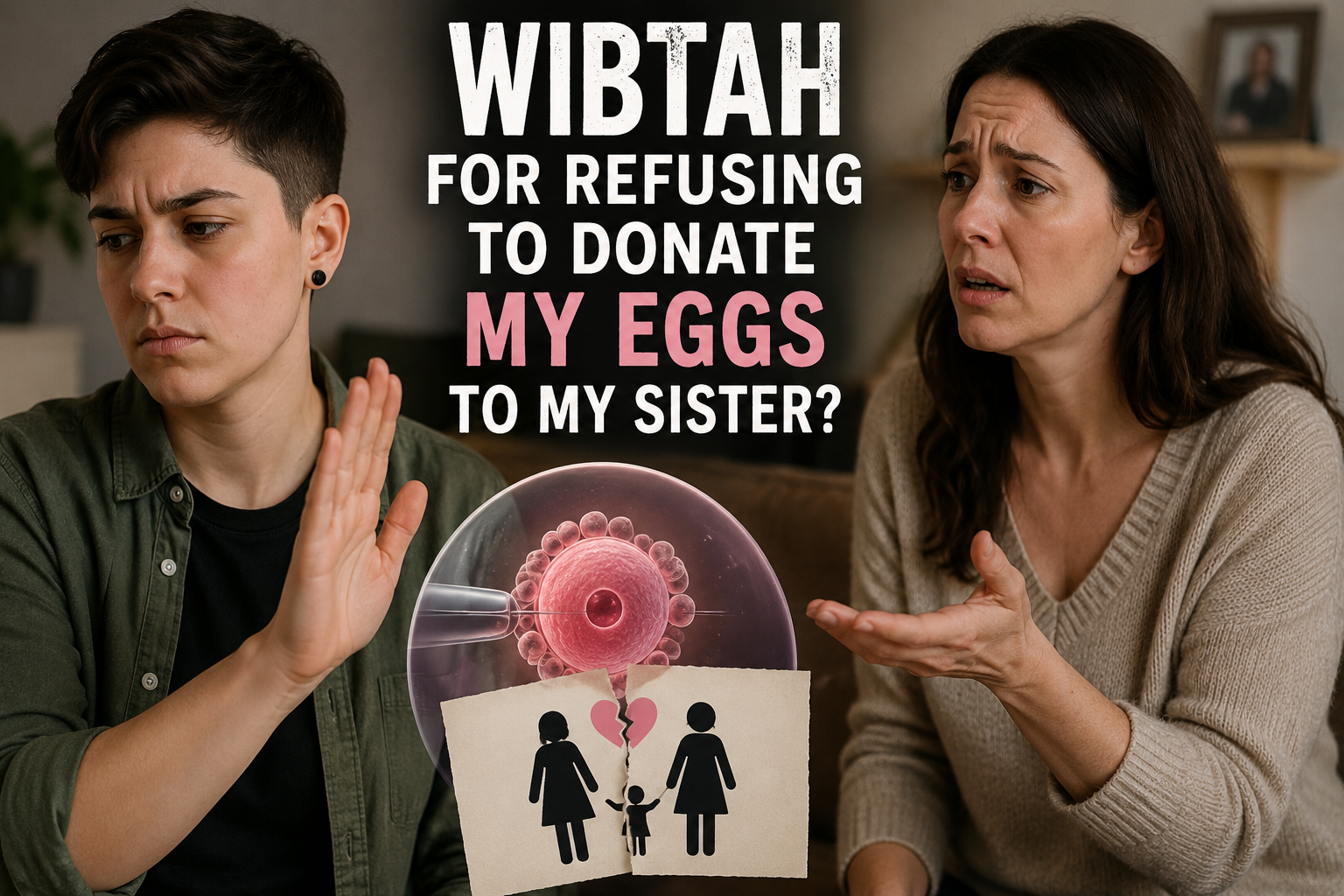
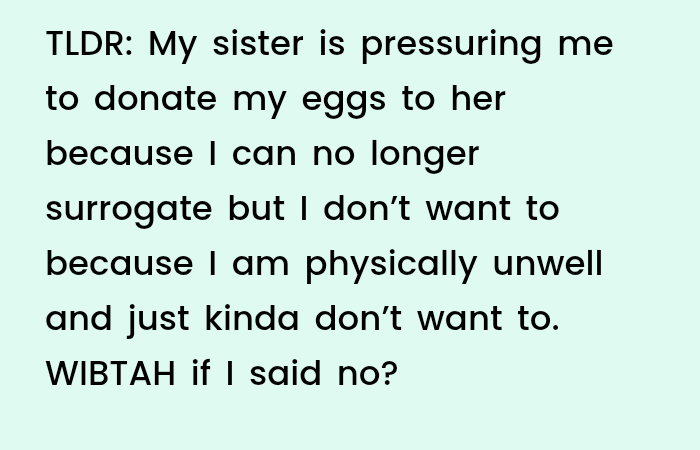
After once offering to help her sister build a family, one person’s life takes an unexpected turn as serious health concerns and a gender transition change everything.
Now facing pressure to donate eggs despite painful medical realities and deeply personal boundaries, they must decide whether protecting their own future makes them selfish—or whether it’s okay to say no to someone they love.
One lesson this article quietly teaches is that boundaries are acts of self-respect, not selfishness.


A Story About Love, Family, and the Right to Make Decisions About Your Own Body
At its core, this article isn’t simply about egg donation. It’s about how life can change in unexpected ways, how promises made years ago may no longer be realistic, and how difficult it can be to balance love for family with personal health and bodily autonomy.
Throughout the story, the writer is clearly torn between wanting to help their sister fulfill her dream of becoming a parent and protecting their own physical and emotional well-being.
Rather than being a simple disagreement, this is a heartbreaking situation where there are no easy answers and everyone involved is carrying emotional pain.
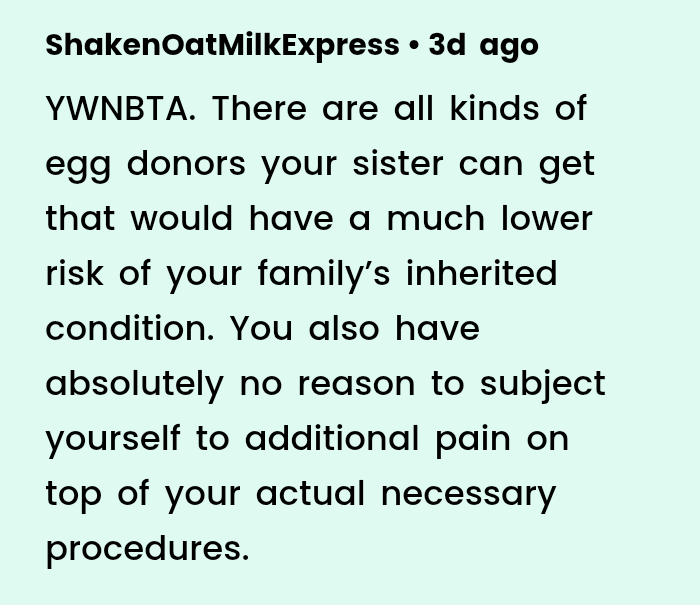
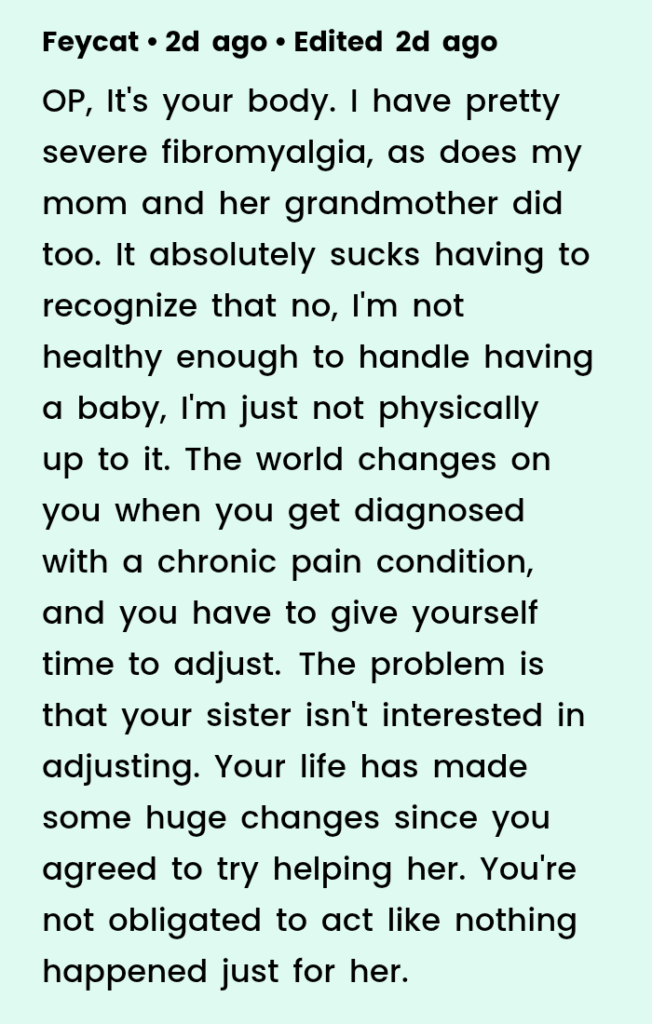
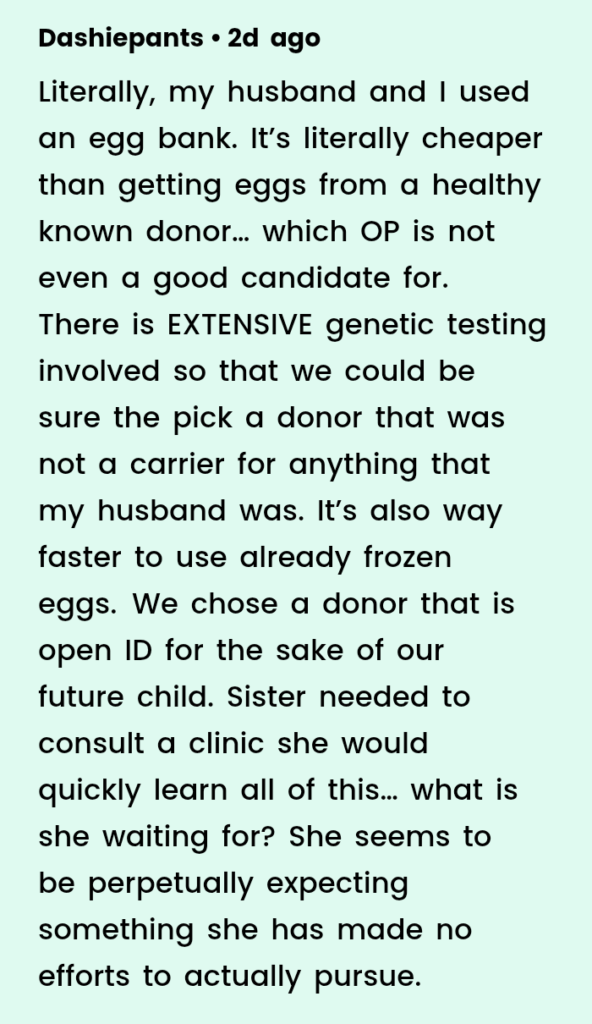
Check The Comment Section Below
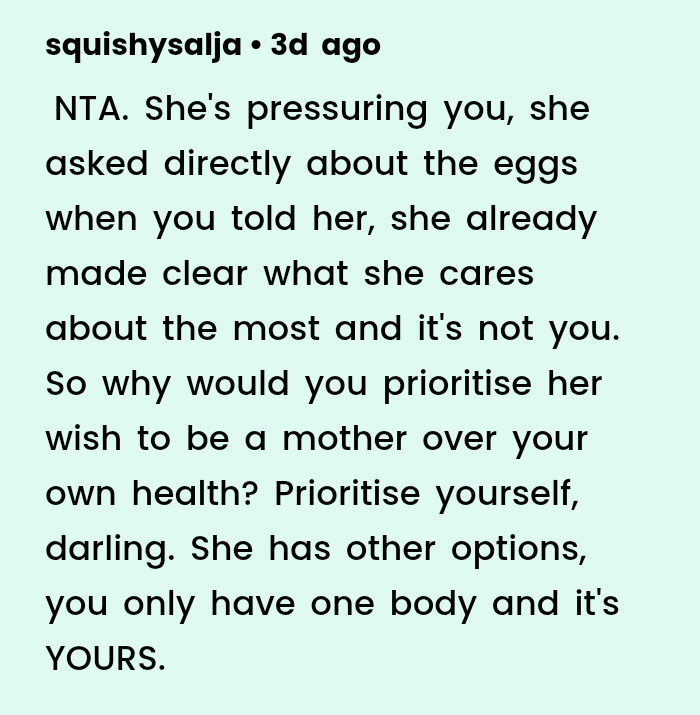
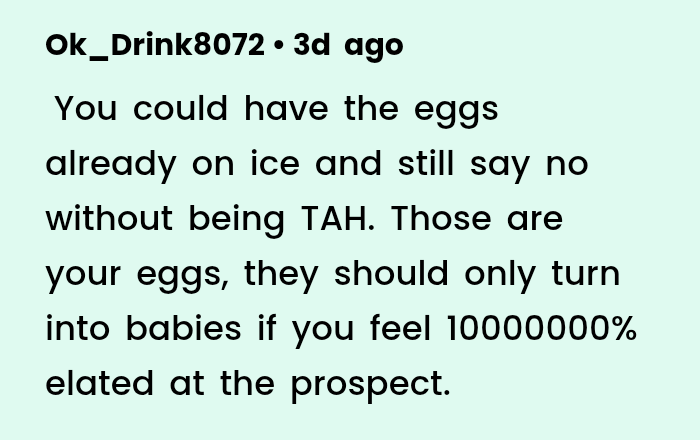
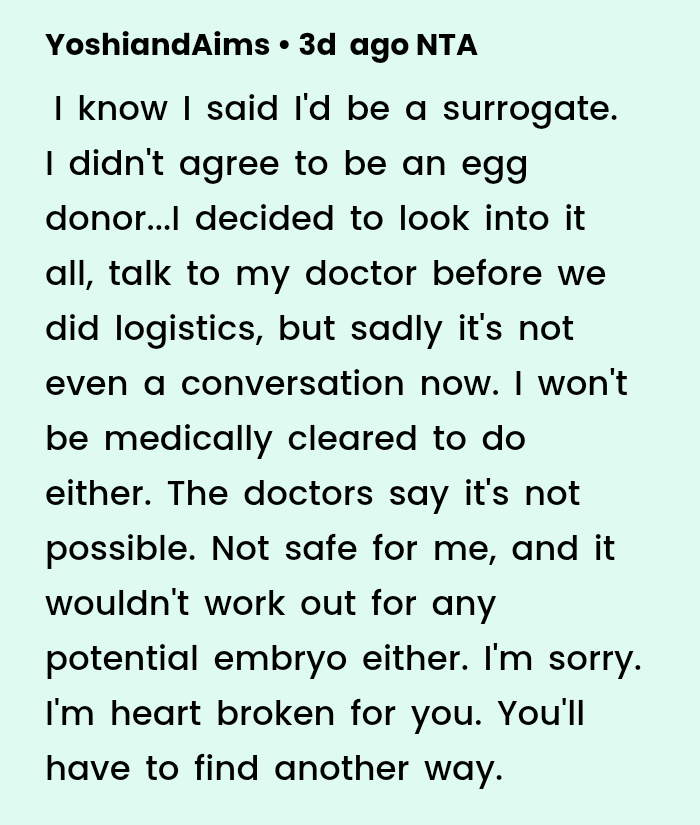
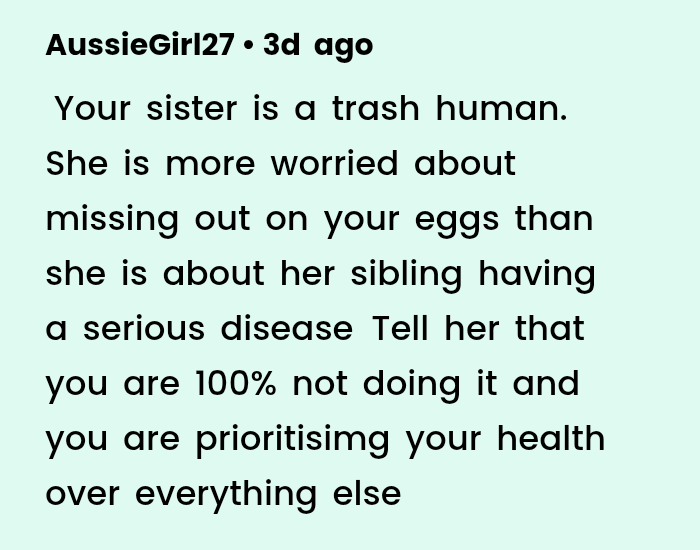
Analysis
A Promise Made Under Very Different Circumstances
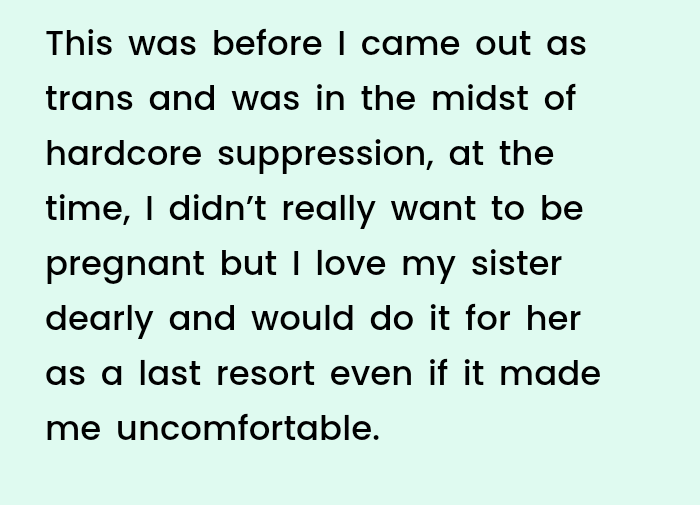
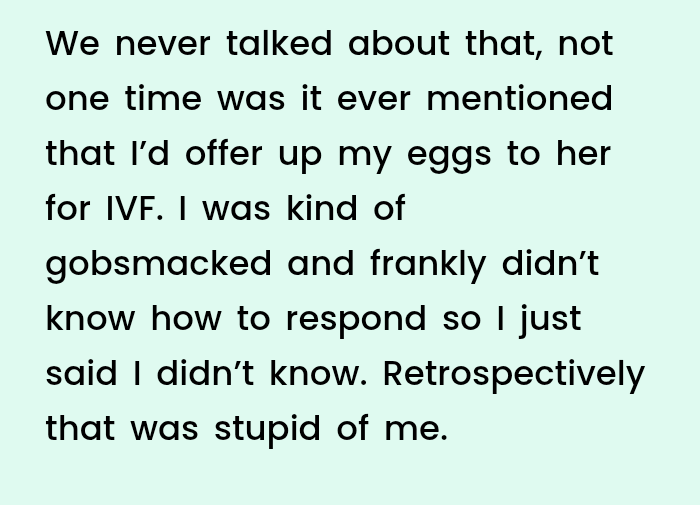
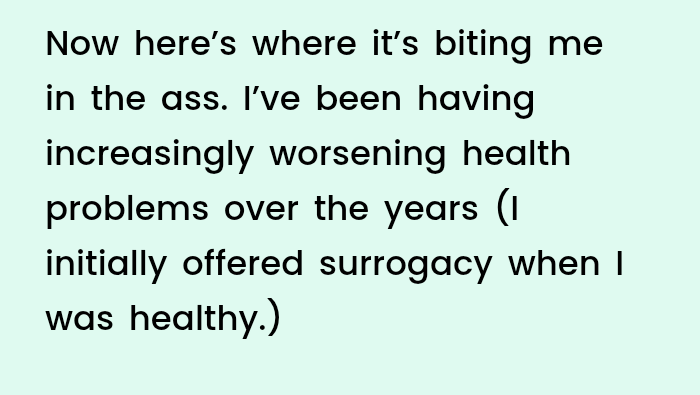
The story begins years earlier, when the author was healthy and offered to potentially become a surrogate for their sister if every other option failed. It wasn’t an easy offer to make even then. They openly admit that pregnancy wasn’t something they truly wanted, but they were willing to endure discomfort out of love for their sister.
That context is incredibly important.
People often make promises based on the circumstances they are living in at the time. Those circumstances can change dramatically. Health changes. Relationships change. Personal identity evolves. What seemed possible years ago may become impossible later, and acknowledging that reality isn’t necessarily breaking a promise—it can simply mean life has taken an unexpected turn.
Coming Out Changed More Than One Part of Life
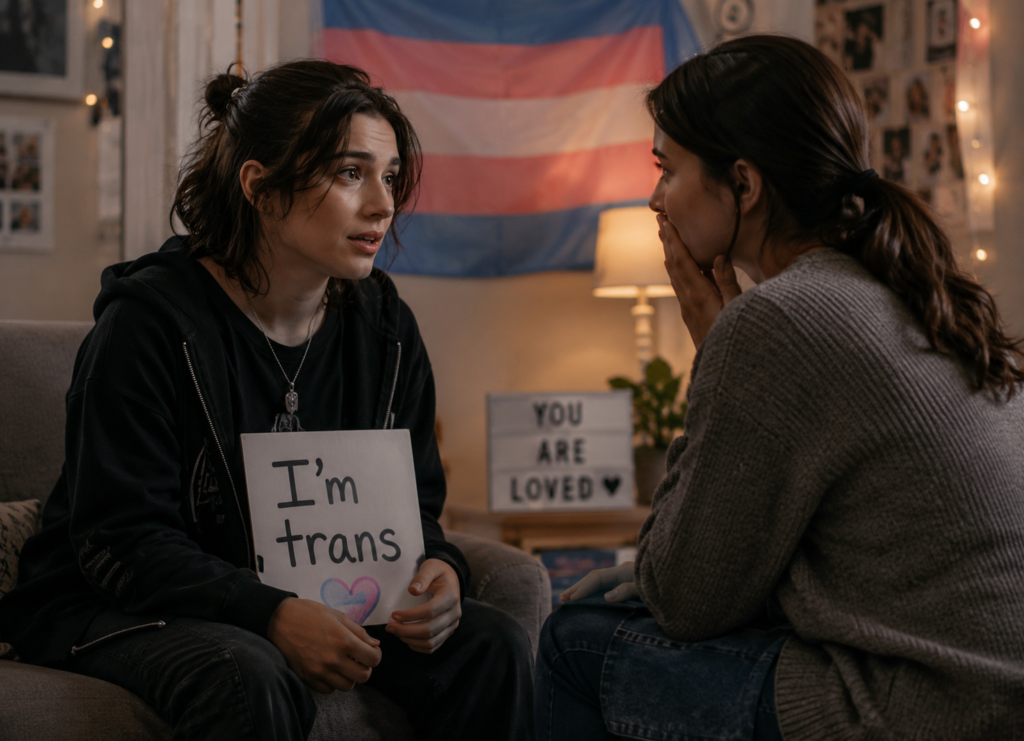
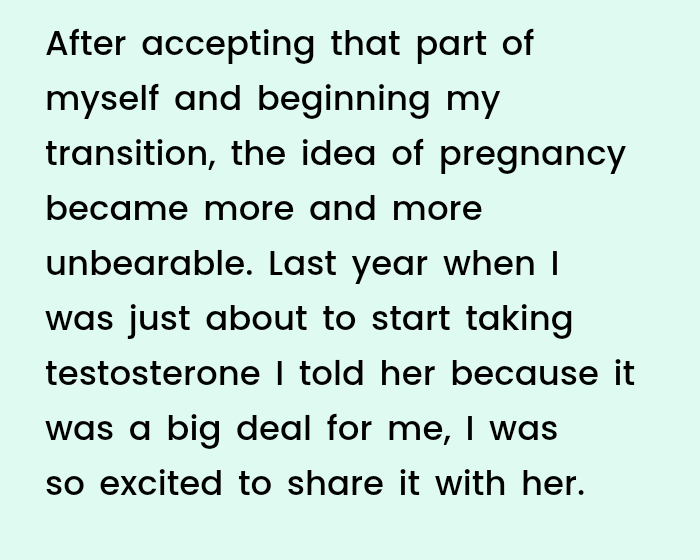
One of the most emotional moments in the article is when the author describes finally accepting their identity and beginning their gender transition.
Coming out as transgender is often a deeply personal journey that requires courage, self-reflection, and vulnerability. For many people, it represents finally living authentically after years of suppressing who they truly are.
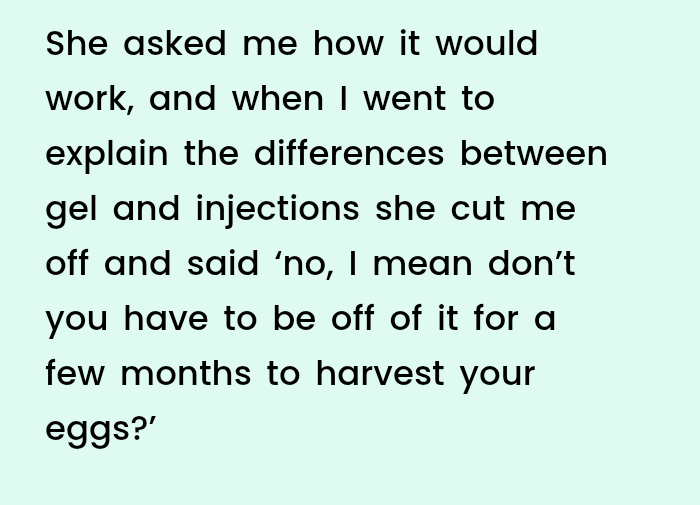
Instead of receiving excitement or emotional support during such a significant milestone, the first response they received from their sister wasn’t about their happiness or well-being.
It was about their eggs.
That moment clearly left a lasting emotional impact. While the sister may have been thinking about her own fertility struggles, the timing unintentionally shifted the focus away from an important life event and onto reproductive possibilities.
Sometimes what hurts people most isn’t what is said—but what isn’t.
Health Problems Changed Everything
As the story progresses, the situation becomes even more complicated.
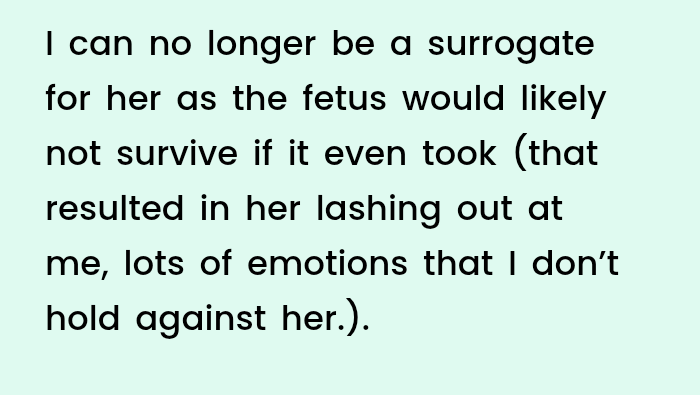
The author develops worsening health problems, eventually reaching the point where carrying a pregnancy is no longer medically safe. Doctors determine that surrogacy is no longer an option because both the pregnancy and the fetus could be at serious risk.
This isn’t a personal choice.
It’s a medical reality.
Unfortunately, infertility and reproductive struggles often create enormous emotional pressure for everyone involved. The sister’s disappointment is understandable, but disappointment does not erase medical facts.
Sometimes life forces people to let go of plans they desperately wanted.
That grief deserves compassion, but so does the person whose body is facing those medical challenges.
Major Surgery Brings Another Difficult Conversation
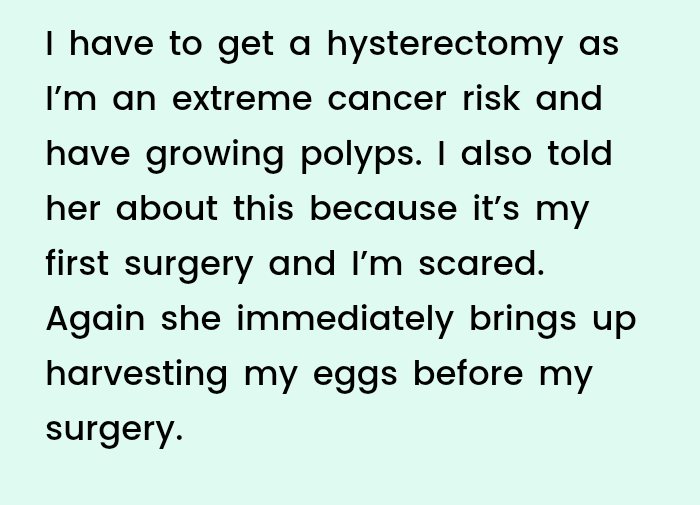
Perhaps one of the hardest scenes in the article occurs when the author reveals they need a hysterectomy due to an extremely high cancer risk and growing polyps.
This should have been a moment centered around fear, comfort, and emotional support.
Instead, the conversation once again turned toward harvesting eggs before surgery.
Reading that scene, it’s easy to understand why the author feels conflicted.
They weren’t discussing fertility.
They were discussing a frightening surgery and potential cancer risk.
Moments like these illustrate how two people experiencing different kinds of pain can unintentionally stop hearing each other. One person is thinking about survival and medical treatment. The other is desperately focused on preserving the possibility of having a biological child.
Neither pain is imaginary.
But the timing creates additional emotional wounds.
The Ethical Question Goes Beyond Egg Donation
Many readers may initially think this story is only asking whether someone should donate their eggs.
In reality, the bigger question is much broader.
Should anyone ever feel obligated to undergo a medical procedure because they once offered to help someone else?
Egg retrieval is not a simple donation.
It often involves hormone treatments, medical monitoring, procedures, physical discomfort, and emotional considerations.
It also creates lifelong biological connections that some people simply aren’t comfortable with.
These are deeply personal decisions that deserve respect regardless of the final answer.
The Fear of Passing on Serious Health Conditions
Another major aspect of this article involves genetics.
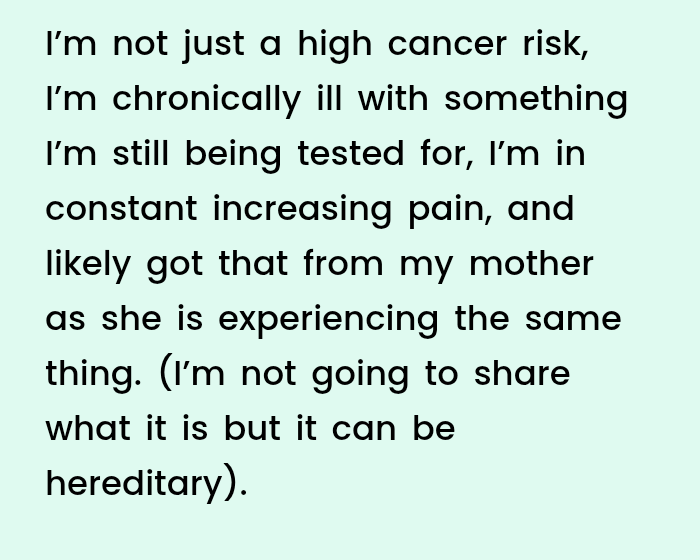
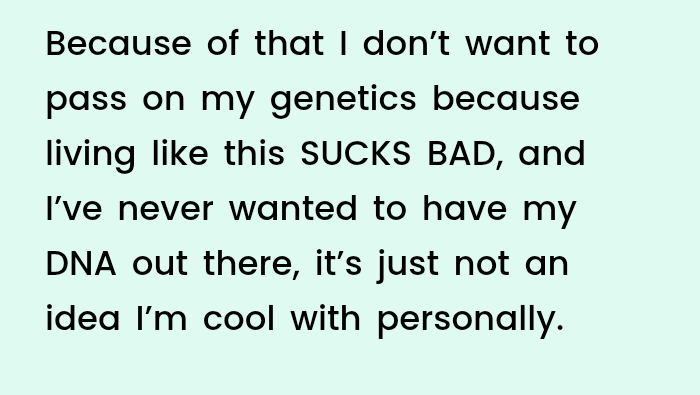
The author explains that they may have inherited a chronic illness from their mother and worries about passing those same genes on to another child.
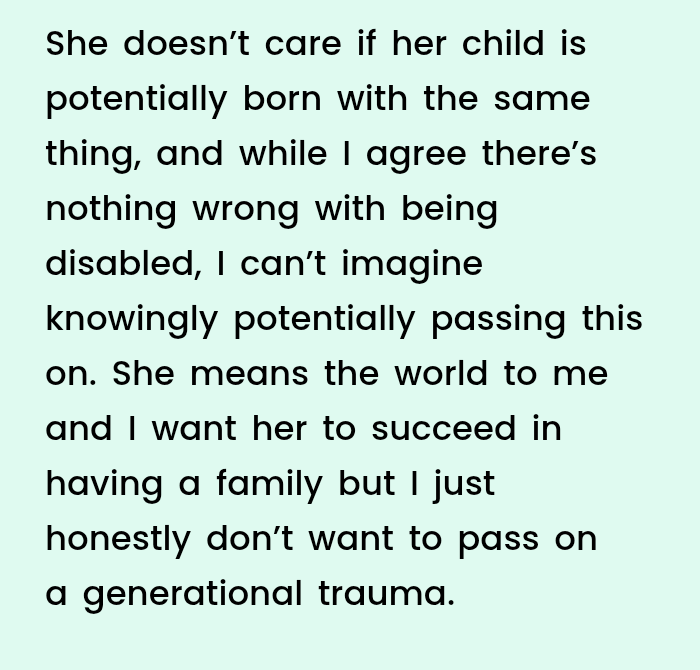
This concern isn’t rooted in prejudice against disability.
In fact, they explicitly acknowledge that disability does not reduce a person’s worth.
Instead, the concern comes from firsthand experience.
Living with chronic illness, constant pain, and uncertainty has shaped their perspective in a way that many healthy people may never fully understand.
Choosing not to knowingly pass along those risks is an intensely personal ethical decision.
Reasonable people may disagree, but it is certainly not an unreasonable concern.
Bodily Autonomy Doesn’t End Because Someone Else Is Hurting
One of the strongest themes throughout this story is bodily autonomy.
Every person has the right to decide what medical procedures they undergo.
That principle remains true regardless of family relationships.
Wanting a child is deeply meaningful.
Wanting to protect your own body is equally meaningful.
These two truths can exist at the same time without making either person a villain.
Sometimes compassion means recognizing that another person’s body is not something we are entitled to, even when our own dreams depend on it.
Family Expectations Can Create Enormous Pressure
Another heartbreaking aspect of the article is the emotional weight carried by family expectations.
The author repeatedly expresses guilt.
They aren’t refusing because they don’t love their sister.
Quite the opposite.
They clearly love her deeply.
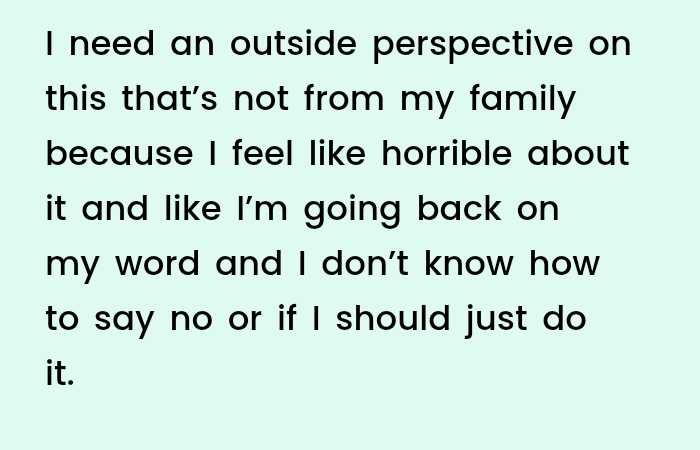
Their struggle comes from feeling like saying “no” somehow makes them selfish or dishonest.
Many people experience similar feelings whenever family members ask for something significant.
The desire to avoid disappointing loved ones can become so powerful that people begin questioning their own boundaries.
Healthy families should allow space for difficult conversations without making anyone feel guilty for protecting their own health.
There Are No Easy Villains Here
One reason this story resonates with so many readers is because it avoids simple good-versus-bad storytelling.
The sister is facing years of infertility and emotional heartbreak.
The author is facing chronic illness, major surgery, gender transition, and fears about inherited disease.
Both are grieving different futures.
That doesn’t excuse pressure or unrealistic expectations, but it helps explain why emotions are running so high.
Sometimes conflict grows not because someone intends to hurt another person, but because two forms of suffering collide.
The Importance of Respecting Boundaries
People often believe saying “no” means they don’t care.
In reality, boundaries simply define what someone can reasonably give without sacrificing their own well-being.
Medical decisions, reproductive choices, and genetic parenthood are among the most personal boundaries a person can have.
Respecting those boundaries is essential, even when the answer is painful to hear.
A Compassionate Way Forward
Perhaps the healthiest path for everyone involved would be one built on honest communication rather than obligation. The author deserves the freedom to make medical decisions based on their health, identity, and personal values without feeling pressured or guilty. At the same time, the sister deserves empathy for the grief and disappointment that often accompany infertility. Those emotions are real and deserve compassion, but they cannot override another person’s autonomy.
Ultimately, this story is about far more than egg donation. It explores identity, chronic illness, infertility, family expectations, promises made under different circumstances, and the difficult reality that love sometimes means accepting a boundary rather than trying to change it. Every scene reminds readers that compassion must extend to everyone involved—and that protecting your own health and future does not make you a bad sibling.