
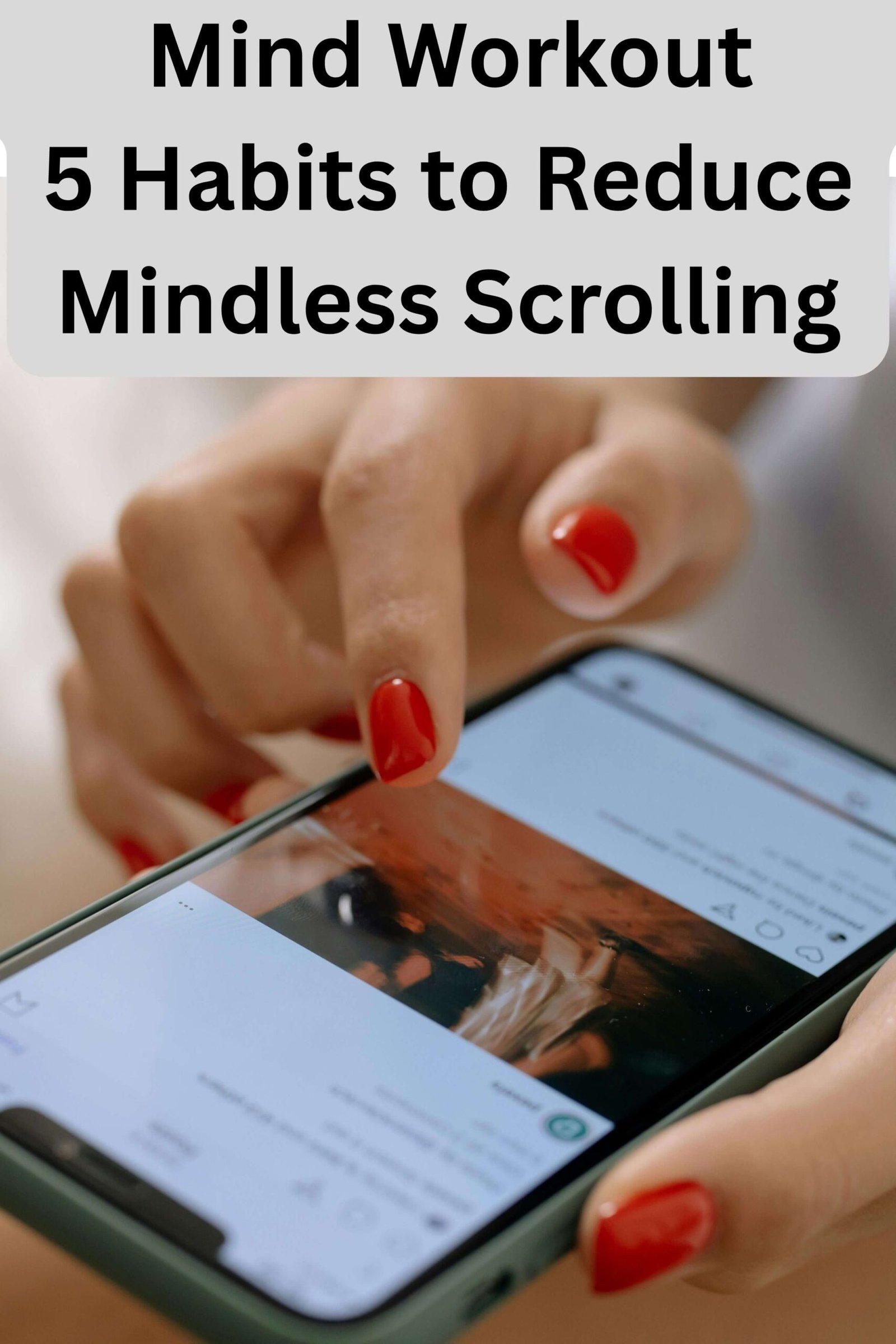
Mind Workout to Train Your Brain Without a Gym Membership
Let me confess something.
There was a time when I couldn’t go to the bathroom without taking my phone.
Yes, you heard that right, even there!
What was I doing?
Scrolling.
Reels.
News.
Random memes.
Five minutes turned into fifteen. My brain felt full — but strangely empty.
That’s when I realized something uncomfortable:
My mind wasn’t tired.
It was overstimulated.
And that was the beginning of my mind workout journey.

Why Your Brain Is Exhausted (Even If You Did Nothing All Day)
Let’s talk honestly.
Most of us don’t struggle with laziness.
We struggle with overload.
Constant notifications.
Endless scrolling.
Replying instantly.
Checking screen time… then ignoring it.
Our mental health quietly suffers while we say,
“I’m just relaxing.”
But here’s the truth:
Scrolling is not rest.
It’s stimulation.
And too much stimulation weakens focus and emotional control — the core of mental strength.
What Is a Mind Workout (And Why You Actually Need One)?
A mind workout is intentional training for your brain.
Just like push-ups build muscles, small mental exercises build:
- Focus
- Emotional regulation
- Patience
- Resilience
- Confidence
Without training, your mind reacts automatically.
With training, your mind responds deliberately.
And that difference changes everything.
The Screen Time Problem No One Talks About
Let’s address the obvious.
📱 Phone during meals.
📱 Phone in bed.
📱 Phone in the bathroom.
📱 Phone while waiting 30 seconds for an elevator.
We are uncomfortable being alone with our thoughts.
That’s not a personality flaw.
It’s a habit loop.
High screen time fragments attention. And fragmented attention weakens mental strength over time.
Your brain forgets how to sit quietly.
So we rebuild it.

Practical 5 Mind Workout Exercises (No Meditation Retreat Required)
Now let’s get useful.
Here are mental exercises that actually work — and don’t require incense or dramatic lifestyle changes.
1. The 5-Minute No-Phone Rule
Pick one daily routine (bathroom, meals, morning tea).
No phone allowed.
At first, it feels awkward.
Then you notice your thoughts slowing down.
This simple mental exercise strengthens focus muscles you didn’t know were weak.
2. Single-Task Training
Instead of:
Watching TV + scrolling + texting.
Try:
Doing one task fully.
Finish it. Then move on.
Your brain loves clarity.
This builds deep concentration — a powerful component of mental strength.
3. Controlled Reaction Practice
When something annoys you:
Don’t respond immediately.
Wait 60 seconds.
Observe your emotional reaction like a scientist.
This trains emotional regulation — essential for long-term mental health.
4. Digital Boundaries
Set a screen time limit for social apps.
Not extreme. Just realistic.
For example:
No scrolling after 10 PM.
Your sleep improves.
Your thoughts settle.
Your mornings feel lighter.
This is a powerful mind workout habit most people underestimate.
5. Daily “Uncomfortable Action”
Every day, do one small thing you usually avoid:
- Make that call
- Ask that question
- Say no politely
- Start that task
Confidence grows when your brain sees proof of capability.
That’s how mental strength becomes real — not motivational quotes.

The Funny (But Serious) Bathroom Phone Habit
Let’s revisit it.
Taking your phone into the bathroom isn’t the problem.
The problem is:
Your brain can’t tolerate stillness.
Stillness feels unfamiliar.
But stillness is where clarity lives.
When I stopped taking my phone there, something strange happened.
I started thinking again.
Ideas came back.
Solutions appeared.
My anxiety reduced slightly, because my brain finally had space.
That’s what a proper mind workout creates — mental space.
The Hard Days
Some days you will fail.
You’ll scroll for 40 minutes.
You’ll react emotionally.
You’ll ignore your screen time warning.
That’s normal.
A mind workout is not about perfection.
It’s about returning to discipline.
Mental strength grows in repetition, not intensity.
What Changed After 90 Days
After practicing consistently:
- My focus improved.
- My sleep improved.
- My overthinking reduced.
- My emotional reactions softened.
Most importantly?
I felt in control again.
And control creates confidence.
Not loud confidence.
Stable confidence.
The kind that supports healthy mental health long-term.
Living Confidently With a Trained Mind
Today, I still scroll.
I still use social media.
But I don’t let it use me.
My mind workout is now a daily hygiene habit — like brushing teeth.
Because protecting mental health is not dramatic.
It’s disciplined. Many professional mental health experts follow research-based insights on resilience and mental health.
If you feel scattered, distracted, mentally drained — you don’t need a life overhaul.
You need structured mental training.
- Start small.
- Protect your attention.
- Guard your screen time.
- Train your reactions.
And slowly, your mental strength becomes visible — in calm decisions, steady focus, and confident responses.
Conclusion
Your brain is powerful. But it’s also trainable. A daily mind workout protects your focus, strengthens emotional control, and improves long-term mental health.
In a world of constant scrolling, mental strength is a competitive advantage. And the best part? You build it quietly. One phone-free moment at a time. Am I asking for too much?
FAQs
Q1: How long should a daily mind workout take?
Even 10–15 intentional minutes can improve focus and emotional control over time.
Q2: Does reducing screen time improve mental health?
Balanced screen habits can reduce overstimulation and improve sleep, clarity, and emotional regulation.
Q3: Can mind workout habits improve productivity?
Yes. Better focus and reduced distraction directly improve performance and efficiency.
Q4: Is scrolling harmful?
Moderation is key. Excessive scrolling may fragment attention and increase mental fatigue.
3 thoughts on “Mind Workout – 5 Habits to Reduce Mindless Scrolling”