
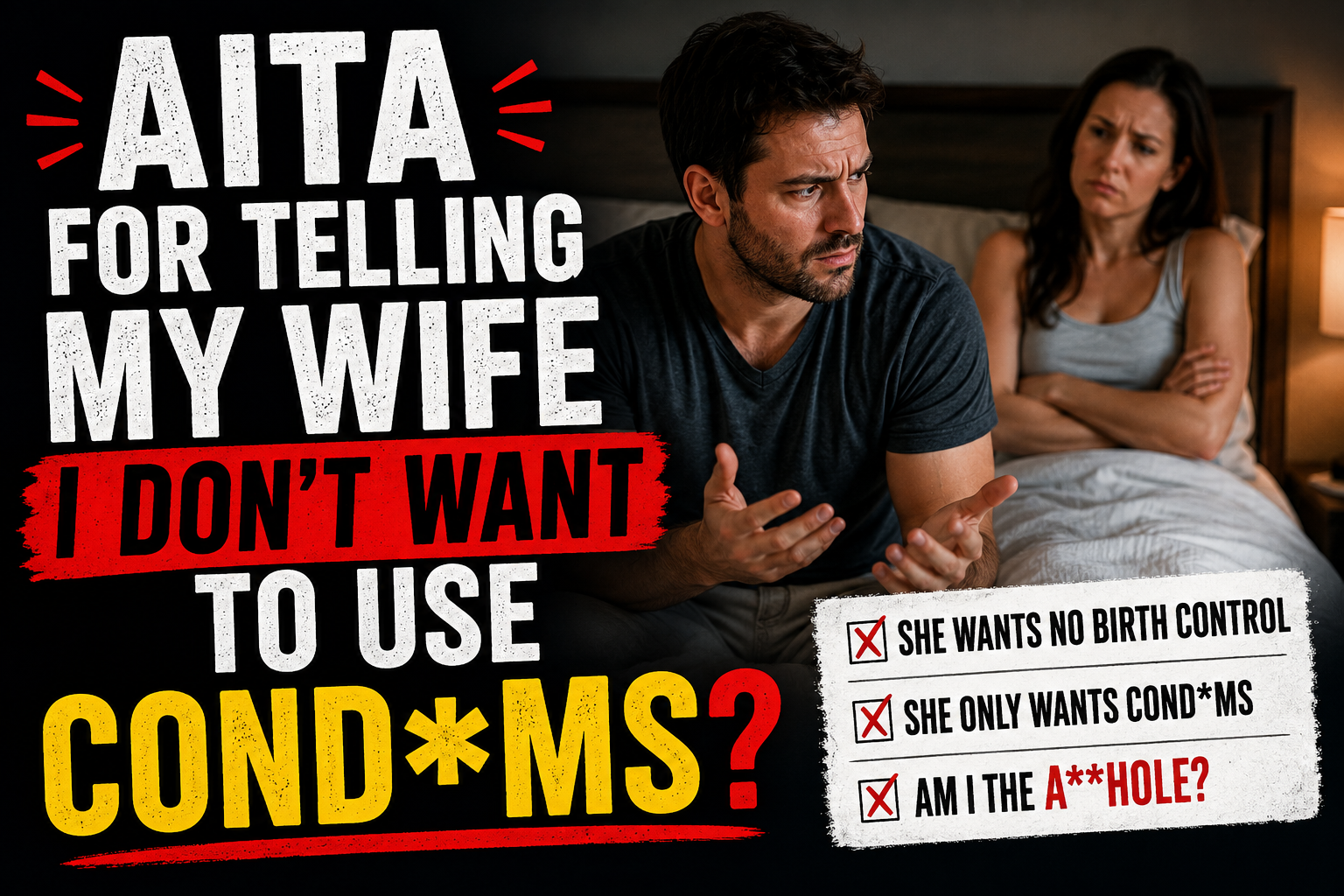
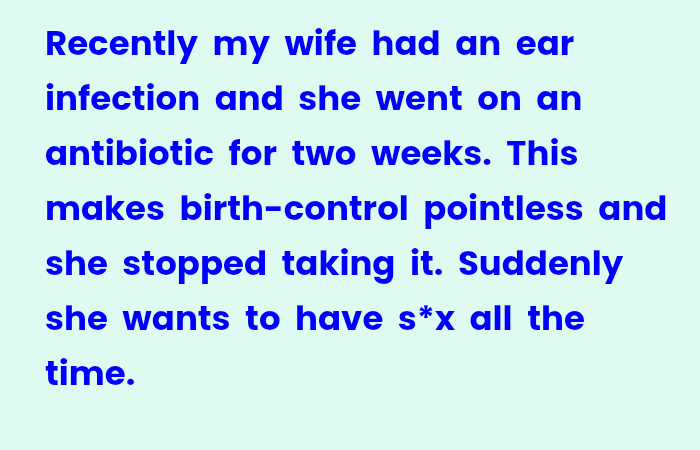
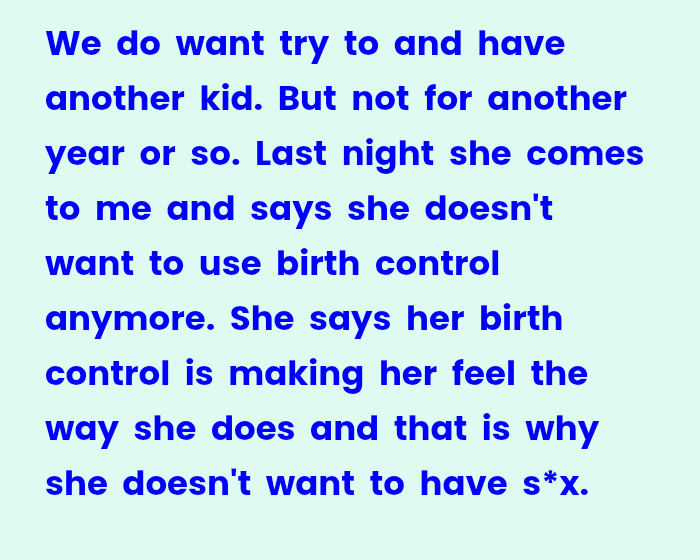
After years of struggling with a nearly nonexistent s*x life, husband thought things were finally improving when his wife revealed that birth control had been affecting her desire for intimacy.
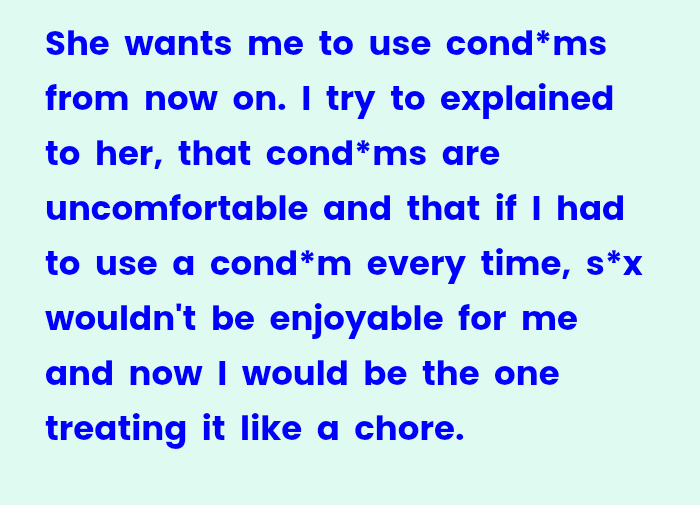
However, their renewed connection quickly turned into a heated disagreement when she refused to use any form of birth control going forward and asked him to use a cond*m instead.
The husband explains that his frustration isn’t simply about frequency. He misses feeling wanted.


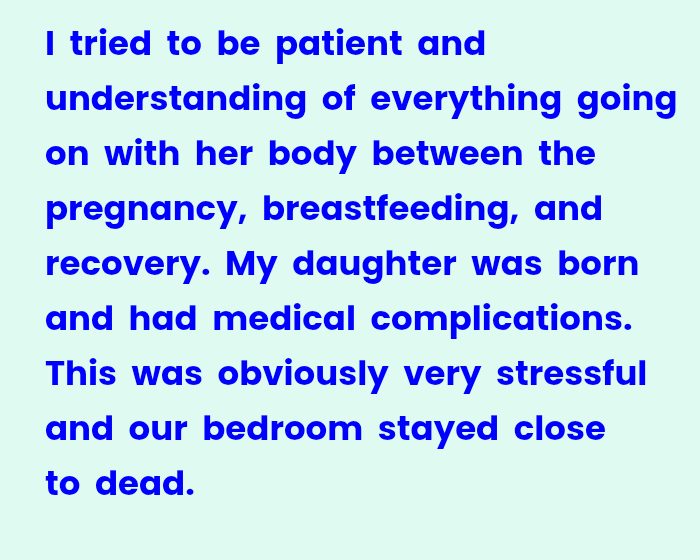

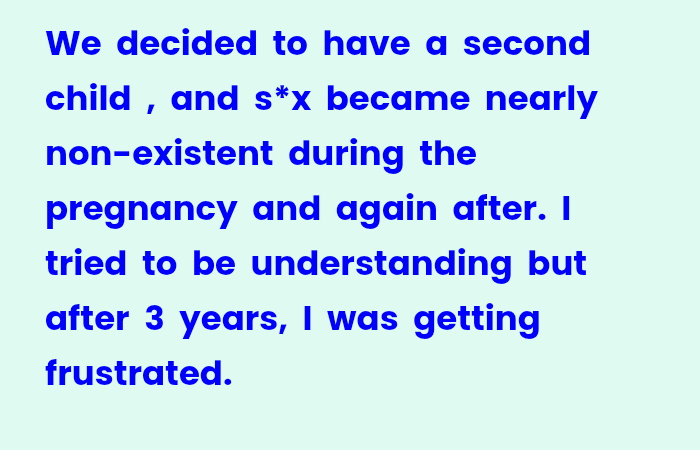
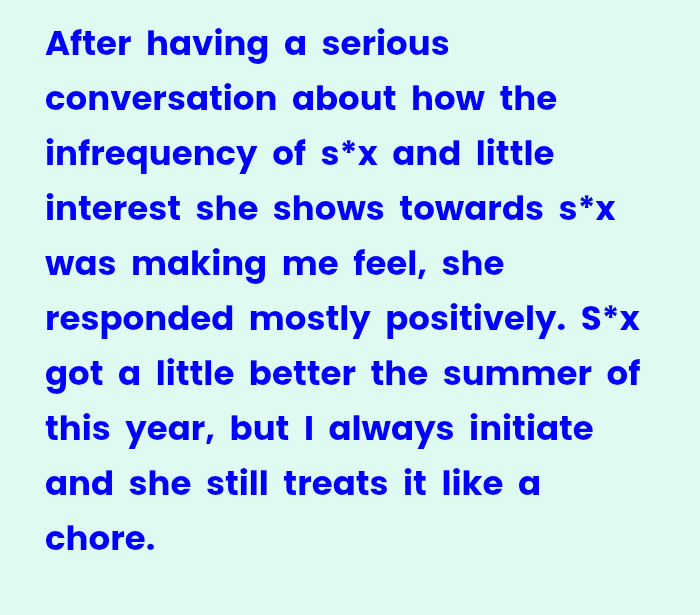





Conversations about s*x, birth control, and family planning can be some of the most sensitive discussions in a marriage. They involve much more than physical intimacy—they touch on trust, communication, personal comfort, health, and long-term goals.
This story highlights how even couples who deeply care about each other can find themselves in conflict when their needs and experiences don’t perfectly align.
Rather than being about one argument, it reflects years of emotional buildup, changing circumstances, and the challenge of navigating marriage after children.









Analysis
Parenthood Can Change Intimacy in Unexpected Ways
One of the biggest themes in this story is how dramatically life changes after becoming parents. Pregnancy, childbirth, breastfeeding, sleepless nights, stress, and the demands of raising young children often leave very little physical or emotional energy for intimacy.
Many couples experience changes in their s*x life during this stage of life, and those changes can last much longer than either partner initially expects.
Neither partner is necessarily at fault for these changes. Physical recovery and hormonal shifts can significantly affect desire, while the other partner may struggle with feelings of rejection, loneliness, or wondering whether they are still attractive to the person they love. These emotions are common, but they can become painful when they remain unspoken for years.
Birth Control Can Affect People Differently
One of the most important moments in this story comes when the wife explains that hormonal birth control has been affecting how she feels. While not everyone experiences side effects, many people report changes in mood, energy, libido, headaches, anxiety, or other symptoms while using hormonal contraceptives. Every person’s body responds differently, and what works well for one individual may be difficult for another.
Her decision to stop using birth control appears to have had a positive effect on her desire for s*x, which helps explain why intimacy suddenly became more frequent and enjoyable. At the same time, she also has every right to make decisions about what medications or medical devices she is comfortable using. Personal health choices deserve respect, especially when they involve long-term physical well-being.
Shared Responsibility Means Listening to Each Other
At the center of the disagreement is a question many couples eventually face: how should responsibility for contraception be shared?
For years, the wife carried the responsibility of hormonal birth control. Now she no longer wants to continue, and naturally that responsibility shifts toward the husband through the use of a cond*m. From his perspective, however, he also has concerns about comfort and enjoyment, particularly after already struggling through years of a difficult s*x life.
This doesn’t automatically make either person selfish.
Both partners are expressing genuine concerns.
She wants to avoid medications that negatively affect her body.
He worries that using a cond*m every time will make intimacy less enjoyable after years of already feeling disconnected.
Healthy relationships recognize that both experiences deserve empathy rather than dismissal.
Communication Matters More Than Winning
One encouraging aspect of this story is that the couple is actually talking about the issue. While the conversation became emotional, discussing difficult topics openly is far healthier than avoiding them altogether.
Sometimes relationship conflicts become bigger than the issue itself because partners begin focusing on proving who is “right” instead of understanding why the other person feels the way they do.
Instead of viewing this as one person versus the other, the healthiest mindset is approaching it as two people trying to solve one shared problem together.
When conversations remain respectful, compromise often becomes much easier to find.
Intimacy Is About More Than Physical Pleasure
For many people, s*x represents emotional connection, affection, reassurance, and closeness—not just physical satisfaction.
When someone feels that intimacy has become routine or obligatory, it can affect self-esteem and create feelings of rejection, even if their partner still loves them deeply.
Likewise, someone experiencing hormonal changes or exhaustion may genuinely care for their spouse while still struggling with physical desire.
Both emotional experiences are valid.
Recognizing that can help couples avoid turning intimacy into a source of blame.
Marriage Requires Flexibility
Relationships rarely remain exactly the same over time.
Bodies change.
Health changes.
Careers change.
Children change daily routines.
What worked during dating may no longer work after several years of marriage and multiple pregnancies.
Healthy couples adapt together rather than expecting life to remain frozen in the honeymoon phase.
Sometimes that means trying different contraceptive options.
Sometimes it means exploring different ways of expressing intimacy.
Sometimes it simply means having patience while navigating temporary seasons of life.
Flexibility often becomes one of the greatest strengths in long-term relationships.
Society Doesn’t Talk Enough About These Conversations
Stories like this resonate because many couples quietly experience similar struggles but rarely discuss them openly. Topics involving s*x, contraception, hormonal health, and intimacy often carry unnecessary embarrassment or stigma.
As a result, many couples attempt to solve complicated medical and emotional issues without enough information or professional guidance.
Open conversations with healthcare providers, relationship counselors, or qualified medical professionals can often provide options that couples never knew existed.
There is no universal solution because every relationship and every body is different.
Compassion Should Go Both Ways
One lesson this story teaches is that compassion needs to flow in both directions.
The wife deserves understanding for wanting to prioritize her physical health and avoid medications that negatively affect her body.
The husband also deserves understanding for expressing how years of feeling unwanted affected his emotional well-being and why he has concerns about changes that might further impact intimacy.
Healthy marriages are strongest when neither partner’s feelings are dismissed simply because the other person’s concerns seem more important.
Listening doesn’t require agreeing with everything.
It simply means recognizing that your partner’s feelings are real.
Looking for Solutions Instead of Taking Sides
Rather than focusing on assigning blame, situations like this benefit most from curiosity and teamwork. There may be additional contraceptive options, different types of cond*ms, fertility awareness methods discussed with a healthcare provider, or other approaches that better suit both partners’ needs. What matters most is that decisions are made together with mutual respect instead of pressure or resentment.
The willingness shown later in the story to learn more, speak with a doctor, and consider different options is actually encouraging. Growth often begins when people become open to new information instead of assuming they already have all the answers.
Final Thoughts
This story isn’t really about a cond*m. It’s about communication, empathy, physical health, emotional connection, and learning how to navigate the changing realities of marriage. Parenthood, hormones, stress, and time can all affect intimacy in ways couples never anticipated. That doesn’t mean the relationship is failing—it means the relationship is evolving.
The strongest marriages aren’t the ones that never face uncomfortable conversations. They’re the ones where both people feel safe expressing their concerns, where neither partner’s experiences are minimized, and where solutions are pursued together instead of treating each other like opponents. Whether discussing s*x, contraception, or family planning, kindness and honest communication remain the most effective tools any couple can have.