
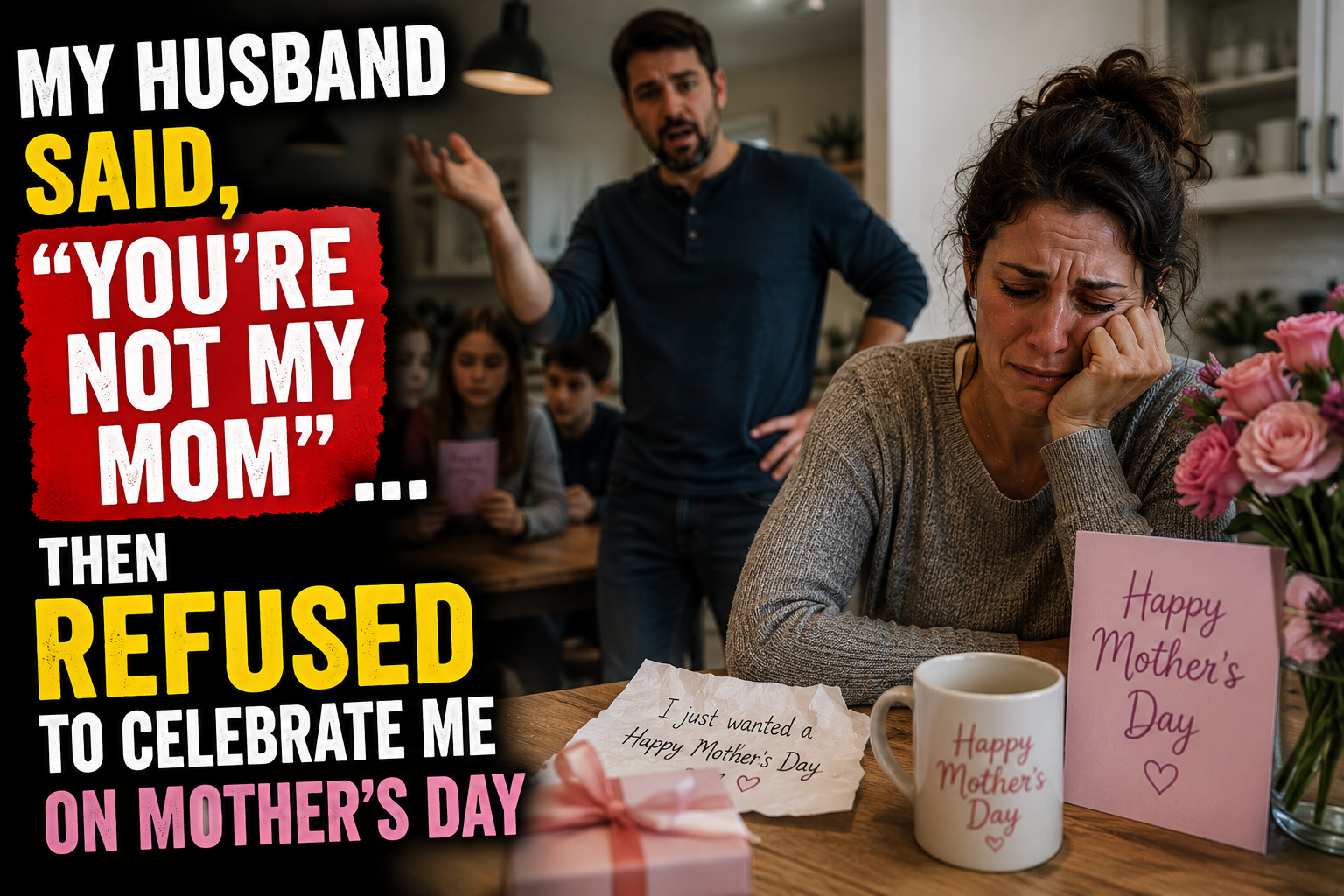
A woman who has spent years caring for her blended family, planning holidays, celebrating birthdays, and supporting both her own children and her stepchildren is left heartbroken on Mother’s Day when her husband refuses to acknowledge her.
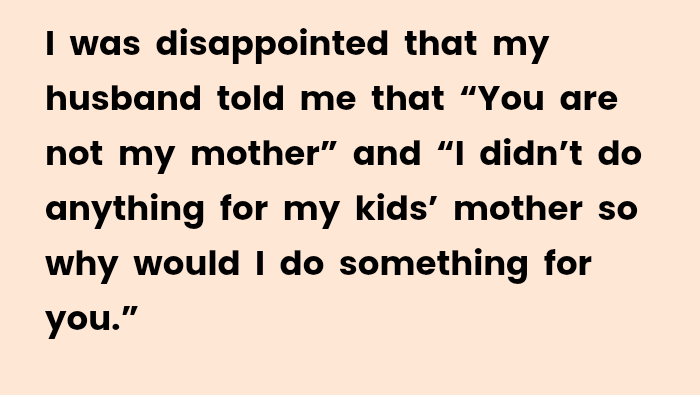
His explanation—”You’re not my mom”—leaves her questioning whether she’s asking for too much or simply hoping for the appreciation and respect every partner deserves.
At the heart of this story isn’t a Mother’s Day card or an expensive gift—it’s the universal human desire to feel appreciated.
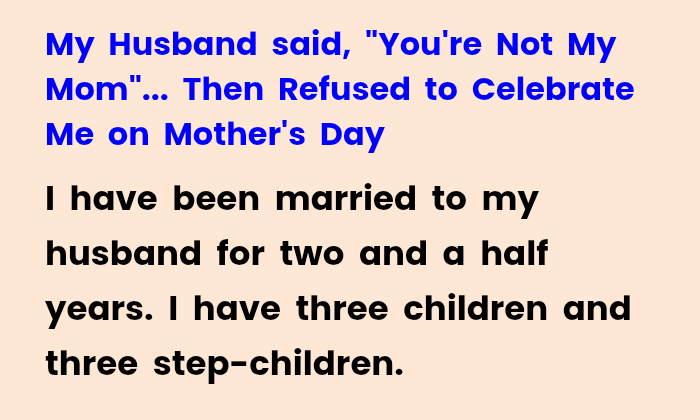
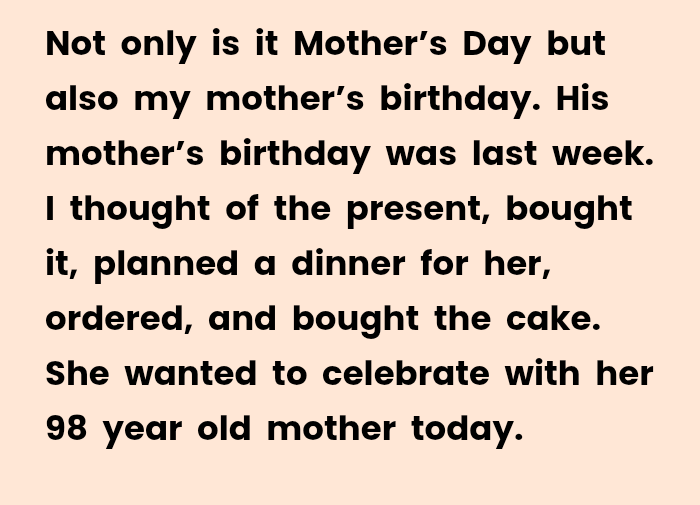
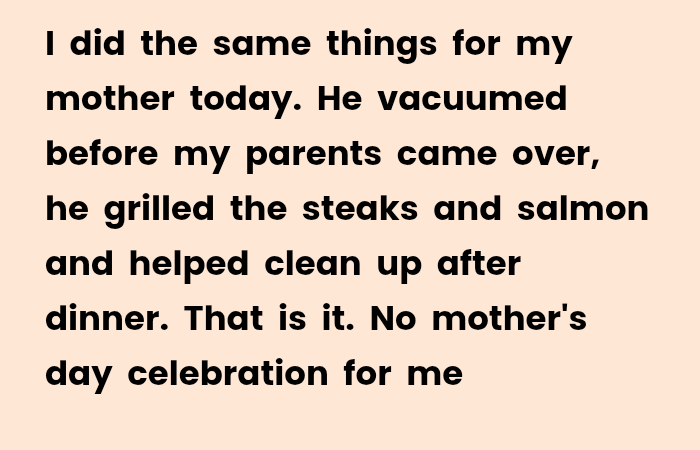
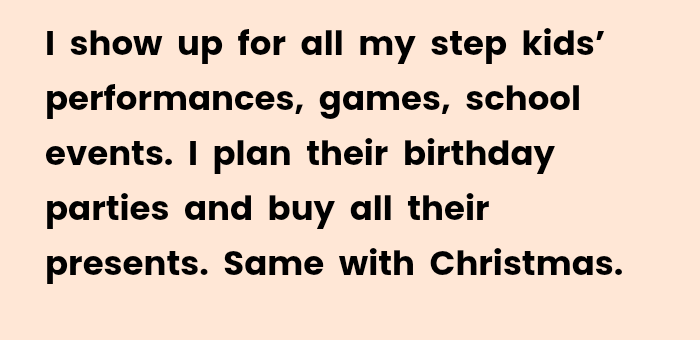
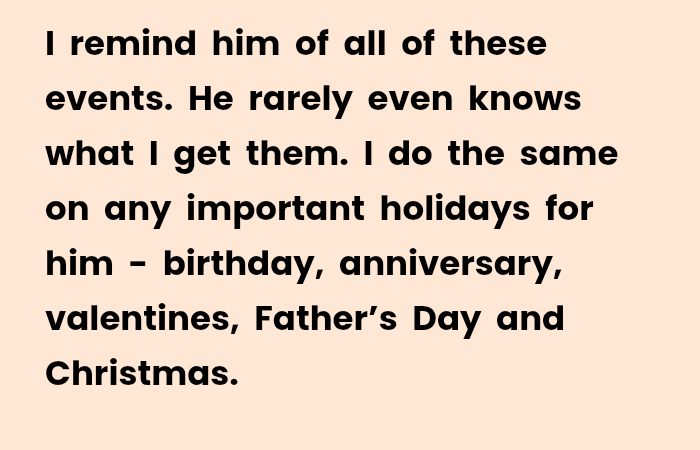
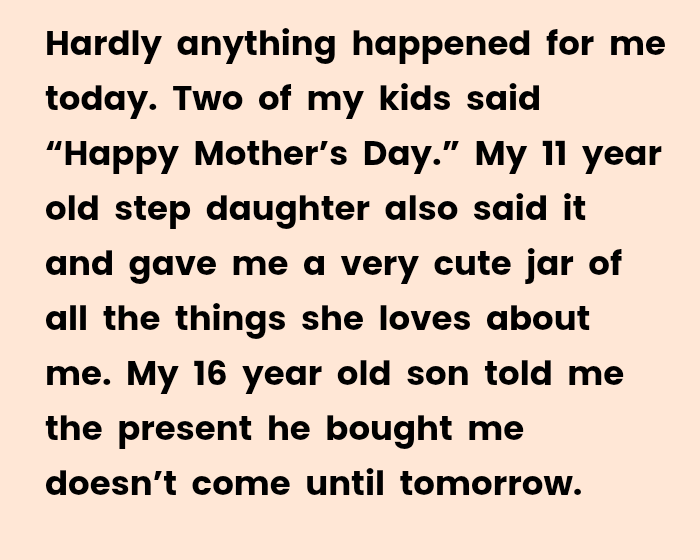
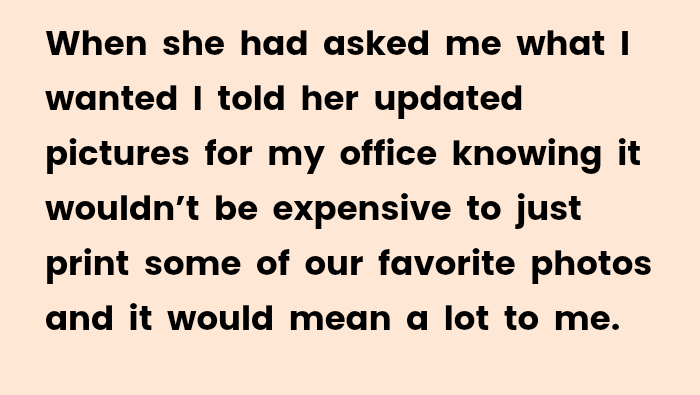
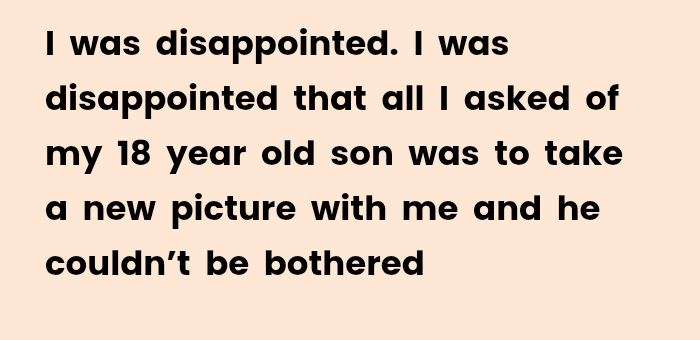
The woman in this story didn’t simply marry a man—she embraced his children as part of her own family.
She attended their performances, celebrated their birthdays, bought Christmas presents, remembered important dates, and invested her time and energy into helping create meaningful childhood memories.
That kind of commitment deserves recognition.
Analysis
Appreciation Is About Love, Not Obligation
Most people don’t remember holidays because of how much money was spent. They remember how they were made to feel.
A simple “Happy Mother’s Day,” a handwritten note, or helping a child with a thoughtful gift can carry far more emotional value than anything purchased in a store.
This story resonates because many people have experienced moments where their efforts seemed invisible.
After spending years caring for children, organizing family events, remembering birthdays, buying gifts, and keeping traditions alive, hearing “You’re not my mom” can feel like every contribution has been reduced to a technicality rather than recognized as an act of love.
Being a Parent Is More Than Biology
Modern families come in many different forms. Blended families, stepfamilies, adoptive families, and chosen families all demonstrate that parenting isn’t defined solely by biology.
It’s defined by showing up consistently, offering support, providing comfort, celebrating milestones, and helping children grow.
Whether someone is a biological parent, stepparent, adoptive parent, or guardian, the emotional labor they contribute has real value. Children often remember the people who were present for them far more than the labels attached to those relationships.
Emotional Labor Often Goes Unnoticed
One of the most important themes in this story is emotional labor.
Many family responsibilities happen quietly behind the scenes. Remembering birthdays, planning dinners, organizing holidays, buying gifts, scheduling appointments, keeping traditions alive, and making sure everyone feels included require time, attention, and mental energy.
These tasks often become so routine that they’re taken for granted.
When one partner carries most of that invisible workload, appreciation becomes incredibly important. Feeling acknowledged reminds people that their efforts matter. Feeling ignored can slowly create resentment, exhaustion, and loneliness.
This story isn’t really about one holiday—it reflects years of emotional investment that the writer no longer feels are being recognized.
Words Can Hurt More Than Silence
Sometimes a single sentence changes the way someone views a relationship.
“You’re not my mom.”
Those five words may have been intended as a logical explanation, but emotionally they communicate something very different.
Instead of hearing, “I appreciate everything you do,” the message received was, “Your role doesn’t matter to me.”
Language carries enormous emotional weight inside relationships. People rarely remember every argument word for word, but they often remember the sentences that made them feel unseen, unwanted, or unimportant.
Kindness costs very little, but it leaves a lasting impression.
Marriage Is About Partnership, Not Technicalities
Healthy marriages aren’t built around keeping score.
They’re built around asking a simple question:
“What can I do today to make my partner feel loved?”
The husband’s argument focused on biology and obligation.
The wife’s disappointment centered on appreciation.
Those are two completely different conversations.
Relationships thrive when partners stop asking, “Do I have to?” and instead ask, “How can I show my partner they’re valued?”
The strongest marriages often succeed because both people willingly go beyond what is technically required.
Small Gestures Often Mean the Most
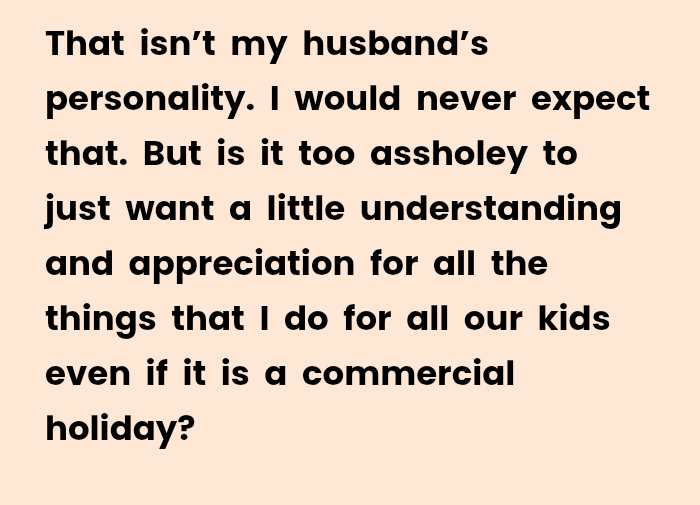
One detail that stands out is how modest the wife’s expectations actually were.
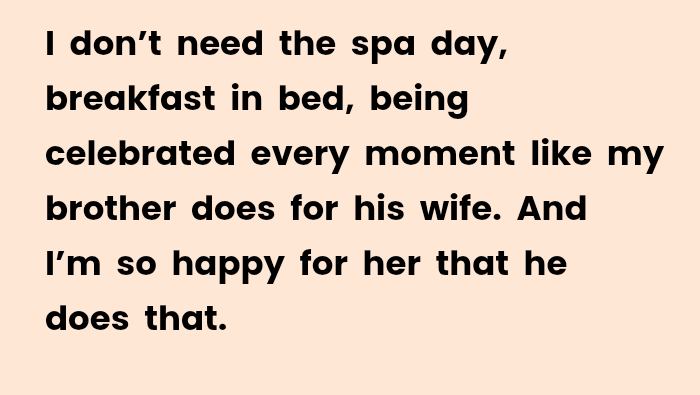
She wasn’t asking for jewelry.
She wasn’t expecting expensive vacations.
She didn’t want breakfast in bed or elaborate surprises.
She simply wanted acknowledgment.
A greeting.
A card.
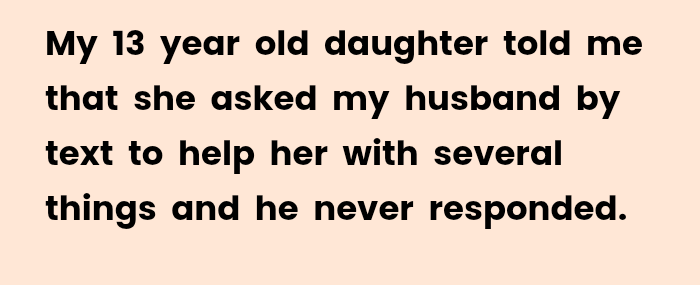
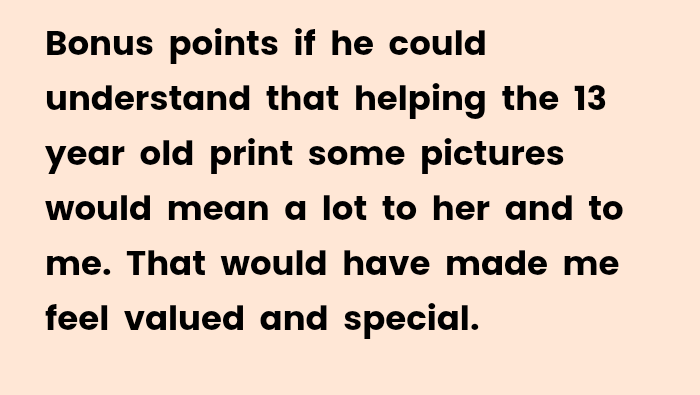
Helping a thirteen-year-old print family photographs.
Those requests weren’t about material gifts—they were about feeling seen.
Often, it’s the smallest gestures that leave the biggest emotional impact because they communicate thoughtfulness rather than obligation.
Blended Families Require Extra Care
Blended families bring unique joys, but they also require intentional communication and appreciation.
Stepparents often invest enormous emotional energy without always receiving the same recognition biological parents receive. Many stepmothers and stepfathers quietly step into responsibilities that aren’t legally or biologically required simply because they love their families.
Acknowledging those efforts strengthens the entire family.
When children see adults appreciating one another, they also learn how healthy relationships function. Gratitude becomes something that’s modeled rather than simply taught.
Society Often Underestimates Caregiving
This story also reflects a broader issue in society.
Caregiving is frequently treated as something people are simply expected to do rather than something worthy of appreciation.
Parents, especially mothers and stepparents, often carry enormous emotional, physical, and mental responsibilities that remain largely invisible.
Cooking.
Planning.
Remembering.
Organizing.
Comforting.
Supporting.
These responsibilities rarely receive applause, yet they are essential to keeping families functioning.
A simple expression of gratitude can remind someone that their countless unseen efforts matter.
Communication Could Have Changed Everything
Many relationship conflicts begin not because people stop loving one another, but because they stop expressing appreciation.
Perhaps the husband genuinely believed his reasoning made sense.
Perhaps he never intended to hurt his wife’s feelings.
Intent matters.
But impact matters too.
Listening without becoming defensive creates opportunities for healing.
Instead of debating whether someone “should” feel hurt, healthy couples try to understand why they feel hurt.
Empathy often resolves conflicts that logic alone cannot.
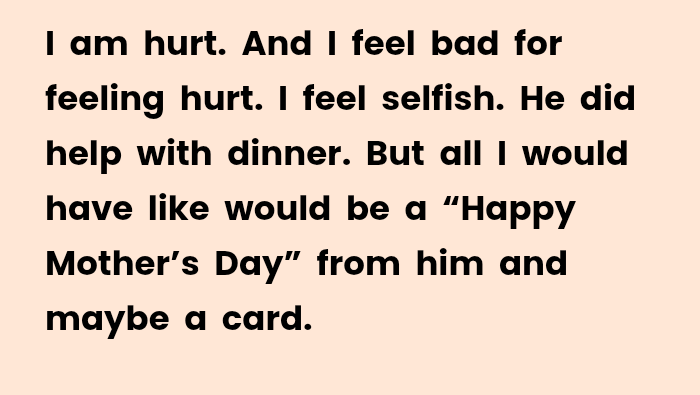
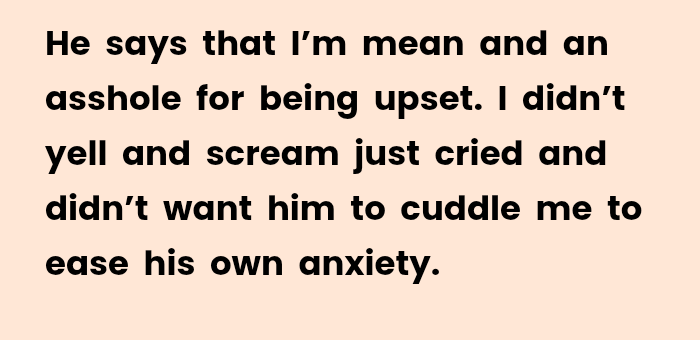
Feeling Hurt Doesn’t Make Someone Selfish
One of the saddest parts of this story is that the writer questions whether feeling disappointed makes her selfish.
It doesn’t.
Wanting appreciation isn’t selfish.
Wanting kindness isn’t selfish.
Wanting your spouse to acknowledge your role within the family isn’t selfish.
Healthy relationships depend on emotional reciprocity. Everyone wants to know that the love, effort, and sacrifices they pour into their family are noticed.
Feeling hurt after being dismissed doesn’t mean someone is demanding—it simply means they’re human.
A Gentle Reminder for Every Couple
Life becomes busy.
Children grow.
Bills pile up.
Work becomes stressful.
Over time, couples sometimes begin assuming their partner already knows they’re appreciated.
But appreciation shouldn’t remain unspoken.
Simple words like “thank you,” “I’m proud of you,” “I couldn’t do this without you,” or “Happy Mother’s Day” can strengthen relationships in ways people often underestimate.
Love grows through everyday moments of recognition far more than grand romantic gestures.
Final Thoughts
This story is about far more than Mother’s Day. It’s about feeling valued, respected, and emotionally supported within a marriage. When someone consistently gives their time, energy, and love to help build a family, it’s natural to hope those efforts will be acknowledged. Appreciation isn’t about obligation or biological titles—it’s about recognizing the people who choose, day after day, to care for those they love.
The encouraging part is that misunderstandings like this don’t always have to become permanent wounds. Honest conversations, genuine empathy, and a willingness to see the situation through each other’s eyes can often rebuild emotional connection. Sometimes people don’t realize how deeply their words affect someone until those feelings are shared openly and compassionately.
Every healthy relationship benefits from a simple truth: people flourish when they feel appreciated. A heartfelt “thank you,” a thoughtful gesture, or a few sincere words of recognition may seem small, but they can make someone feel deeply loved and remind them that everything they do for their family truly matters.