
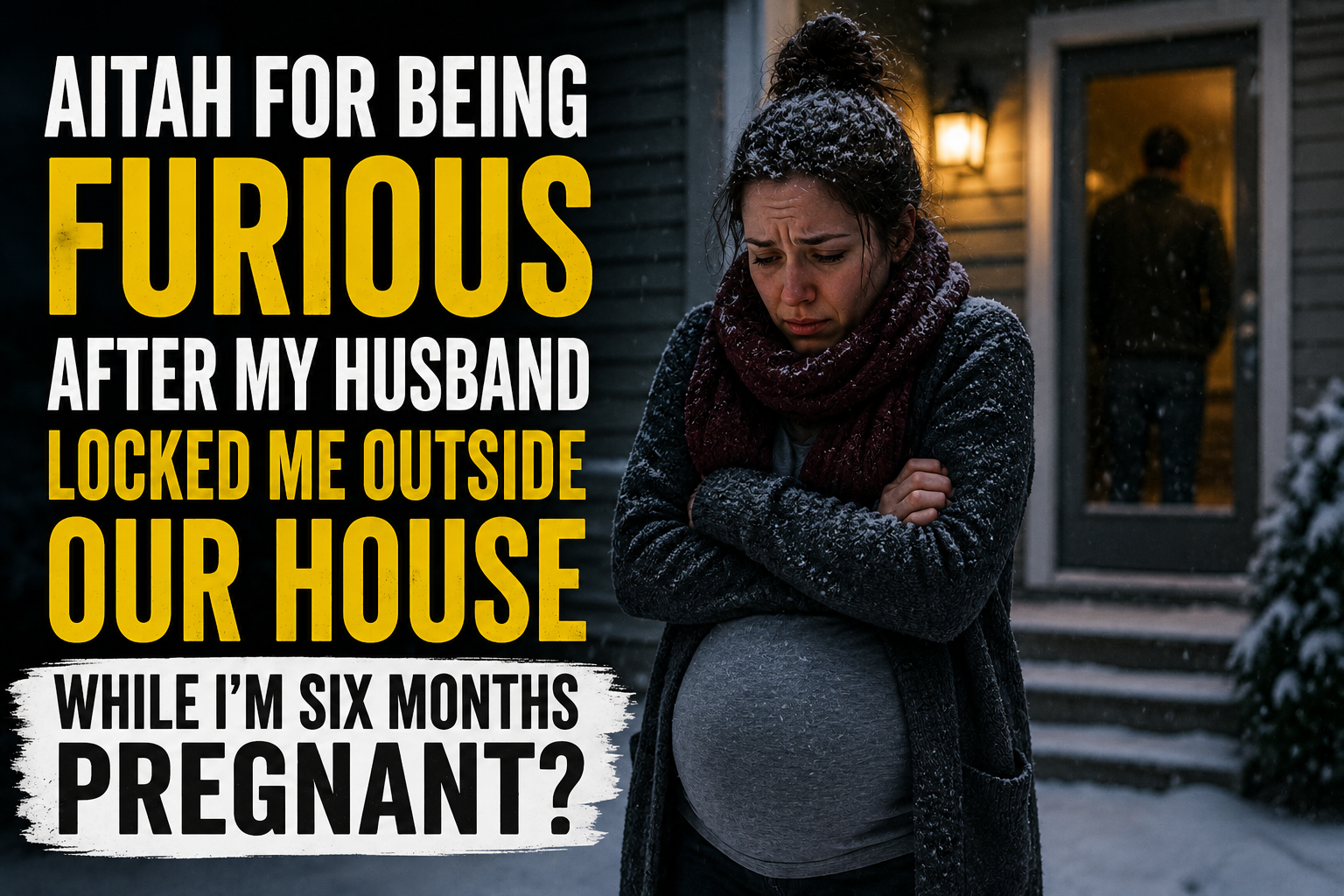
My husband and I are in our mid-twenties. We have three-year-old twin daughters, and I’m currently six months pregnant with our third child.
This morning should have been a fun family day.
We’ve had a lot of snow recently, but because we’ve both been working, our girls hadn’t had a chance to go outside and enjoy it. This is the first winter they’re old enough to actually get excited about snow, and they’ve been talking about it nonstop.
Since we both had the day off, I figured it was the perfect opportunity.
I told my husband I was going to bundle the girls up and take them outside for a little while.
He immediately said he wasn’t going because it was too cold.
I told him that was completely fine. He didn’t have to come.
Then he said he didn’t want any of us going outside because he was worried the girls would get sick.
I laughed a little and said we’d only stay out for a few minutes. It was around 25°F, not some dangerous subzero temperature. Looking back, I probably brushed off his concerns too quickly, but after that he stopped arguing, so I assumed the conversation was over.
I got the girls dressed in their winter gear, and we headed outside.
They were absolutely thrilled.
Watching them laugh and play in the snow made me feel like I’d made the right decision.
About ten minutes later, my husband opened the front door and called the girls inside.
They happily ran back into the house.
I stayed outside for another moment because I was annoyed and wanted a second to myself before going back in.
When I walked up to the front door and tried the handle…
It was locked.
At first I assumed he’d done it automatically without thinking.
I knocked.
Nothing.
I knocked again.
Still nothing.
I started calling his name.
No response.
Then I texted him.
No reply.
I called his phone.
He ignored every call.
At that point I desperately needed to use the bathroom, so I even texted him explaining that I really had to pee.
Nothing.
The worst part wasn’t even standing outside in the cold.
It was hearing one of my daughters crying inside because she knew I was outside and couldn’t understand why I wasn’t coming back in.
That absolutely broke my heart.
Eventually I gave up knocking and just sat down on the porch.
Twenty-five minutes later…
He finally opened the door.
The first thing I did was push past him so I could get to the bathroom before I had an accident.
Instead of apologizing, he was smiling.
He actually laughed and said,
“I thought you said it wasn’t that cold. What’s the problem?”
I was stunned.
Since then, we’ve barely spoken.
Here’s what’s making me question myself.
This isn’t who he normally is.
He’s usually caring, patient, and supportive. He’s never done anything remotely like this before, which is why I’m having such a hard time processing it.
I understand that he probably felt like I ignored his opinion about taking the girls outside.
Maybe he felt undermined as a parent.
If that’s the case, I’m willing to have that conversation.
But locking me out of my own home while I’m six months pregnant, ignoring my calls and messages, and leaving me outside for twenty-five minutes feels completely different.
That doesn’t feel like communication.
It feels like punishment.
Maybe I shouldn’t have dismissed his concerns.
Maybe I could have handled the disagreement better.
But I also don’t believe adults should punish their spouses like they’re misbehaving children.
So now I’m genuinely questioning myself.
AITAH for being angry about this, or am I making a much bigger deal out of it than I should?
Analysis: What This Situation Really Reveals
At first glance, this story might seem like a disagreement about taking children outside in cold weather. But when you look a little deeper, it quickly becomes clear that the real issue isn’t the snow at all.
It’s about control, respect, and how couples handle conflict.
Every relationship has disagreements. Parents constantly make different judgment calls about bedtime, food, screen time, school, or even whether it’s too cold to play outside. Those disagreements are completely normal. What’s far more important is how those disagreements are handled.
When one partner responds by trying to “teach the other a lesson” instead of having a conversation, the relationship can quickly become unhealthy. Locking someone out of their own home, refusing to answer their calls, or intentionally leaving them in an uncomfortable or vulnerable situation shifts the conflict from disagreement into punishment.
That can have lasting emotional effects.
Even if it only happens once, the person on the receiving end may start questioning whether they are emotionally safe in the relationship. Trust isn’t only built through love and affection. It’s also built through knowing that disagreements won’t turn into acts of humiliation, retaliation, or control.
Another important part of this story is the children.
Kids notice far more than adults often realize. Hearing a parent cry, seeing one parent locked outside, or witnessing conflict without understanding what’s happening can leave children feeling anxious or confused. They don’t need to understand every detail to sense that something isn’t right.
The healthiest relationships aren’t the ones that never argue. They’re the ones where both people feel heard, respected, and emotionally safe, even when they disagree. That means discussing parenting decisions calmly, acknowledging each other’s concerns, apologizing when necessary, and avoiding actions meant to embarrass or punish the other person.
If this behavior truly was a one-time incident and completely out of character, it’s worth having a serious conversation about why it happened and making it clear that it cannot happen again. If, however, similar controlling or retaliatory behaviors have happened before or begin happening more often, it may be a sign of a deeper relationship issue that deserves professional support.
At the end of the day, healthy communication solves far more problems than punishment ever will. Mutual respect, accountability, and empathy are what allow relationships to survive disagreements—not proving who’s right or getting the last laugh.