
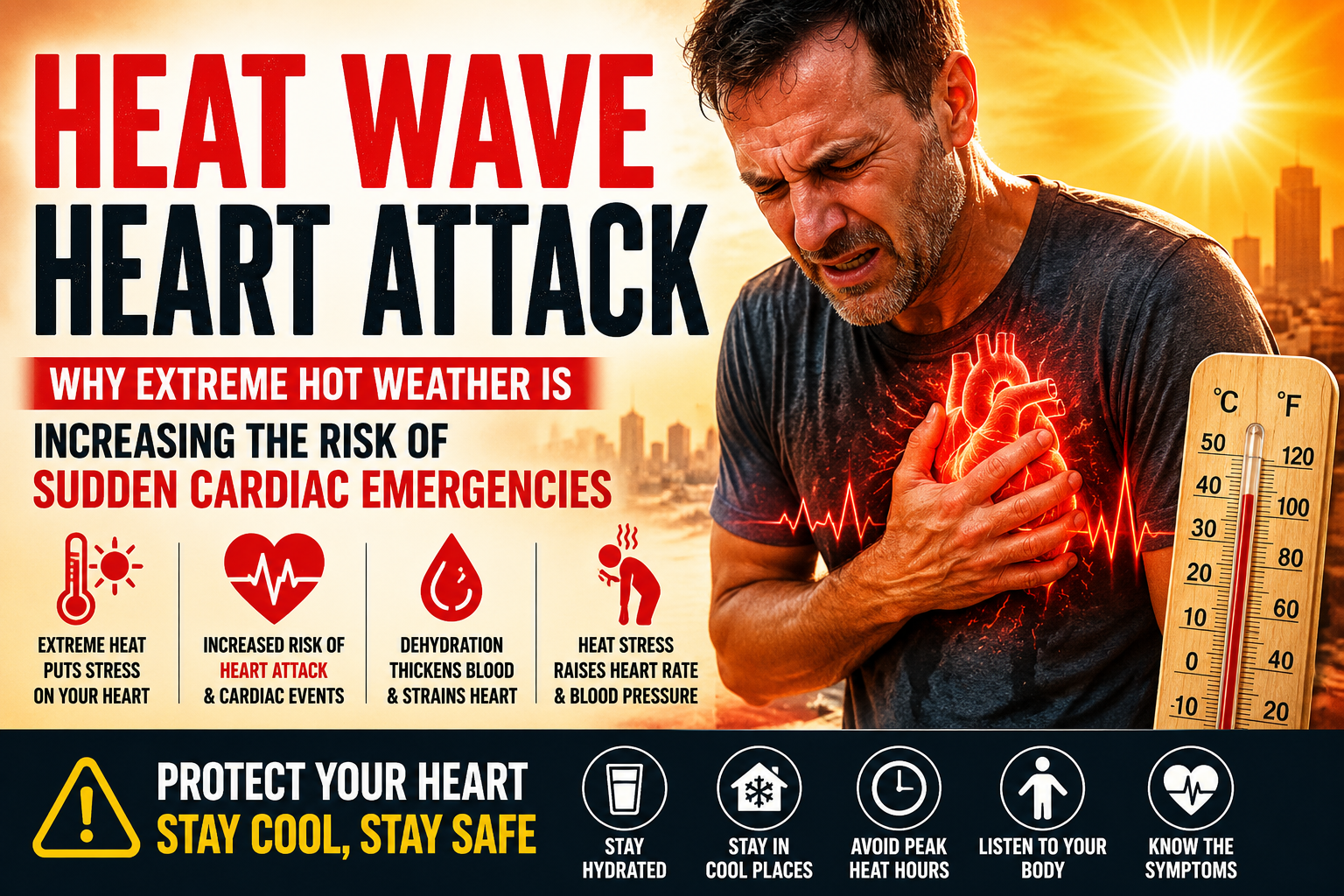
Every summer, headlines report people collapsing during record-breaking temperatures. While it may seem as though “every other person” is having a heart attack, the reality is more nuanced. Extreme heat does not directly cause heart attacks in everyone, but it can significantly increase the risk in vulnerable people, especially older adults and those with existing heart disease, high blood pressure, diabetes, or obesity
As heat waves become more frequent across the United States and the United Kingdom, doctors are urging people to take the risks seriously.
What Is a Heat Wave Heart Attack?
A heat wave heart attack refers to a heart attack that occurs during periods of unusually high temperatures when the body’s cooling system is under intense stress.
During hot weather, the heart has to work much harder to keep body temperature under control. Blood vessels widen, sweating increases, and the heart pumps faster to circulate blood toward the skin for cooling. For some people, this additional strain may trigger a heart attack or worsen existing heart conditions.
Why Does Extreme Heat Increase Heart Attack Risk?
1. The Heart Works Harder
When temperatures soar, your heart pumps faster to maintain a normal body temperature. This extra workload increases oxygen demand by the heart muscle.
If the heart’s blood supply is already limited by narrowed arteries, the increased demand may contribute to a heart attack.
2. Dehydration Thickens the Blood
One of the biggest dangers during a heat wave is dehydration.
Losing fluids through heavy sweating can:
- Reduce blood volume
- Lower blood pressure
- Make blood thicker
- Increase the likelihood of blood clots
Blood clots can block coronary arteries, leading to a heart attack.
3. Electrolyte Imbalance
Sweating removes important minerals including:
- Sodium
- Potassium
- Magnesium
Low electrolyte levels may cause abnormal heart rhythms, muscle weakness, dizziness, and, in severe cases, serious cardiac complications.
4. Heat Stress Raises Heart Rate
Even while resting, the body expends extra energy trying to cool itself.
The result:
- Faster heartbeat
- Increased blood circulation
- Greater stress on the cardiovascular system
For healthy people this is usually manageable, but for someone with heart disease it may become dangerous.
Who Is Most at Risk?
A heat wave heart attack is more likely in:
- Adults over age 65
- People with coronary artery disease
- Individuals with high blood pressure
- People with diabetes
- Smokers
- Those who are obese
- People with kidney disease
- Outdoor workers
- Athletes exercising in extreme heat
- Anyone taking medications that affect hydration or temperature regulation
Warning Signs You Should Never Ignore
Seek emergency medical care immediately if you experience:
- Chest pain or pressure
- Pain spreading to the arm, jaw, neck, or back
- Severe shortness of breath
- Cold sweat
- Nausea or vomiting
- Sudden weakness
- Fainting
- Irregular heartbeat
Women may also experience unusual fatigue, indigestion, nausea, or upper back pain instead of classic chest pain.
Heat Exhaustion vs. Heart Attack
Many symptoms overlap.
Heat Exhaustion
- Heavy sweating
- Muscle cramps
- Headache
- Dizziness
- Weakness
- Cool, clammy skin
Heart Attack
- Chest pressure
- Pain radiating to the arm or jaw
- Shortness of breath
- Cold sweat
- Nausea
- Collapse
Sometimes both conditions occur together, making immediate medical evaluation essential.
How to Prevent a Heat Wave Heart Attack
Stay Hydrated
Drink water regularly throughout the day.
Don’t wait until you feel thirsty.
Avoid Peak Heat
Limit outdoor activities between 11 AM and 4 PM, when temperatures are usually highest.
Dress Smart
Wear:
- Loose clothing
- Lightweight fabrics
- Light colors
Stay Cool
Use:
- Air conditioning
- Fans
- Cooling towels
- Shade whenever possible
Avoid Heavy Physical Activity
Postpone strenuous exercise during extreme heat.
If you must exercise, choose early morning or late evening.
Eat Light Meals
Large meals increase metabolic heat.
Choose fruits, vegetables, salads, and foods with high water content.
Check on Older Family Members
Many heat-related deaths occur among older adults living alone.
Regular phone calls or visits during heat waves can save lives.
What About Healthy Young Adults?
Healthy people can also experience heat-related heart problems if they:
- Become severely dehydrated
- Exercise intensely in extreme temperatures
- Ignore symptoms of heat illness
- Have an undiagnosed heart condition
Although the risk is much lower than in older adults, it is not zero.
Climate Change Is Making Heat Waves More Dangerous
Scientists report that heat waves are becoming more frequent, lasting longer, and reaching higher temperatures in many parts of the UK and USA. This means more people may face heat-related illnesses, including cardiovascular complications, especially during prolonged periods of extreme heat.
The Bottom Line
A heat wave heart attack is not inevitable, but extreme hot weather places significant stress on the cardiovascular system. Dehydration, increased heart workload, electrolyte loss, and existing medical conditions all contribute to the increased risk.
Staying hydrated, avoiding excessive heat exposure, recognizing early warning signs, and seeking immediate medical attention for chest pain or severe shortness of breath can save lives.
As temperatures continue to break records, protecting your heart during a heat wave is just as important as protecting your skin from the sun.