

Your Mind Deserves Care Too
Most people think mental fitness only matters when things go wrong. But in reality, your mind gives early warning signs long before serious problems begin. Recognizing the signs of poor mental fitness early can help you take control before it affects your daily life.
5 Signs of Poor Mental Fitness
1. Constant Overthinking
You find yourself stuck in the same thoughts again and again, unable to relax your mind.
2. Lack of Focus
Even simple tasks feel difficult because your mind keeps wandering.
3. Feeling Emotionally Drained
You feel tired even without doing much physical work.
4. Negative Self-Talk
You often doubt yourself or think negatively about your abilities.
5. Loss of Motivation
Things you once enjoyed no longer excite you.
If you want to practice daily exercises to boost your mental resilience, check out our Simple Mental Fitness Exercises guide for easy, no-pressure routines.
How fit is my mind right now?
That’s where the importance of mental fitness comes in – quietly, gently, and honestly!
Yeah, I have been in the same shoes where some days feel heavy on the chest, making it hard to breathe yet some days feel like I’m on the seventh sky!
What Is Mental Fitness, Like Really?
Mental fitness meaning isn’t to stay happy all the time. It doesn’t mean never feeling anxious, sad, or stressed. Life is a roller coaster ride, where you experience a gush of emotions each day. Hence, mental fitness simply means having the ability to cope, adapt, and respond to life, especially when things get hard.
Just like physical fitness helps your body handle strain, mental fitness helps your mind handle stress, emotions, and uncertainty.
And yes, it’s something you can build.
Women experiencing hormonal imbalances might notice signs similar to stress or low mental fitness; learn more about PCOS Symptoms Women Ignore to better understand these early signals.
Why the Importance of Mental Fitness Is Often Ignored
Many of us were taught to:
- “Stay strong”
- “Don’t overthink”
- “Just be positive”
I heard someone say, “Ignoring your mental health doesn’t make you stronger, it makes you exhausted”, and it struck my mind forever.
The importance of mental fitness lies in prevention. When your mind is cared for, you’re better able to:
- Manage anxiety
- Handle emotional triggers
- Stay present
- Make healthier choices
- Bounce back after setbacks
Mental Fitness and Anxiety: Let’s Talk About It Gently
Anxiety doesn’t mean something is “wrong” with you. It usually means your mind has been in survival mode for too long.
Mental fitness helps by:
- Teaching your nervous system that it’s safe to slow down
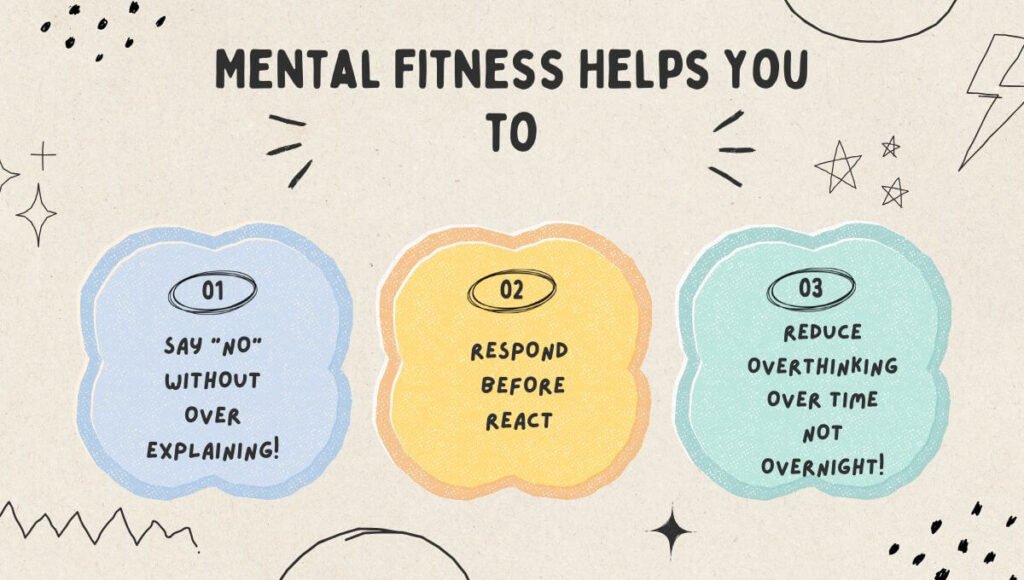
- Helping you respond instead of react
- Reducing overthinking over time (not overnight)
Hence, coping with anxiety isn’t about “fixing” yourself. It’s about supporting yourself.
For more scientific insights on mental fitness and anxiety, the World Health Organization provides trusted resources and guidance.
The Connection Between Mental Health and Wellbeing
Mental fitness is deeply tied to overall mental health and wellbeing. So what really happens when your mental fitness is low? You might experience:
- Constant fatigue
- Irritability
- Trouble focusing
- Emotional numbness
- Sleep issues
When mental fitness improves, even slightly, you may feel:
- More grounded
- Less reactive
- More aware of your emotions
- Kinder toward yourself
Small shifts matters a lot!

Simple Mental Fitness Exercises (No Pressure, No Perfection)
You don’t need a perfect routine or expensive tools to improve your mental health. Some gentle mental fitness exercises that actually help are listed below:
1. One-Minute Breathing Check
Place one hand on your chest, and the other on your stomach. Breathe slowly for one minute. Close your eyes and feel the rhythm of your breathing. Try to connect to your body and meditate quietly.
2. Name What You’re Feeling
Instead of pushing emotions away, quietly say:
- “I’m feeling anxious.”
- “I’m feeling overwhelmed.”
Naming your emotions reduces their intensity. This is mental fitness in action.
3. Limit Mental Overload
You don’t need to absorb every piece of bad news, social media post, or opinion. Sometimes it’s best to protect your mental peace. Prioritize your mental space over everything—yes, even over every single thing!
4. Daily Habits for Mental Wellbeing
If you’re wondering how to improve mental fitness, start small. Here are some habits to begin with that don’t demand perfection:
- Going to bed 15 minutes earlier
- Stepping outside for a whiff of fresh air
- Drinking water before caffeine
- Moving your body gently
- Saying “no” without over-explaining
Mental strength and resilience grow from consistency, not intensity. Remember “The Hare & the Tortoise”—slow and steady wins the race, whether in reel or real life!
Sometimes, improving your physical health can support mental wellbeing. Try our Home Remedy to Lose Belly Fat Naturally tips to feel more energized.”
Mental Fitness Is Not About “Being Positive”
Let’s clear this up!
Mental fitness does NOT mean:
- Toxic positivity
- Ignoring the pain
- Forcing gratitude
Real mental fitness means:
- Allowing yourself to feel and heal
- Giving emotions space without judgment
- Choosing progress, no matter how little it may be, over pressure
You’re allowed to have bad days and still be mentally strong. I agree this is the era of AI, but let’s normalize being human, getting hurt and heal like any other day.
Why Talking About Mental Fitness Matters
The importance of mental fitness is especially relevant today, when life feels fast, loud, and uncertain.
Caring for your mind:
- Improves relationships
- Supports physical health
- Helps with focus and productivity
- Builds emotional resilience
Most importantly, it helps you feel like yourself again.
A Gentle Reminder Before You Go
If no one has told you this today, let this be your reminder:
You don’t have to do everything at once.
You don’t have to be “fixed”.
You don’t have to earn rest or peace.
Mental fitness is not a destination; it’s a relationship with your own self.
And like all good relationships, it grows with patience, compassion, and time.
Breathe.
You’re doing better than you think!
Conclusion: Your Mind Matters More Than You Think
If there’s one thing to take away from understanding the importance of mental fitness, it’s this:
your mind deserves care just as much as your body does.
Mental fitness isn’t about getting everything right. It’s about showing up for you, even on the days when anxiety feels heavy, motivation feels low, or life feels overwhelming.
You don’t need to rush this journey.
You don’t need to compare your progress.
You just need to keep choosing yourself — gently, consistently, and honestly.
And remember: you are not alone in this. I am always here to listen how you feel, and not to question why you feel that way!
FAQs
What is the meaning of mental fitness?
Mental fitness refers to your mind’s ability to cope with stress, manage emotions, stay focused, and adapt to challenges. It doesn’t mean being happy all the time. It means being emotionally aware and resilient.
Are mental fitness exercises the same as meditation?
Not exactly. Meditation is one type of mental fitness exercise, but other exercises like journaling, stress management, and emotional awareness also help reduce the signs of poor mental fitness.
Is mental fitness the same as mental health?
They are closely connected but not the same. Mental health refers to overall wellbeing, while mental fitness focuses on strengthening your mind’s ability to cope and avoid the signs of poor mental fitness.
How long does it take to see improvement in mental fitness?
There’s no fixed timeline. Some people notice improvement in the signs of poor mental fitness within weeks, while for others it may take longer. Small steps count.
Can anyone work on their mental fitness?
Absolutely. Everyone can work on mental fitness to reduce the signs of poor mental fitness, regardless of age or current mental state.
Absolutely. Mental fitness is for everyone, regardless of age or current mental state.
What are the signs of poor mental fitness?
Signs of poor mental fitness include overthinking, low energy, lack of focus, emotional numbness, and negative self-talk. Recognizing these signs early helps you take control of your mental wellbeing.
Why is mental fitness important in daily life?
Mental fitness is important because it helps you manage the signs of poor mental fitness, reduce anxiety, make better decisions, and maintain emotional balance. A mentally fit mind supports better relationships, productivity, and overall wellbeing.
Can improving mental fitness help with anxiety?
Yes. Improving mental fitness can reduce the signs of poor mental fitness such as overthinking and emotional overwhelm, helping you respond calmly to anxious thoughts.
How can I improve my mental fitness naturally?
Mindful breathing
Getting enough rest
Limiting mental overload
Staying physically active
Expressing emotions
These habits help prevent the common signs of poor mental fitness.
5 thoughts on “5 Signs of Poor Mental Fitness You Should Never Ignore”